How Pepper Mash Ferments for Hot Sauce
Make your own: hot sauce recipe builder → Choose a pepper, scale a sourced recipe, and print your batch.
A pepper mash ferment is a common home-sauce step. NCHFP does not publish a pepper-mash ferment procedure. Its lactic-ferment numbers come from sauerkraut: 3 tablespoons of salt per five-pound load, fully fermented in about 3 to 4 weeks in the USDA 70 to 75F window. A separate NCHFP cayenne pepper sauce uses 3 pounds hot peppers and cider vinegar (5%), then a boil 1 hour and simmer 1 additional hour. FDA acidified foods finish at a finished equilibrium pH of 4.6 or below. Those are the measured bounds this page uses.
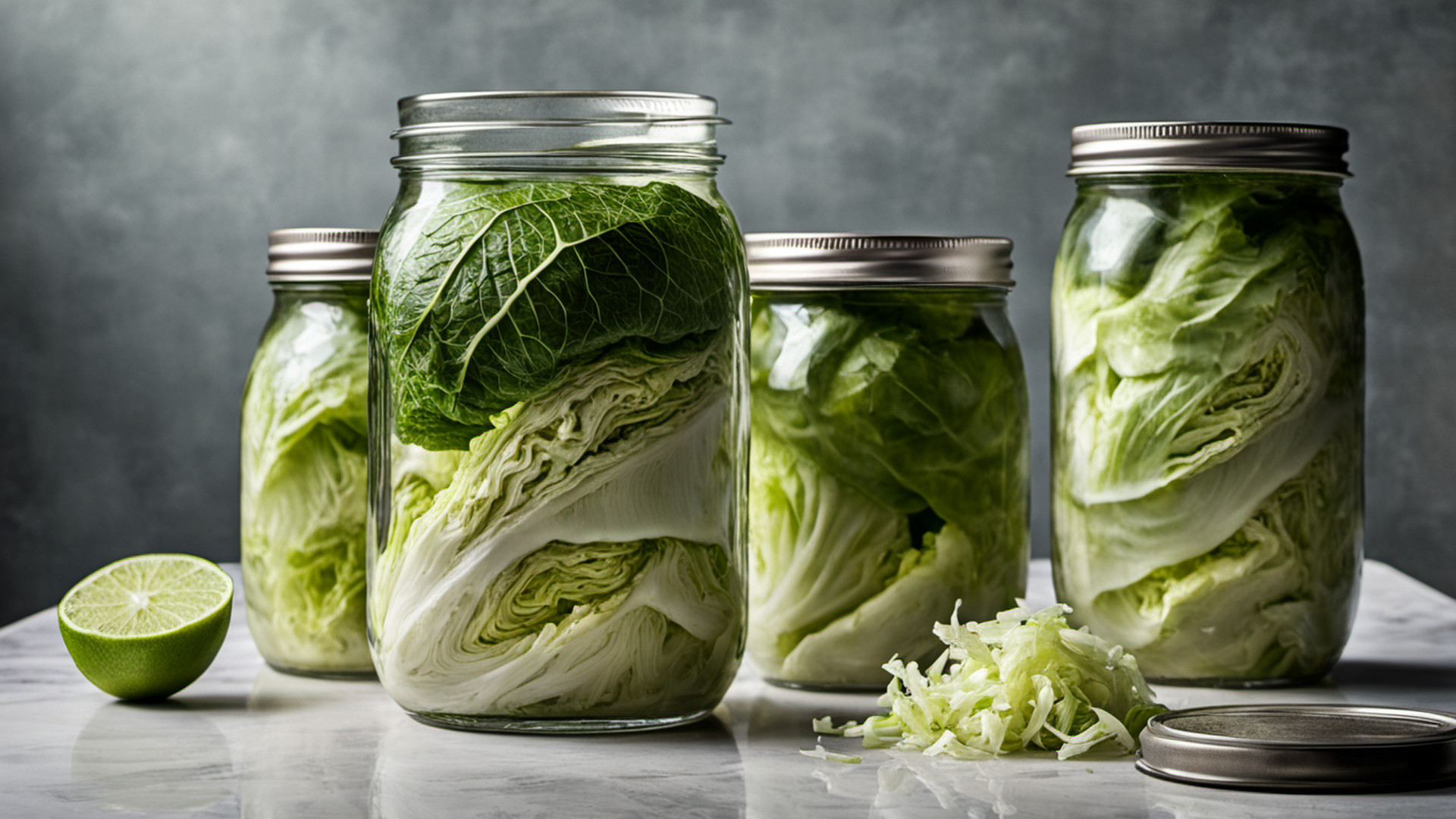
USDA sauerkraut ferment times
The only NCHFP lactic-ferment clock with published temperature bands is sauerkraut, adapted from USDA Agriculture Information Bulletin No. 539. Kraut will be fully fermented in about 3 to 4 weeks in the warmer USDA band. At 60 to 65F, fermentation may take 5 to 6 weeks. Below 60F, kraut may not ferment. Above 75F, kraut may become soft. Those four outcomes are cabbage procedure, not a tested pepper mash. A maker who copies the clock onto chopped peppers is extending a cabbage document past its stated food. The chart on this page plots the two completed-ferment bands that NCHFP does state: 3 to 4 weeks and 5 to 6 weeks. It does not invent a pepper-mash week count. If a mash is still bubbling after the cabbage window, that is not evidence the mash is unsafe or safe; it is evidence the food is not the food in the table. Keep the batch under brine and treat unfinished mash as an untested ferment, not as a scheduled process.
Salt loads NCHFP actually prints
NCHFP sauerkraut starts with 25 lbs cabbage on the ingredient list. The packed procedure is more useful at kitchen scale: work with about 5 pounds of cabbage at a time and add 3 tablespoons of salt. Mix, pack until salt draws juices, and repeat. If juice does not cover the cabbage, NCHFP says to add boiled and cooled brine at 1-1/2 tablespoons of salt per quart of water. That extra brine is a cover, not a second recipe. The same page does not give a percent-by-weight salt figure for peppers, and it does not authorize swapping cabbage for hot peppers at the same tablespoon count. A mash that is drier than shredded cabbage may not throw enough juice; the documented response on the cabbage page is still the boiled brine, not a guessed percentage. Weigh the peppers if you want a lab notebook. Do not call the result an NCHFP mash recipe. The salt facts on this page are cabbage facts. They bound what a first-party ferment document actually says, which is the point of the measurement movement.
Containers, brine depth, plastics
NCHFP sizes fermentors by vegetable weight: a 1-gallon container is needed for each 5 pounds of fresh vegetables. A 5-gallon stone crock is described as ideal for about 25 pounds of fresh cabbage or cucumbers. Food-grade plastic and glass containers are excellent substitutes for stone crocks. Non-food-grade plastic may be used only if lined with a clean food-grade plastic bag. NCHFP is blunt on the next point: do not use garbage bags or trash liners. Cabbage and cucumbers must be kept 1 to 2 inches under brine while fermenting. The documented weights are a dinner plate or glass pie plate held down with 2 to 3 sealed quart jars of water, or a sealed brine-filled bag. Cover the opening with a clean, heavy bath towel. Quart and half-gallon Mason jars are called an acceptable practice for sauerkraut, with more spoilage losses. None of that text names peppers. The container rules still matter for a mash because they are the first-party list of what may touch a lactic ferment: food-grade plastic, glass, or crock, brine cover, no trash bags. A bucket that held paint is out. A jar that cannot keep mash 1 to 2 inches under brine is a spoilage risk on the cabbage procedure; it is not a reason to invent a new pepper rule.
Vinegar sauce is a different process
NCHFP does publish a pepper sauce. Cayenne Pepper Sauce starts with 3 pounds hot peppers, sliced onion, garlic, cilantro, canned diced tomatoes, water, and cider vinegar (5%). The cook is a boil 1 hour, then simmer 1 additional hour, then a blender puree and a brief return toward a boil. Jars are filled hot and processed in a boiling-water canner. That is an acidified, cooked, canned sauce. It is not a salt-lactic mash left on the counter. The vinegar (5%) is a labeled acidity input, not a fermentation byproduct. FDA defines an acidified food as a low-acid food to which acid or acid food is added, with a finished equilibrium pH of 4.6 or below and water activity greater than 0.85. The cayenne recipe is built as a canning procedure with a published process time. A jar of untested pepper mash is not that procedure, even if a pH strip later reads 4.6. Commercial processors of acidified foods in hermetically sealed containers must register and file scheduled processes; that federal filing duty is not a home-kitchen checklist, and it does not convert a mash crock into a filed sauce. Keep the two paths separate: salt-lactic vegetable ferment on one NCHFP page, vinegar-cooked cayenne sauce on another.
What a home mash can use
Fully fermented kraut may be kept tightly covered in the refrigerator for several months, or it may be canned on the sauerkraut process table. A pepper mash has the first option in spirit and not the second in print: refrigeration is the documented holding method NCHFP gives for finished kraut that is not canned. It is also the holding method this site uses on sourced refrigerator recipes in the recipe builder. Do not water-bath an untested mash because the kraut table exists. Do not treat a finished mash pH reading as a scheduled process. If the work is a cabbage-style lactic ferment, keep the food 1 to 2 inches under brine in a food-grade container, and stay inside the USDA store window rather than the band where kraut may become soft. If the work is a cooked pepper sauce, use a tested recipe such as NCHFP cayenne pepper sauce with cider vinegar (5%) and the published boil and simmer times. Blend only in equipment whose manufacturer states a hot-liquid rule; the high-power and budget blender guides on this site quote those rules. For pH and water activity as commercial filing concepts, use the shelf-stability article. For a kitchen batch you can scale and print without claiming a mash canning step, use the recipe builder.
NCHFP sauerkraut time to fully fermented
USDA/NCHFP cabbage procedure only. Not a pepper-mash schedule.
| Item | Value | Unit |
|---|---|---|
| 3 to 4 weeks | 4 | weeks |
| 5 to 6 weeks | 6 | weeks |
Sources
Source pages checked .
FAQ
How long does NCHFP say a lactic ferment takes?
For sauerkraut, kraut will be fully fermented in about 3 to 4 weeks at 70 to 75F. At 60 to 65F, fermentation may take 5 to 6 weeks. NCHFP does not publish a pepper-mash duration.
Can I can homemade pepper mash like sauerkraut?
NCHFP lets fully fermented kraut be kept tightly covered in the refrigerator for several months or canned on the sauerkraut table. It does not give a mash canning table. Use refrigeration for an untested mash, not the cabbage process times.
Is NCHFP cayenne pepper sauce a ferment?
No. That recipe uses 3 pounds hot peppers and cider vinegar (5%), then a boil 1 hour and simmer 1 additional hour before canning. It is a cooked vinegar sauce.
What pH does FDA use for acidified foods?
An acidified food has a finished equilibrium pH of 4.6 or below and a water activity greater than 0.85. That definition is for acidified foods, not a substitute for a tested home mash recipe.