Fresh, Frozen or Dried Peppers: What Each Pound Costs
Make your own: hot sauce recipe builder → Choose a pepper, scale a sourced recipe, and print your batch.
A pepper bought fresh, frozen or dried is the same fruit at three different stages of water removal and handwork, and the price per pound tracks that work rather than the heat. One Hatch Valley supplier lists fresh green chile at $8 a pound, flame-roasted and frozen green chile at $18 a pound, and dried red chile pods at $19.98 a pound. The gap between fresh and frozen covers roasting, peeling and freezing. The gap between frozen and dried covers a dehydrator run and a pantry-stable pack. What follows measures each step, the shelf life it buys, and the handling it leaves with you.
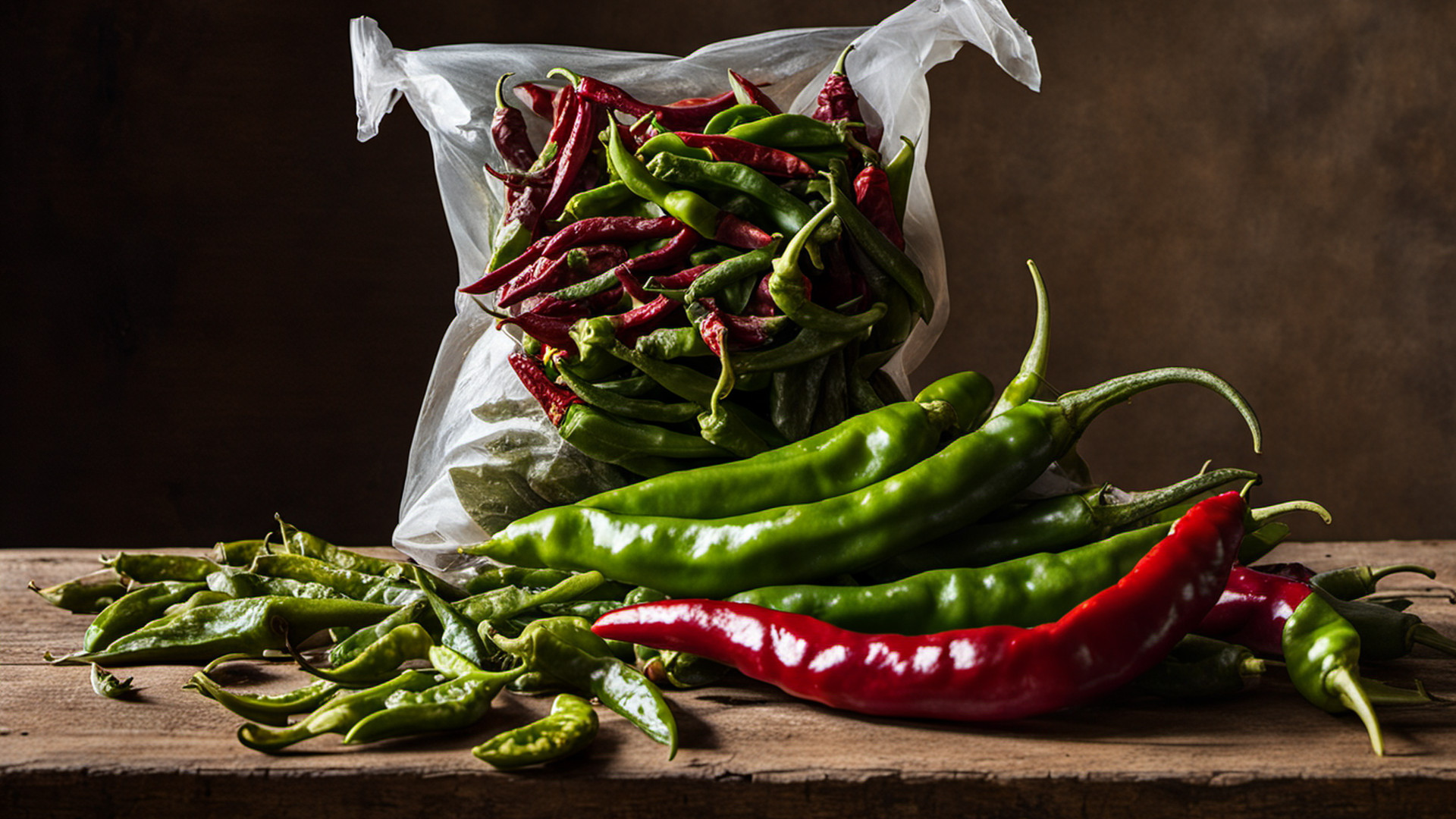
Three put-ups, three prices per pound
Fresh green chile is the cheapest per pound on the supplier's own pages, at $8 a pound for a boxed harvest order. Flame-roasted, partially peeled and flash-frozen green chile is $18 a pound. Dried red chile pods are $19.98 a pound.
The chart above puts those three figures in one unit, dollars per pound as sold. Fresh to frozen doubles the price. Frozen to dried adds roughly two dollars. Fresh to dried works out at about two and a half times the field price, which is the cost of removing water and putting the result in a pantry-stable pack.
The comparison is close to like-for-like but not identical. Fresh and frozen are green chile; the dried product is whole red pods sold in sizes from 8 ounces to 4 pounds. The supplier itself separates seven formats, listing fresh, frozen, jarred, sauces, salsas, dried red pods and mixed packs as distinct lines. Read the chart as a put-up ladder from one farm, not as a national price index.
What the ladder buys is time. A fresh box has to be used or processed inside a fortnight, while the dried pack is described as having a pantry shelf life of one to two years. That difference is the thing a buyer is actually paying for at the top of the ladder.
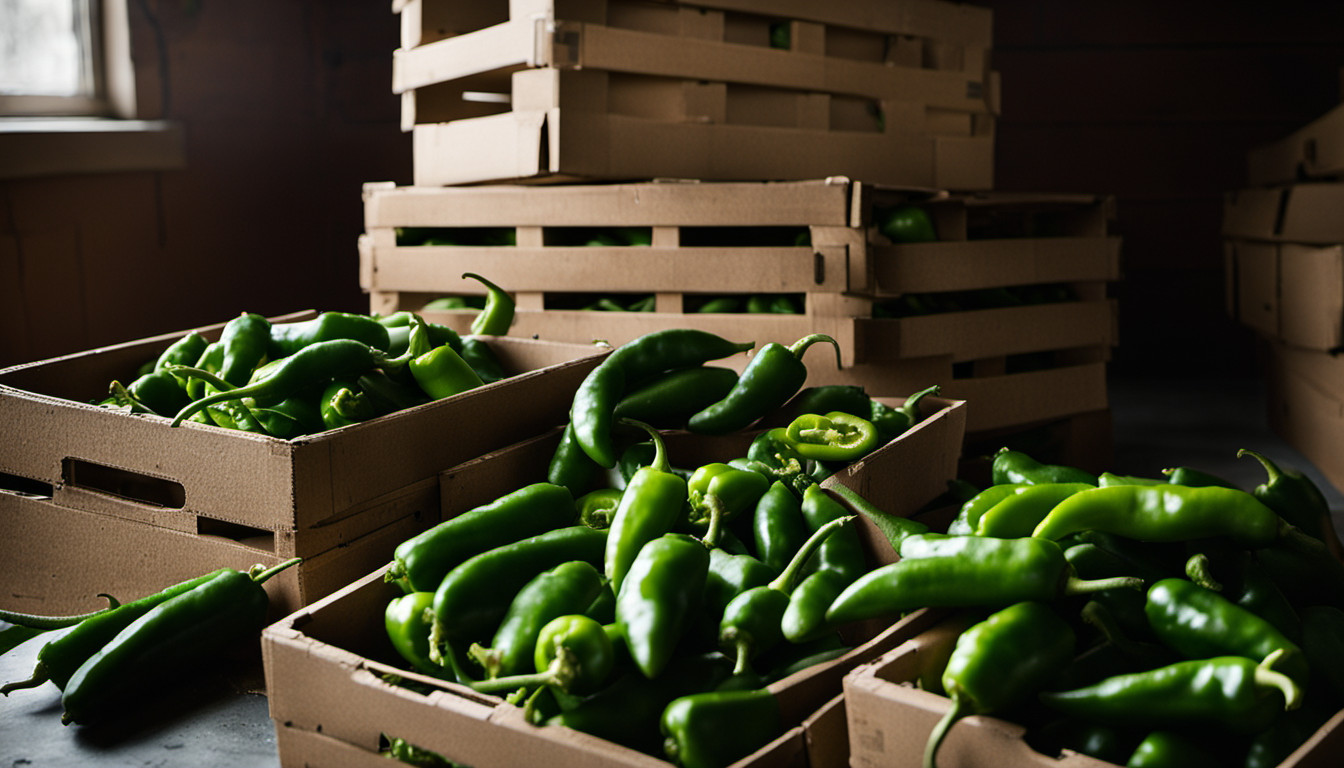
Fresh price excludes the season
The $8 pound is available only inside a window. The supplier marks fresh green chile as seasonal, late July into October, and the rest of the year the same harvest is sold roasted and frozen.
Fresh pods are also the shortest-lived input in the building. A produce distributor's handling guide gives jalapeños a 14-day shelf life and recommends 45 to 50 degrees Fahrenheit at 85 to 95 percent relative humidity. Retail packs for the same commodity run from 2 to 40 pounds, so the fresh option scales from a restaurant case to a home box without changing the format.
Quality decisions happen at receiving. The same guide says to reject peppers that appear shriveled or decayed, and notes that dry lines or striations across the skin indicate a hotter pepper without indicating poor quality. That second point matters for consistency work: a load with visible striations is a load that will test hotter, and the supplier's own guide says so.
Ethylene is the quiet risk. Peppers are sensitive to ethylene gas, and exposure causes a colour change in the fruit. A fresh delivery stored beside ripening fruit can shift colour without any handling error by the kitchen.
Fresh therefore prices lowest per pound and highest per unit of attention. The pound is cheap; the week it must be used in is not.
Frozen carries the roasting and peeling
The frozen line is a processed product, and the processing is named on the page: flame-roasted over open flame, partially peeled and flash-frozen at peak harvest. Each box holds five one-pound vacuum-sealed bags, which is a portioning decision as much as a packing one, since a bag can be thawed alone.
What that processing saves shows up in yield. The supplier's own fresh guide estimates that five pounds of raw pods yield about three pounds after roasting and peeling. Forty percent of the purchase leaves as charred skin, seeds and water before the chile reaches a pot. A maker buying fresh is buying that 40 percent and doing the work; a maker buying frozen is buying three usable pounds per five and paying $18 a pound for the privilege.
Freezing at home is the middle route, and it has a published step. Clemson's freezing guide lists sweet pepper halves at three minutes of water blanching. Hot peppers are usually frozen without blanching in home practice, but the blanching table is the only timing the cited guide publishes, so it is the only one quoted here.
Portion size is where frozen wins on labour. The five-bag box is described as roughly 10 to 15 meals, which is a stated serving range rather than a yield, and it lets a small kitchen thaw one pound at a time instead of committing a whole fresh box to the roaster at once.
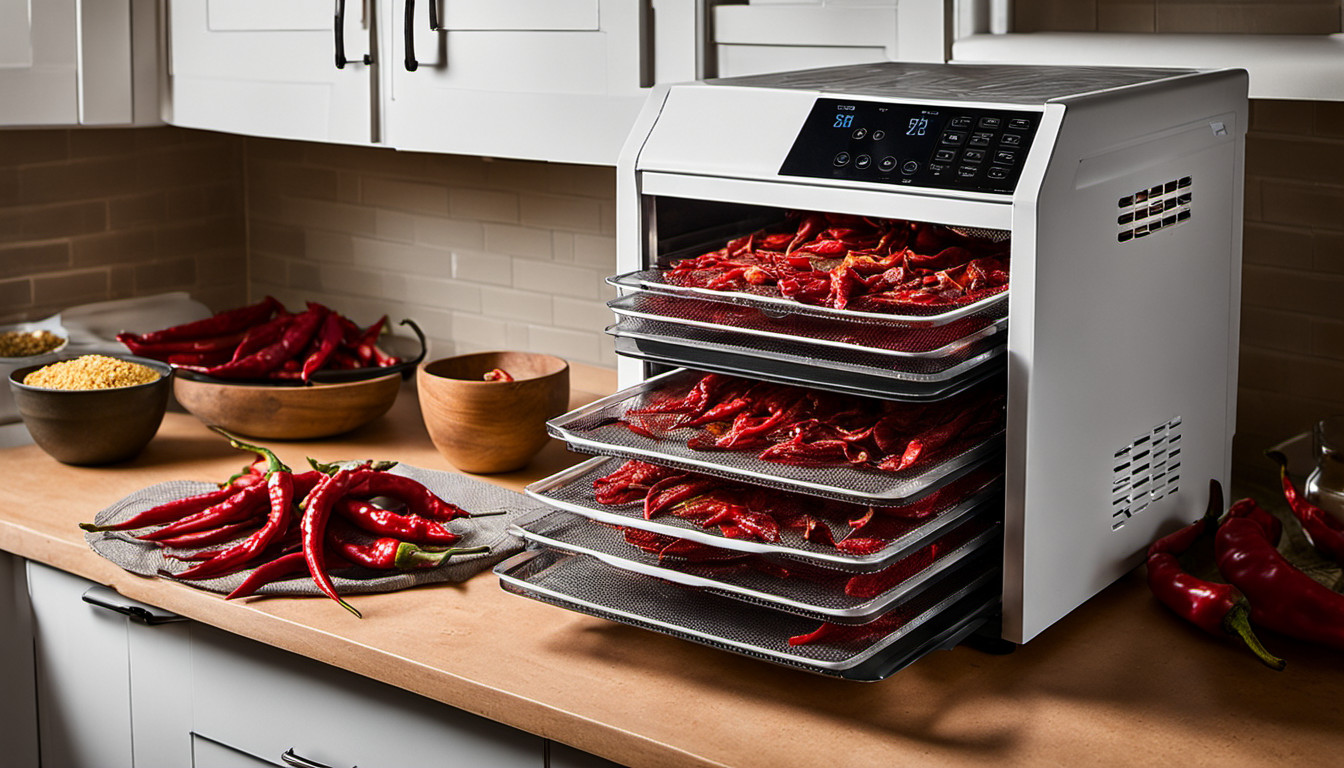
Dried strips water and adds handling hours
Dehydrating is the most labour-intensive of the three put-ups, and the labour is measurable in hours rather than minutes. Clemson's drying table gives peppers 8 to 12 hours of dehydrator time after washing, stemming, coring and cutting into disks about three eighths of an inch. Colorado State's preserve guide sets the temperature at 140 degrees Fahrenheit and warns that a conventional oven may take up to twice as long.
That is not a set-and-forget process. The same guide says to turn large pieces over every three to four hours during drying, then to condition the cooled peppers in loosely covered containers for four to ten days before storage. Read together, a single dried batch occupies part of two days of attention plus a conditioning window of more than a week.
What the hours buy is shelf stability without refrigeration. The dried pods are sold with a stated pantry shelf life of one to two years, and pack sizes run from 8 ounces to 4 pounds, so the format scales with the batch rather than forcing a freezer commitment.
Dried product is also the least forgiving of storage heat. Clemson's guide notes that vegetables have about half the shelf life of fruits and can generally be stored for six months at 60 degrees Fahrenheit or three months at 80 degrees. A dried pepper in a hot kitchen loses its window faster than the one-to-two-year label suggests.
For a maker, the arithmetic is straightforward: dried peppers cost the most per pound and the most handling hours per pound, and they pay that back in storage time and no freezer space.
Storage temperature outranks the format
Format sets the price; storage temperature sets how long the purchase stays usable. Clemson's freezing guide says most vegetables keep high quality for 12 to 18 months at 0 degrees Fahrenheit or lower, and states plainly that frozen produce should be stored at 0 degrees or lower, with higher temperatures shortening shelf life.
The supplier's figures agree from the other direction. Roasted and frozen Hatch chile is sold with a two-year shelf life at 0 degrees, and home-frozen roasted chile is described as keeping quality for 12 or more months at the same temperature. Two to one years of usable life is available from the same fruit at the same freezer setting.
Dried product behaves the same way with a different thermostat. Its stated storage life drops from six months at 60 degrees to three months at 80 degrees. A pantry that runs warm during summer halves the dried window without any change to the pack.
Fresh is the outlier because it has no stable setting at all. Fourteen days is the distributor's shelf life figure, and the recommended holding conditions are a specific temperature and humidity band rather than a freezer.
One consequence for a cost comparison: the price per pound on the invoice is not the cost per usable pound. A dried pack stored at 80 degrees for four months is a pack that has outlived its stated window, and the saving from buying in bulk evaporates with it.
Pack size moves the dried price
Dried peppers are the format where the quoted price per pound varies most with how much you buy. A spice house lists whole chile de arbol at $27.98 for one pound and $18.66 a pound on a five-pound purchase. A separate ingredient supplier lists whole de arbol at $21.85 for a one-pound bag and states $1.37 an ounce on the same page.
Those three numbers bracket the farm-direct dried price of $19.98 a pound. The spread is pack configuration and sourcing, not heat: the spice house product is arbol, the farm product is Hatch red chile, and the two are different pods with different uses. What carries across is the shape of the curve. One-pound dried purchases sit at the top of it, and five-pound purchases sit near the bottom.
A one-pound bag is also a small amount of product by sauce standards. At $1.37 an ounce, a kitchen that treats dried pods as a bulk input is paying retail-ounce prices for the convenience of a small pack.
For a maker, the decision is whether the batch will consume a five-pound unit inside its stored window. If it will, the bulk pack is the cheaper per-pound route at $18.66. If it will not, the same saving becomes waste, and the shelf-life figures in the previous section are the test.
Matching a format to batch size
Recipes written for production are usually written in percentages, not pounds, and that is the right shape for a format decision. The calculator below takes a batch mass and a set of ingredient percentages and returns grams for each ingredient, which lets the same recipe run at 20 kilograms or 200 without recomputing by hand.
Format choice enters before the calculator does. If a recipe calls for a large share of roasted pepper, the fresh quantity has to be larger than the finished weight, because five pounds of raw pods yield about three pounds after roasting. Buying fresh to a finished-weight target without that adjustment leaves the batch short by roughly 40 percent.
Dried product cannot be swapped in on the same mass basis. A dried pod has been through 8 to 12 hours of dehydrating at 140 degrees, so its mass is a different quantity from a fresh or roasted pound, and a recipe written in percentages of finished batch mass will not translate one-for-one.
Frozen sits between the two on effort and at the top of the convenience scale. It arrives roasted, partially peeled and portioned into one-pound bags, which is the format that removes the most steps from a production day and costs $18 a pound to do it.
Run the batch in grams first, then price the format against the mass the recipe actually needs. The per-pound price is the last number in that sequence, not the first.
Price per pound for one farm's chile, by put-up
Dollars per pound as sold, from the supplier's own product pages on 2026-10-28. Fresh and frozen are green chile; the dried line is whole red pods.
| Item | Value | Unit |
|---|---|---|
| Fresh green chile | 8 | USD/lb |
| Roasted frozen green | 18 | USD/lb |
| Dried red pods | 19.98 | USD/lb |
Recipe percentages to grams
Enter the batch mass and each ingredient's share. The calculator converts the percentages into grams so a tested ratio can be reproduced at a different batch size.
| Ingredient | Percent | Grams | Remove |
|---|---|---|---|
| 1,100 g | |||
| 500 g | |||
| 240 g | |||
| 60 g |
Total: 95.0% of the batch
Percentages are by weight. A tested recipe still needs its own pH and process checks; this tool only does the arithmetic.
FAQ
Is frozen cheaper than fresh peppers?
Not per pound. The same supplier lists fresh green chile at $8 a pound and roasted frozen at $18 a pound. The frozen premium pays for flame-roasting, partial peeling and flash-freezing at harvest.
How long do dried peppers keep?
The farm-direct dried pods are sold with a one-to-two-year pantry shelf life, but Clemson's drying guide puts vegetables at six months at 60 degrees Fahrenheit and three months at 80 degrees.
Can I freeze fresh peppers without blanching?
Clemson's freezing guide treats blanching as essential for top quality in most vegetables and lists sweet pepper halves at three minutes of water blanching.
Why does a five-pound bag of dried chiles cost less per pound?
Pack size. One spice house lists $27.98 for a single pound and $18.66 a pound at five pounds, and a farm-direct dried line sits at $19.98 a pound.