Home Hot Sauce Canning Needs a Tested Recipe
Make your own: hot sauce recipe builder → Choose a pepper, scale a sourced recipe, and print your batch.
A family salsa mix is a mix of acid and low acid ingredients. Overall pH is what determines if a product is safe to be processed in a boiling water canner. If a salsa is not adequately acidified to a pH of 4.6 or below, that canner will not prevent toxin-production by botulism-causing bacteria. NCHFP Easy Hot Sauce is one tested path: 8 cups (64 ounces) canned, diced tomatoes, undrained, chopped Serrano peppers, and 4 cups distilled white vinegar (5%), processed 10 min in half-pints at 0 - 1,000 ft. A custom formula is not that recipe.
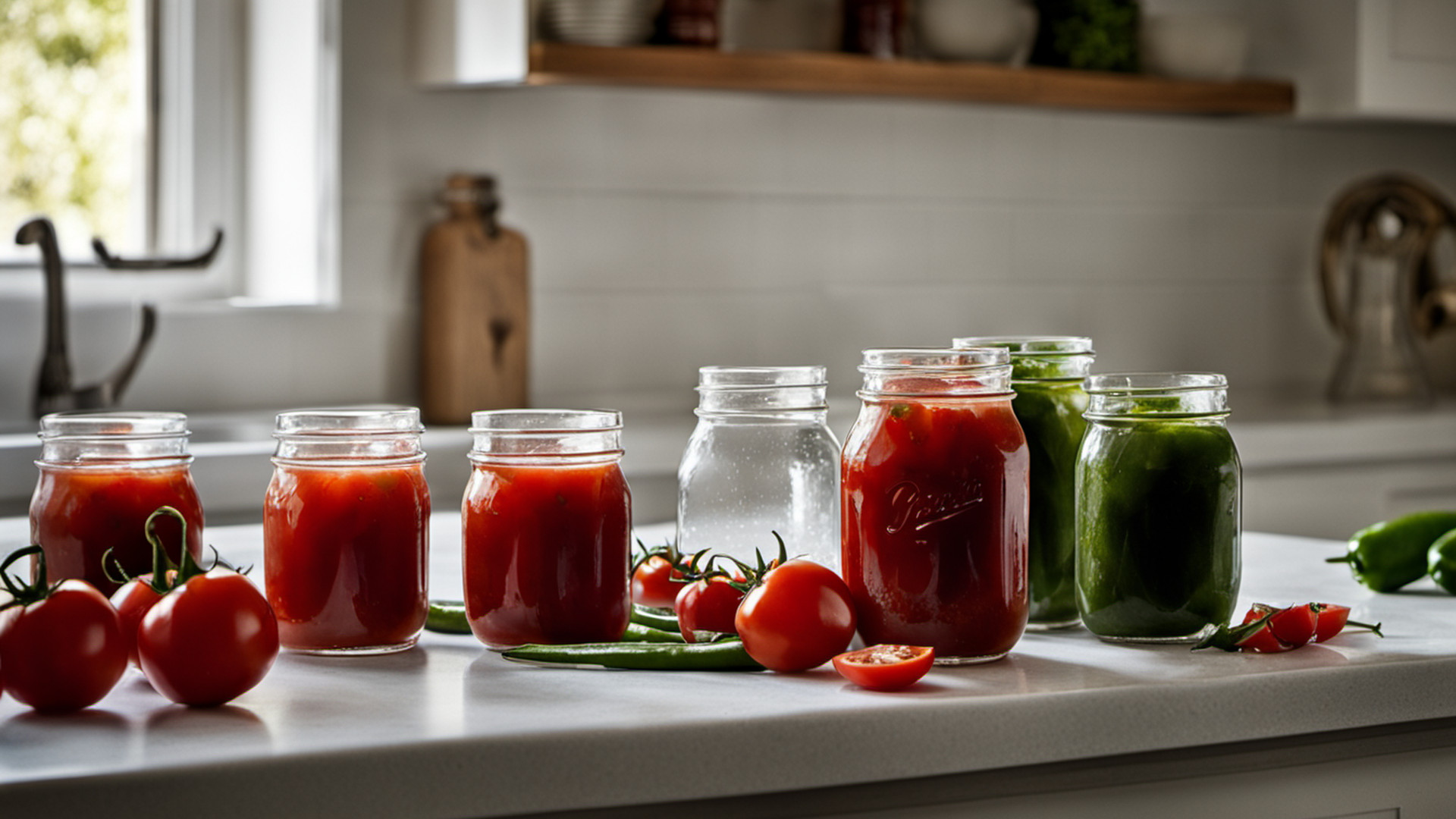
pH decides the boiling-water path
Salsas are a mix of acid and low acid ingredients. Peppers sit on the low-acid side of that mix. Tomatoes and vinegar sit on the acid side. Overall pH is what determines if a product is safe to be processed in a boiling water canner. That sentence is the measurement, not a kitchen slogan. If a salsa is not adequately acidified to a pH of 4.6 or below, then processing in a boiling water canner will not provide enough heat to prevent toxin-production by botulism-causing bacteria. The number 4.6 is the threshold in that NCHFP sentence. It is not a process time, a jar size, or a permit to skip vinegar. Sufficient, carefully calculated amounts of vinegar or another acid are necessary ingredients for acidification. Calculated means the tested recipe already did that work. It does not mean a cook may add a splash of vinegar until a strip looks low. A strip reading taken on a custom mix does not rewrite the NCHFP sentence. The boiling water canner is allowed only after the mix is adequately acidified to a pH of 4.6 or below. If it is not, the canner is the wrong tool. This page does not invent a pressure-canner schedule for an untested hot sauce. It records the NCHFP rule that overall pH is what determines if a product is safe to be processed in a boiling water canner.
Custom salsa has no NCHFP test
Without detailed knowledge of the ingredients, proportions, and procedure used for a salsa recipe, there is no way to tell is the product is safe for boiling water canning. That is NCHFP's wording, including the grammar. The three required pieces are ingredients, proportions, and procedure. A pepper list without weights is not proportions. A boil time copied from another sauce is not the procedure for this mix. Unfortunately, we at the National Center are not able to fund and staff product testing for individual recipes. That closes the obvious request: send NCHFP your house sauce and wait for a process. They will not staff it. If you are determined to can your own salsa, please call your local Cooperative Extension office and ask if they have contact information for private testing companies. Extension is the contact path. Private testing companies do the lab work NCHFP will not fund. This page does not name a lab, a fee, or a turnaround. It names the office to call. USDA and Cooperative Extension have a variety of tested recipes and processes for canning salsa at home, which is the other door: use a recipe they already tested, or pay for a test of yours. A pH strip on an untested jar does not replace either door. It does not supply the missing ingredients, proportions, and procedure.
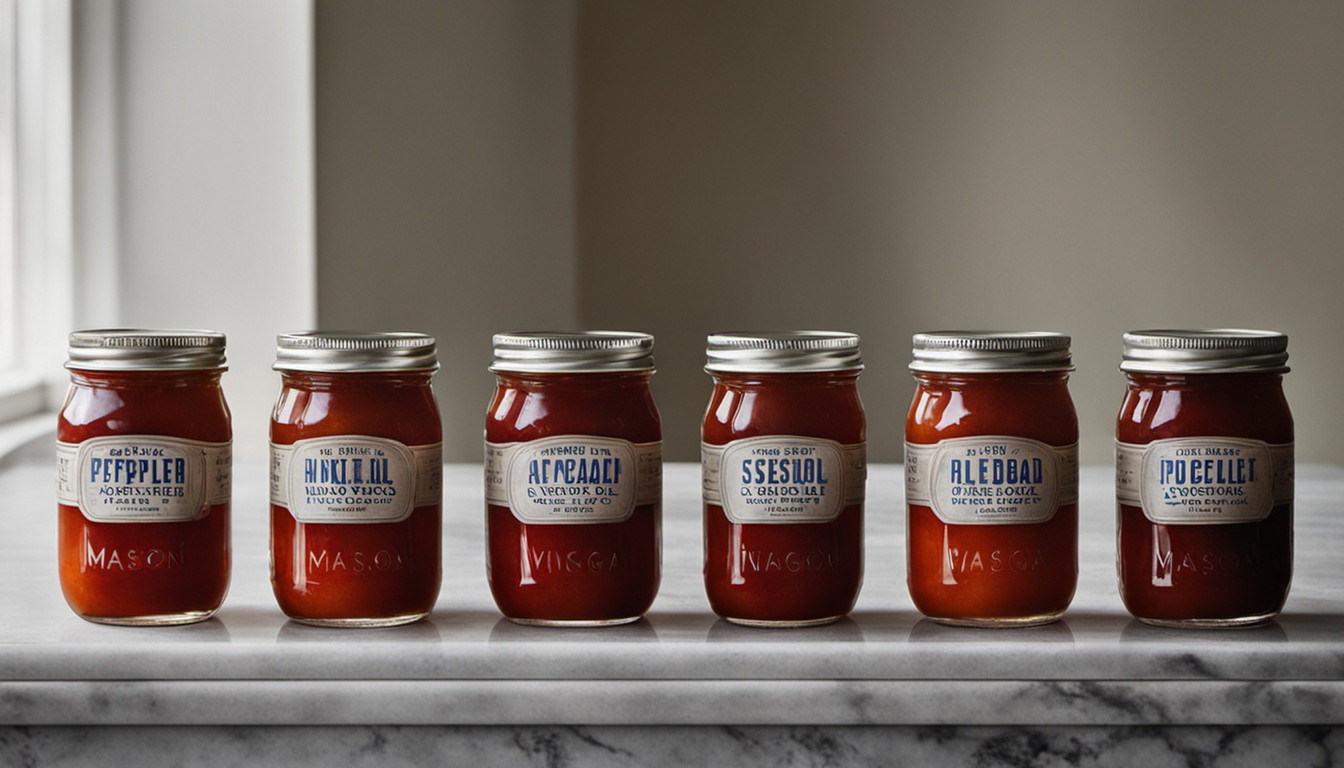
Easy Hot Sauce is one tested formula
NCHFP Easy Hot Sauce starts with 8 cups (64 ounces) canned, diced tomatoes, undrained. It adds seeded, chopped Serrano peppers. It adds 4 cups distilled white vinegar (5%). Those three lines are the acidification math for this recipe, already done. Substituting fresh tomatoes, dropping the vinegar, or swapping peppers changes the ingredients, proportions, and procedure. The yield is about 7 to 8 half-pint jars. The cook is specific: simmer another 20 minutes, until tomatoes are soft, then heat to boiling and boil for another 15 minutes after the food mill. Fill hot sauce into clean, hot half-pint jars. This is not a quart process. It is not a ferment. It is not a mash left on the counter. Wear plastic or rubber gloves when handling, cutting and seeding hot peppers, per the recipe caution. The vinegar line is 4 cups distilled white vinegar (5%). Five percent is the labeled acidity of that vinegar, not a finished-sauce pH reading. The tomatoes line is 8 cups (64 ounces) canned, diced tomatoes, undrained. Leave those amounts as written if the goal is this tested sauce. A thinner or thicker house blend is a different product. NCHFP is not able to fund and staff product testing for individual recipes. Use Easy Hot Sauce as printed, or call Extension about private testing companies.
Process minutes follow elevation
Table 1 is the recommended process time for Easy Hot Sauce in a boiling water canner. The pack is Hot. The jar size is Half-pints. At 0 - 1,000 ft the time is 10 min. At 1,001 - 6,000 ft the time is 15 min. Above 6,000 ft the time is 20 min. Those three numbers are the chart on this page. They apply to this recipe in half-pint jars, not to an untested mash and not to a quart of a different mix. Let cool, undisturbed, 12-24 hours and check for seals, as the same page states after the canner step. The chart does not convert a refrigerator sauce into a shelf jar. It does not authorize swapping Serrano peppers for a hotter pepper and keeping 10 min. If the elevation is 0 - 1,000 ft, the printed time is 10 min. If it is 1,001 - 6,000 ft, the printed time is 15 min. Above 6,000 ft, the printed time is 20 min. The interactive tool on this page returns those three values from the same table. It does not interpolate. It does not offer a fourth band. Fill the jars only after the simmer another 20 minutes and the boil for another 15 minutes. Process time is the canner step, not a substitute for those two cooks.
Three kitchen paths, not one pH number
Path one is a tested NCHFP formula such as Easy Hot Sauce: 8 cups (64 ounces) canned, diced tomatoes, undrained, chopped Serrano peppers, and 4 cups distilled white vinegar (5%), in 7 to 8 half-pint jars. Path two is a custom salsa. Without detailed knowledge of the ingredients, proportions, and procedure, there is no way to tell is the product is safe for boiling water canning. Call Cooperative Extension for private testing companies. NCHFP will not fund that test. Path three is refrigeration. This site's recipe builder scales sourced refrigerator recipes and does not claim a mash canning step. A pH of 4.6 or below is the acidification line for a boiling water canner. It is not a license to skip vinegar or another acid. It is not a water-activity lecture; that belongs on the shelf-stability article. It is not a sauerkraut clock; that belongs on the mash ferment article. For a kitchen batch you can print without a canner, use the recipe builder. For this tested canner recipe, keep the tomatoes, Serrano peppers, 4 cups distilled white vinegar (5%), and half-pint jars together. Do not mix the three paths.
NCHFP Easy Hot Sauce process time, half-pints
Hot pack, half-pint jars only. Not a process for an untested sauce.
| Item | Value | Unit |
|---|---|---|
| 0 - 1,000 ft | 10 | min |
| 1,001 - 6,000 ft | 15 | min |
| Above 6,000 ft | 20 | min |
NCHFP Easy Hot Sauce, hot pack, half-pint jars. Times are Table 1 only.
0 - 1,000 ft: 10 min
Sources
Source pages checked .
FAQ
What pH does NCHFP require for a boiling water canner salsa?
If a salsa is not adequately acidified to a pH of 4.6 or below, a boiling water canner will not prevent toxin-production by botulism-causing bacteria. Overall pH is what determines if a product is safe to be processed in a boiling water canner.
Can NCHFP test my custom hot sauce recipe?
NCHFP is not able to fund and staff product testing for individual recipes. Call your local Cooperative Extension office for private testing companies.
How long do I process NCHFP Easy Hot Sauce?
In half-pints, 10 min at 0 - 1,000 ft, 15 min at 1,001 - 6,000 ft, and 20 min above 6,000 ft.