Salt and Sugar Balance in Hot Sauce, Measured as Water Activity
Make your own: hot sauce recipe builder → Choose a pepper, scale a sourced recipe, and print your batch.
Salt and sugar are treated as flavor decisions and priced as ingredients, but in a shelf-stable sauce the water they control matters more than the flavor they add. Water activity is the number that matters: the free moisture in a product, expressed as the quotient of its vapor pressure over that of pure water at the same temperature. Most foods sit above 0.95, which is enough moisture for bacteria, yeasts and mold. Get to 0.85 or less and the food leaves the acidified and low-acid canned food regulations altogether. Between those two numbers is where every hot sauce formula lives, and this article works through what moves it.
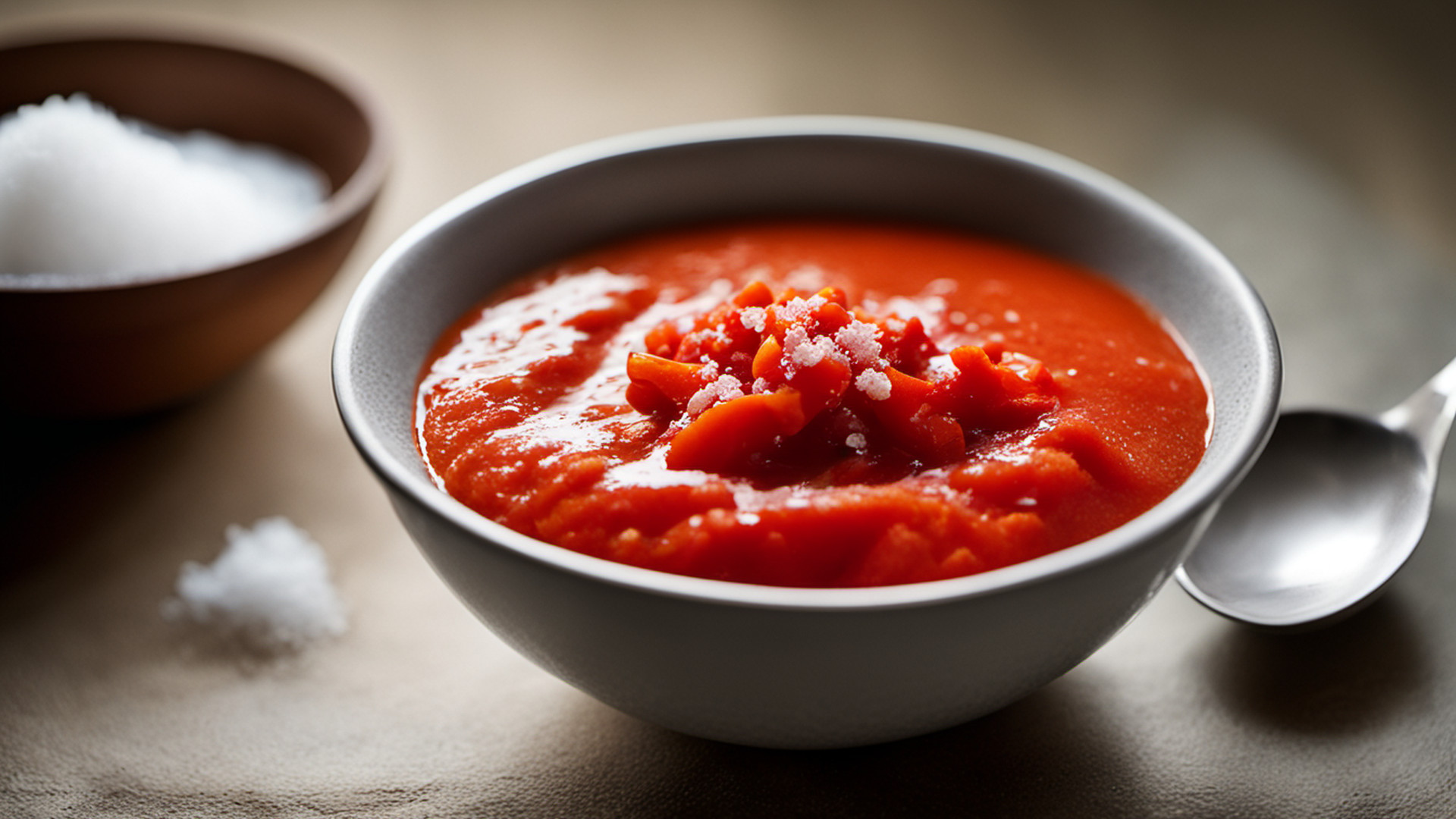
Salt and sugar act on water
Neither ingredient attacks a microbe. Both change the water the microbe would otherwise use. The vapor pressure of a salt or sugar solution is lower than that of pure water, and water activity is that vapor pressure expressed as a ratio against pure water at the same temperature. A water activity of 0.80 means the vapor pressure is 80 percent of pure water.
That ratio is why the ingredients work at levels a cook can taste. The FDA's technical guidance on water activity states directly that water activity is usually controlled by the use of salt or sugar. There is no separate mechanism to look for; the salt and the sugar are the mechanism, and their effect is proportional to how much water they hold.
It also explains why the two are not interchangeable by weight. The vapor pressure of the solution drops below that of pure water whether the solute is salt or sugar, but the grams needed to reach a given water activity depend on the ingredient and on everything else in the formula, which is why the percent-salt shortcut is tied to data for that particular product.
For a sauce formulator the practical reading is that salt is not only seasoning and sugar is not only sweetness. Each is a lever on the same dial, and the dial has a number attached to it that can be measured and written down.
The 0.85 line is a definition
The number that shapes the paperwork is 0.85. It is used as the point of definition for deciding whether a low-acid canned food or an acidified food is covered by the regulations. Acidified foods are defined as having water activity above 0.85 and a finished equilibrium pH of 4.6 or below, so both conditions have to hold for a product to sit in that category.
Controlled to 0.85 or less, the finished food is not subject to 21 CFR Parts 108, 113 and 114 at all. That is a large difference in obligation for two decimal places, and it is a definition rather than a target: a sauce at 0.86 is inside the regulated set and a sauce at 0.84 is outside it.
There is also an exclusion worth reading closely, because it is written with sauces in mind. The acidified-food definition excludes acid foods, including standardized and nonstandardized food dressings and condiment sauces, that contain small amounts of low-acid food and finish at a pH that does not significantly differ from the predominant acid food. Whether a particular sauce lands inside or outside that exclusion is a judgment about its formulation, not a general rule.
None of this tells a maker what salt percentage to use. The definitions set boundaries that decide which rules apply; the formulation work is finding the water activity the product actually reaches, and then deciding whether the texture and taste at that level are acceptable.
Salt is dosed against produce weight
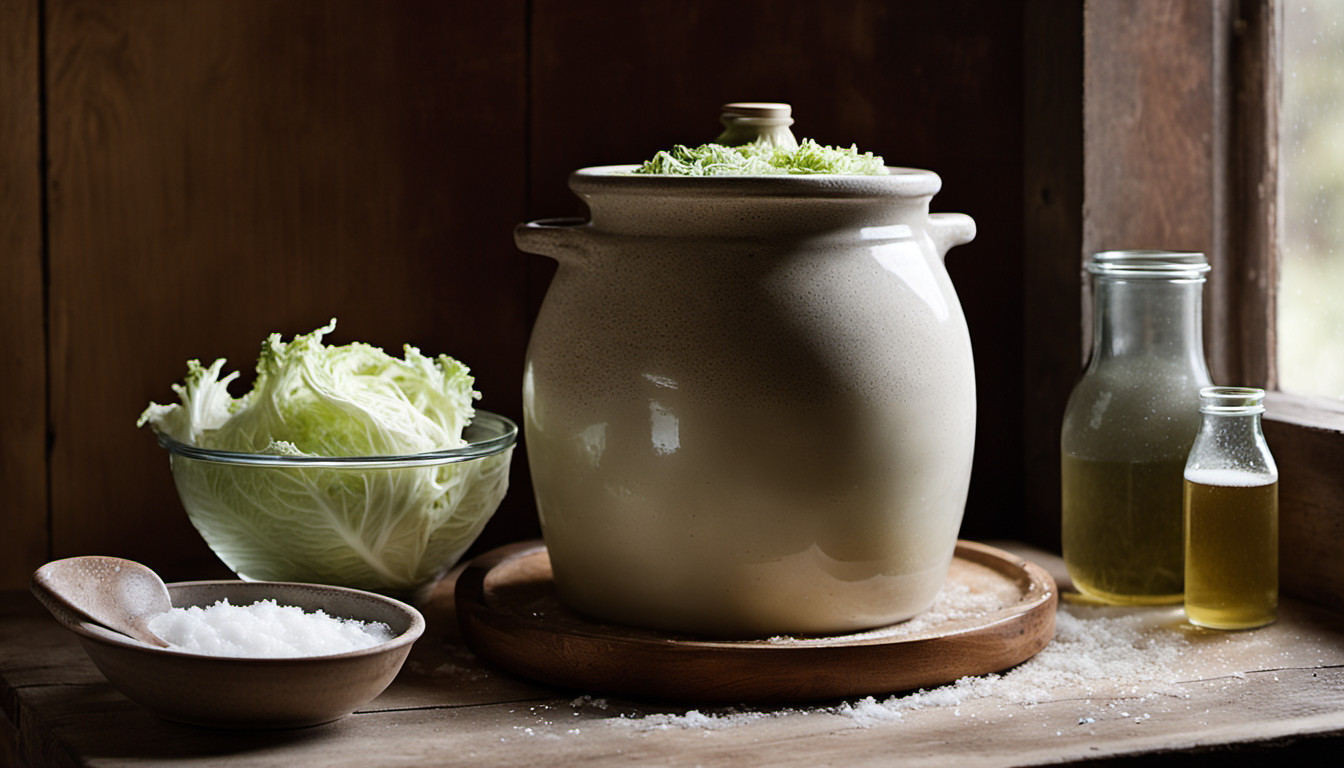
Published fermentation recipes show how salt is actually specified in practice, and it is not as a percentage of the finished food. The sauerkraut procedure works with about 5 pounds of cabbage at a time and adds 3 tablespoons of salt to that batch. The bulk version of the same recipe pairs 25 lbs of cabbage with 3/4 cup of canning or pickling salt.
A top-up instruction fills the last gap: if the juice does not cover the cabbage, add boiled and cooled brine made with 1-1/2 tablespoons of salt per quart of water. Note what that fixes and what it does not. It fixes the concentration of the topping liquid, not the salt level of the food, because it is added only to cover.
This is a workable home method and a poor production specification. Tablespoons per five pounds varies with the grind and packing of the salt, and the recipe never states a target percentage of the batch. A maker scaling to 200 pounds cannot simply multiply a volume measure and expect the same water activity.
Converting the recipe to a percentage is arithmetic the recipe does not do for you: weigh the salt, divide by total batch mass, and record it. The FDA's technical guidance is explicit that the number only becomes evidence when someone has data tying salt levels in that particular product to measured water activity.
A salt percentage needs a curve
Salt percentage is a useful proxy rather than a measurement. Where salt is the preservative, percent salt determinations alone may be sufficient to document control of water activity and commercial sterility, but the processor or processing authority needs data that consistently relates salt levels in that product to water activity levels.
The phrase that matters is that product. Salt, acid, solids and sugar all shift the relationship, so a curve built on one sauce does not transfer to a different one. Two sauces at 3 percent salt can sit at different water activities if their solids and sugar differ, which is why the guidance anchors the proxy to data for the particular product.
The measurement itself is sensitive. A one degree Celsius difference between the sample and the air interface can shift a water activity reading by 0.05, which is larger than the gap between the 0.85 definition line and a compliant result. A reading taken without temperature control is not a small approximation; it can be the difference between a product inside the regulated set and one outside it.
That argues for treating water activity as an instrument reading with a method attached, not a number to estimate from a recipe. Record the temperature, the instrument and the sample preparation alongside the result, and re-measure when the formulation or an ingredient supplier changes, because the relationship is product-specific.
Sugar is a water binder you can taste
Sugar does the same job by a different route. Extension guidance describes sugar acting as a preservative by binding water to the sugar molecule, which prevents the growth of molds and other microorganisms. Where sugar is reduced, more water is available for microbial growth and the product spoils sooner.
The scale of that effect is not subtle in a preserved product. Reduced-sugar jams and jellies can still be processed and sealed, but they carry a shorter shelf life, generally 6 months instead of 1 year. The recipe change moved only one variable and the storage life halved.
Sweeteners are not interchangeable in this role. Sucralose adds sweetness but does not bind water the way sugar does, which is why extension guidance tells preservers not to reduce the sugar in traditional jam recipes: too little sugar prevents gelling and may allow yeasts and molds to grow.
A sauce is not a jam, and the sugar levels are not comparable. The transferable point is the mechanism and the direction: sugar lowers water activity in proportion to how much is present, so cutting it raises water activity and shortens the safe storage window. A sauce reformulated to be less sweet is a different preservation problem, not a flavor tweak.
The label turns salt into a sodium number
Salt also has a second life on the pack, where it appears as sodium. The Daily Value for sodium is less than 2,300 milligrams per day, and the FDA describes that allowance as equal to about 1 teaspoon of table salt. A teaspoon is a small quantity to spread across a batch of sauce.
That equivalence is the simplest sanity check available before a label is designed. If a batch carries a teaspoon of salt per bottle, one bottle delivers roughly a full day's sodium allowance. Nothing in the water-activity discussion changes that arithmetic, and a sauce that is safe because of its salt level is a sauce whose sodium number will be high.
It also makes the sodium figure a constraint on the salt lever. Pushing salt up lowers water activity and lowers the storage risk, and simultaneously pushes the sodium value on the panel. The two effects come from the same grams and cannot be separated, which is why the formulation decision is a balance rather than an optimization.
Write both numbers down for each trial batch: the salt percentage as weighed against total batch mass, and the measured water activity that goes with it. Six months later the pair is the only record that explains why a batch behaved the way it did, and the sodium value on the label traces back to the same figure.
Where the water activity lines sit
Water activity (aw) values named in FDA technical guidance and in 21 CFR 114.3. Lower is drier; the 0.85 line is the regulatory definition point, not a target for a sauce.
| Item | Value | Unit |
|---|---|---|
| C. botulinum, some products | 0.96 | aw |
| Most foods | 0.95 | aw |
| C. botulinum minimum | 0.93 | aw |
| Definition line | 0.85 | aw |
| Vapor pressure example | 0.8 | aw |
Recipe percentages to grams
Enter the batch mass and each ingredient's share. The calculator converts the percentages into grams so a tested ratio can be reproduced at a different batch size.
| Ingredient | Percent | Grams | Remove |
|---|---|---|---|
| 1,100 g | |||
| 500 g | |||
| 240 g | |||
| 60 g |
Total: 95.0% of the batch
Percentages are by weight. A tested recipe still needs its own pH and process checks; this tool only does the arithmetic.
FAQ
What salt percentage should hot sauce have?
There is no single figure, and published fermentation recipes dose salt against produce weight instead: about 5 pounds of cabbage with 3 tablespoons of salt. What matters is the water activity the salt produces, and percent salt only documents that control when you have data for that product.
Does salt or sugar lower water activity more?
Both lower it by reducing vapor pressure below that of pure water, and the FDA states water activity is usually controlled with salt or sugar. Sugar binds water to the sugar molecule, and sucralose does not do the same job.
Is a hot sauce with water activity below 0.85 exempt from FDA filing?
Controlled to 0.85 or less in the finished product, the food is not subject to 21 CFR Parts 108, 113 and 114. At 0.85 or above, the acidified-food definition applies where pH is also 4.6 or below, subject to the condiment-sauce exclusion.
How accurate is a water activity meter reading?
Temperature control matters more than most operators expect: a one degree Celsius difference between the sample and the air interface can shift the reading by 0.05, against a definition line at 0.85.
How much sodium does a salty hot sauce carry?
The sodium Daily Value is under 2,300 mg per day, which the FDA equates to about 1 teaspoon of table salt. A teaspoon of salt per bottle is therefore close to a full day's allowance.