How Accelerated Shelf-Life Testing Is Set Up and Read
Make your own: hot sauce recipe builder → Choose a pepper, scale a sourced recipe, and print your batch.
A shelf-life date is a claim about a future you have not observed yet, so the test that produces it has to be built rather than waited out. Accelerated shelf-life testing shortens the wait by storing product at an elevated temperature and extrapolating back. The method has published assumptions: a Q10 of 2, meaning each 10 degree rise doubles the rate, turns one day at 40 C into at least four ambient days. This article covers how the study is defined, what the numbers look like when they arrive, where extrapolation stops being honest, and what paperwork a commercial sauce needs beside the date.
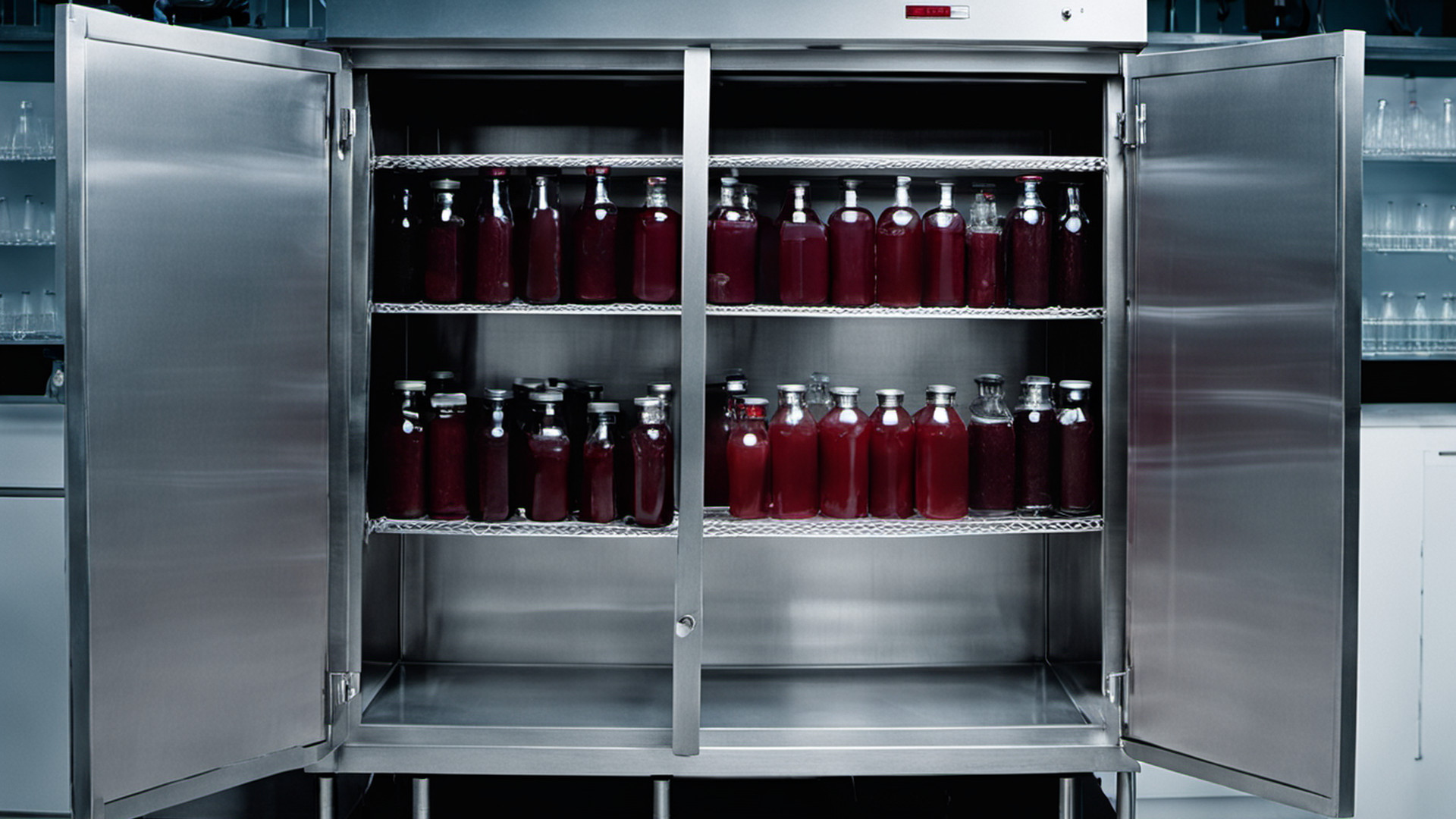
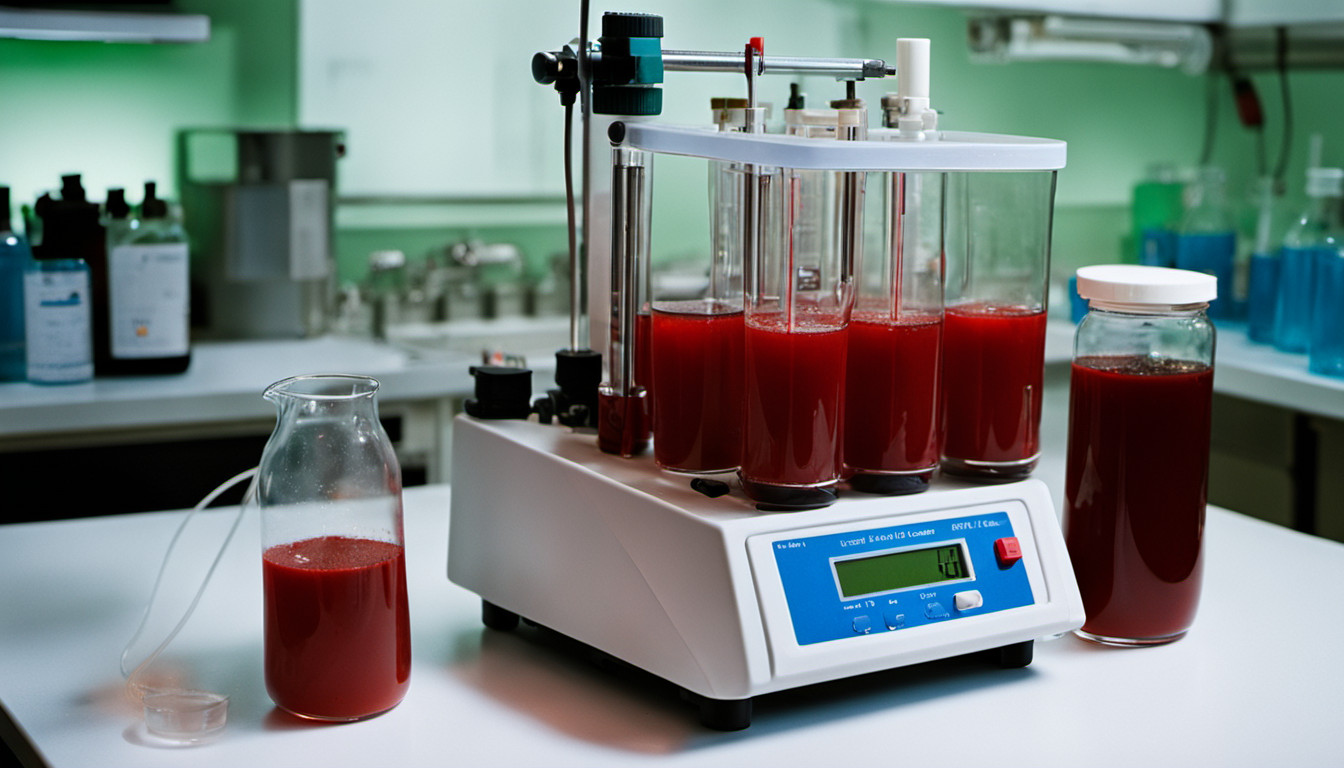
What an accelerated test measures
The method exists because real-time testing does not fit a product launch. Accelerated shelf-life testing is used to shorten the time required to estimate a shelf life, and the most common form is storing food at an elevated temperature. The shelf life under normal storage is then estimated by extrapolation from what happened in the warm cabinet.
That extrapolation rests on one assumption: the change you observe at the higher temperature is the same change that would have happened slowly at the lower one. The method is described as particularly useful when the patterns of changes are practically identical under normal and accelerated storage. When the patterns differ, the arithmetic still produces a number and the number is not a shelf life.
A test therefore has to name its failure mode before it starts. Colour shift, heat fade, separation, cap corrosion and microbial growth are different curves, and a study that measures only one of them has only measured one of them. The published approach is to pick the mode or modes of failure first, then design conditions around them.
For a hot sauce, the failure modes are not hypothetical. Capsaicin, the compound that carries the burn, degrades measurably over months of warm storage, and carotenoids go faster than the heat does. A study that reads only pH will miss both.
Six steps from product to prediction
The published sequence is short enough to check a lab proposal against. Step one is to define the product and packaging that will be put into the conditions, with a set timeframe. A shelf-life result belongs to a specific bottle, closure and formulation, not to a recipe in general.
Step two is to identify the conditions and the type of test needed. Step three is to define the mode of failure. Step four is to set up and run the testing, and step five is to analyse the results. The last step is to predict real-time shelf life.
Steps two and three are where most of the judgment sits. The storage conditions are usually a temperature or two, and sometimes a relative humidity, chosen by looking at shelf-life studies of similar products. The failure mode is chosen by asking which characteristics matter most and which are likely to go first.
This sequence also explains why two labs can return different shelf lives for the same sauce. A study optimised for colour loss and a study optimised for microbial stability are measuring different endpoints, and neither is wrong. The useful question for a maker is which endpoint the retailer or the co-packer will ask about, and whether the study in hand answers that one.
Write the answers down before the samples go in. A prediction made after the fact is not a prediction.
Safety failure and quality failure
Two different standards apply to a bottled sauce, and one of them is legal rather than sensory. An acidified food is defined as having a water activity greater than 0.85 and a finished equilibrium pH of 4.6 or below, and the finished equilibrium pH must not exceed 4.6.
Hot sauce usually sits inside that category. Extension guidance states that the water activity of a hot sauce is assumed to be above 0.85, which means water activity is not available as the control that stops pathogen growth. The pH of the hot sauce must be less than 4.6, and a thermal cook or kill step is still required. Home-scale guidance goes further and says hot sauces should be brought to a boil.
A pH reading is only as good as the method behind it. The regulation specifies measuring at a temperature between 20 and 30 degrees Celsius, with 25 as the optimum, because electrode temperature moves the number. A measurement taken cold and reported without that context is not comparable to a scheduled process value.
Quality failure is a separate track. A sauce can be safe and still fail on colour, separation or heat fade, and those are the changes an accelerated test is usually built to catch. Keep the two results in separate columns, because a passing micro result says nothing about whether the sauce still looks right in month nine.
A day at 40 C counts as four
The conversion from accelerated time to shelf time is where a study becomes a date. One published hot sauce study held samples in an incubator at 40 degrees Celsius with 75 percent relative humidity and permanent light at 15,000 lux.
The calculation used a Q10 of 2, fixed as a theoretical value, on the basis that every 10 degree increase implies a two-fold increase in reaction rate. With ambient taken as roughly 20 degrees, the 40 degree cabinet represents two 10 degree steps, which is a factor of four. The study therefore treated each day at 40 degrees as at least four days at ambient temperature.
Two details in that setup are worth copying. The first is light: 15,000 lux with permanent illumination is a stress that a dark incubator does not apply, and a sauce in a clear bottle on a lit shelf meets it. The second is humidity, which matters for closures and labels as much as for the sauce.
The factor of four is an assumption, not a measurement. It produces a usable first estimate for a product whose degradation roughly follows the doubling rule, and it can overstate or understate shelf life for a product that does not. A test reported as a single number without its Q10 assumption cannot be checked by the person reading it.
What the numbers look like
A published storage study on dried hot peppers shows the shape of the data an accelerated test produces. Pods were held at 20, 25 or 30 degrees Celsius and 75 percent relative humidity for five months, sampled on day zero and at 50-day intervals until day 150.
Capsaicin in polyethylene-packed pods fell 8.8 percent at 20 degrees, 10.4 percent at 25 degrees and 12.9 percent at 30 degrees over that period. The chart above plots those three figures. The rise is monotonic and modest: five degrees of extra storage heat bought roughly one and a half percentage points of extra heat loss.
Heat was not the fastest-changing attribute. Across the same storage, ascorbic acid fell 22.6 percent, phenolic compounds 19.0 percent, carotenoids 17 percent and capsaicinoids 12.7 percent. Packaging mattered too: the disappearance rate rose with temperature and was higher in jute bags than in polyethylene. Between 77.4 and 87.3 percent of the initial compounds survived five months.
Read as a shelf-life study, that pattern says the sauce will lose colour before it loses burn. A maker who tests only Scoville will conclude the product is stable while the bottle is visibly browning. The measured endpoint has to be the attribute that fails first, not the attribute that is easiest to assay.
Where extrapolation breaks
Accelerated testing is a model, and the model has published failure modes. Frozen products are difficult to accelerate because thawing changes the product itself, so a frozen sauce tested warm is a different material by the time it is measured.
Microbial endpoints are trickier still. If spoilage is the main concern, raising the hold temperature can favour different classes of microbes, so a warm cabinet can grow a population that would never dominate at ambient. Spoilage concerns in shelf-stable products are usually yeasts and moulds rather than pathogens, and those respond to temperature differently from the bacteria a safety study worries about.
The intrinsic factors that decide which failure comes first are listed plainly: water activity and pH with its total acidity and acid type. Two sauces at the same pH but different acid profiles do not necessarily age the same way, which is why a shelf-life result does not transfer between recipes.
Distribution reality is handled by a separate test rather than a longer one. Seven-cycle abuse testing is an industry method for determining how much abuse a product withstands, and it models the truck, the loading dock and the customer's kitchen rather than the shelf.
Use acceleration to rank formulations and to catch a failing package early. Use real-time storage, and abuse cycles, to defend the date you print.
Setting the date and the paperwork
A shelf-life date is one line in a document set that a commercial sauce needs. The scheduled process requires that a finished equilibrium pH of 4.6 or lower is reached within the time designated in that process, so the process and the date are written together rather than chosen separately.
Laboratory support is available and specific. Extension labs classify a product as acid, acidified, water activity controlled or other, and provide processing recommendations. For products outside those categories they can test a sample and issue an official letter stating its pH and water activity, which is the document a buyer or inspector can file.
For a home-scale or start-up batch, the starting point is a tested process rather than an invented one. The calculator below returns the boiling-water process time for the NCHFP Easy Hot Sauce recipe at a given elevation, in half-pint jars, using that recipe's published table. It answers a process-time question, not a shelf-life question, and the two are different documents.
Sequence the work in the order the evidence arrives. Fix the formulation and the package, run the process as scheduled, measure pH and water activity with a stated method and temperature, then run storage and abuse testing against the failure mode that matters.
The date on the label is the last thing you write, not the first, and it should be the smallest claim the evidence supports.
Capsaicin lost after 150 days at three storage temperatures
Percent loss of capsaicin in polyethylene-packed dried hot peppers after 150 days, from a published storage study. Values are the study's own figures.
| Item | Value | Unit |
|---|---|---|
| Capsaicin loss at 20 C | 8.8 | % |
| Capsaicin loss at 25 C | 10.4 | % |
| Capsaicin loss at 30 C | 12.9 | % |
NCHFP Easy Hot Sauce, hot pack, half-pint jars. Times are Table 1 only.
0 - 1,000 ft: 10 min
FAQ
How long does accelerated shelf-life testing take?
Less than real time by the acceleration factor. One hot sauce study treated each day at 40 C as at least four ambient days, using a Q10 of 2, so a six-month target needs roughly six weeks in the cabinet.
What temperature is used for accelerated shelf-life testing?
A published hot sauce protocol used 40 C with 75 percent relative humidity and permanent light at 15,000 lux. The choice is product-specific and is normally set from studies of similar foods.
Does a shelf-life test prove a hot sauce is safe?
No. Safety comes from the scheduled process: finished equilibrium pH at or below 4.6, water activity assumed above 0.85 in hot sauce, and a thermal kill step. Storage testing measures change, not safety.
Will a hot sauce lose heat during storage?
Yes, slowly. Capsaicin in dried pods fell 8.8 percent at 20 C and 12.9 percent at 30 C over 150 days, while carotenoids fell faster over the same period.