Hot Sauce Bottle Size Economics: 5 oz, 10 oz and Larger
Make your own: hot sauce recipe builder → Choose a pepper, scale a sourced recipe, and print your batch.
Bottle size is usually chosen by how the sauce looks on a shelf, but the decision has arithmetic underneath it. Twelve five-ounce woozy bottles cost $5.99, while twelve ten-ounce bottles of the same style cost $7.80. The larger case holds twice the sauce for less than two dollars more, which inverts the cost per fluid ounce. This article works through the glass, the closure, the volume tiers that cut case prices, the shelf prices small brands actually charge, and the margin each size leaves before sauce and labour are counted.
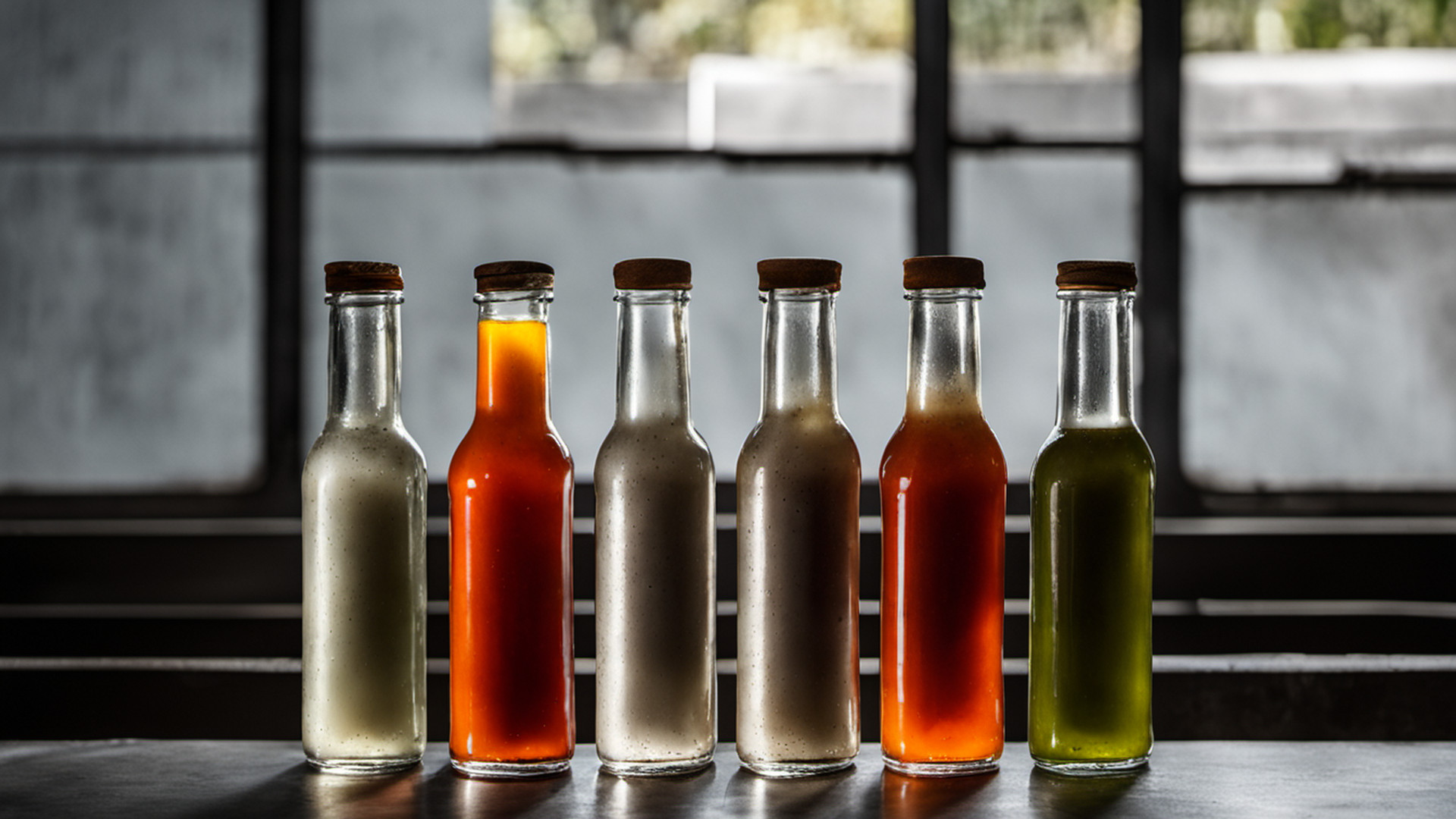
Glass cost does not track volume
The first thing a size comparison shows is that glass is priced by mould, not by capacity. A case of twelve 5 oz woozy bottles is $5.99. A case of twelve 10 oz woozy bottles in the same 24-414 finish is $7.80. An 8 oz bottle with a wider 28-400 mouth is $10.10 a case, which is more than the ten-ounce case despite holding less.
That ordering is not a pricing error. The 8 oz line is a widemouth mould, and the catalogue lists it beside the standard woozy sizes rather than as a bigger version of them. The same catalogue runs from 1.7 oz minis to 10 oz in the standard shape, and the mini is sold 48 to a case at $15.55.
So the chart above is a comparison of moulds at a fixed case count, not a linear price-per-ounce curve. Reading it as volume pricing would be wrong in both directions: the ten-ounce bottle is cheaper than the eight, and the mini is the cheapest unit in the catalogue by a wide margin because forty-eight of them fit in one case.
For a maker, that means the size decision starts with which mould the co-packer or filler can run. Once the mould is fixed, the case price is a published number with published tiers behind it, and the volume discussion in a later section applies.
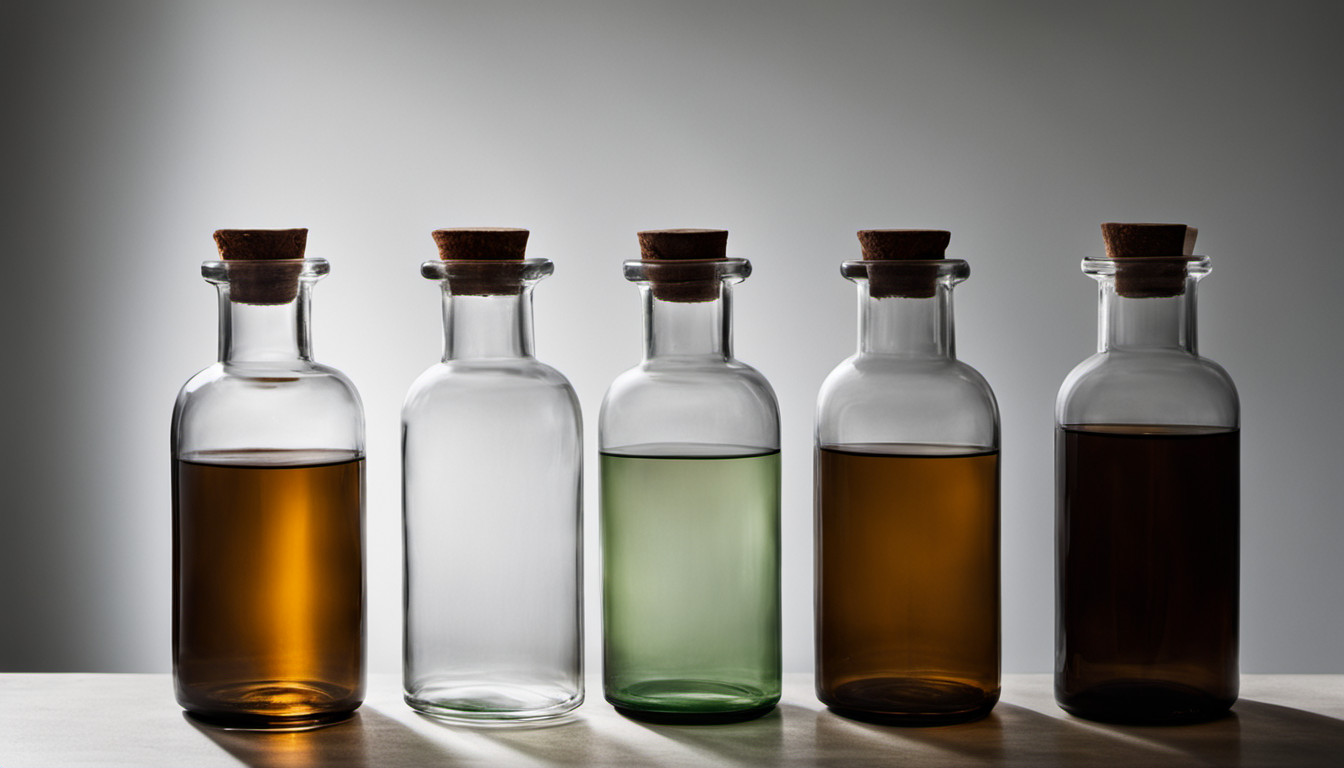
Per-bottle and per-ounce arithmetic
Dividing the case price by twelve gives the number that goes into a cost sheet. The 5 oz case lands at about 50 cents a bottle. The 10 oz case lands at 65 cents. The 8 oz widemouth lands at about 84 cents.
Per fluid ounce the order reverses. At roughly 50 cents for five ounces, the small bottle costs about ten cents an ounce for glass. At 65 cents for ten ounces, the large bottle costs about six and a half cents an ounce. Doubling the fill cut the glass cost per ounce by roughly a third while raising the cost per bottle by about fifteen cents.
That gap is the whole economic case for the larger format, and it is small in absolute terms. Fifteen cents a bottle is not what decides a retail price. What it does decide is how much of a fixed shelf price survives after packaging, and that share grows quickly when the shelf price is low.
The mini bottle shows the other end of the curve. Forty-eight 1.7 oz bottles for $15.55 works out to roughly 32 cents a bottle, which is cheaper per unit than either full-size bottle and dramatically more expensive per ounce of sauce. Minis are a sampling format, and the arithmetic says so without any marketing input.
The neck and overflow set the fill
A five-ounce bottle does not hold five ounces. The Fillmore listing gives the 5 oz woozy an overflow capacity of 5.20 fluid ounces, and the 24-414 neck finish is what the closure threads onto. Fill height, headspace and any orifice reducer all sit inside that overflow figure.
Closures are cheap and not optional. A 24-414 black plastic cap with a foam liner is listed at $0.08 each, or $275.00 for a case of 5,500. The same page carries a warning worth reading before a filler is booked: plastic lids are not suitable for applications that require heat processing. A hot-fill process and a plastic closure are a question for the process authority, not a line item.
A reducer adds a fraction more. National Bottles lists a 24 mm orifice reducer for its 5 oz woozy at $0.15, and sells the same 5 oz bottle with caps at $6.38 a case against $6.20 for bottles alone. The difference between those two case prices is about 18 cents, which is what a dozen caps cost at that supplier.
Added together, a filled 5 oz bottle carries roughly 58 cents of glass and closure before sauce, label or labour. That is the number the batch calculator starts from.
Volume tiers change the case price
Case prices fall in published steps, and the steps are steep enough to matter for a growing brand. The 5 oz case is $5.99 at one case, $5.25 at 72 to 233 cases, $4.99 at 234 to 467, $4.55 at 468 to 1,871, and $3.99 above that.
Ten-ounce cases follow the same shape and land at $6.45 at the top tier. Across the ladder, the 5 oz bottle moves from about 50 cents to about 33 cents, a third off the glass cost without any change to the bottle.
Closures have the same structure with bigger steps. The cap is $0.08 each and $275.00 for a case of 5,500, which is a nickel a cap at that quantity. The difference between eight cents and five cents is small per bottle and meaningful across ten thousand units.
The practical reading is that the tier boundary, not the bottle, is the purchasing decision. Ordering 71 cases pays $5.99 a case; ordering 72 pays $5.25. A brand that plans production in round numbers can land just under a boundary and pay full price for the privilege.
Tier prices also change the comparison between sizes. At list price the 10 oz case costs $1.81 more than the 5 oz case. At the top tiers the gap narrows to $2.46 against a case that holds twice as much sauce, so the larger format gets relatively cheaper as volume rises, not more expensive.
Shelf price per ounce falls faster than cost
Retail prices at the small end are higher per ounce than most makers expect. One brand store lists a 5 fl oz bottle at $8.48, which is about $1.70 a fluid ounce. The same brand sells a 64 fl oz jug at $52.00, about 81 cents a fluid ounce.
That is a 52 percent lower shelf price per ounce at the large size, against a glass cost that fell by only about a third. The retail ladder is steeper than the packaging ladder, which means the larger format gives up more price per ounce than it saves in cost.
A second brand shows the same spread at a single size. TABASCO lists its 5 fl oz original at $7.99 and a 5 fl oz reserve line at $11.99. Identical bottle size, identical closure, a 50 percent price difference carried entirely by the product and the brand.
Multi-packs are the third lever, and they are priced as a small discount. The same 5 fl oz bottle is offered at two for $16.62, against $16.96 at the single-unit price, which is the two percent the page advertises.
Read together, the shelf data says the bottle is a weak pricing lever and a strong cost lever. Size changes what the customer pays per ounce far more than it changes what the maker pays per bottle.
Margin at the small size
Margin work starts by subtracting the parts that are priced. A 5 oz bottle at list is about 50 cents and a cap is 8 cents, so roughly 58 cents of every bottle is glass and closure. Against an $8.48 shelf price that is under seven percent of the retail price.
The remainder, about $7.90, has to cover sauce, label, labour, freight, any distributor margin and the producer's own margin. Sauce is the variable that scales with the recipe, and a label is a per-unit print cost that does not change with fill volume. Labour per bottle falls as batch size rises, which is why the same recipe produces different unit costs at different scales.
At the large end the packaging share is even smaller per ounce, but the 64 fl oz jug sells for less per fluid ounce. A 64 fl oz jug at $52.00 carries about 81 cents of revenue per fluid ounce against roughly $1.70 for the small bottle, so the larger format gives up most of its packaging advantage in the price.
The size with the best margin is therefore not the size with the cheapest packaging. It is the size where the shelf price per ounce holds up while the packaging cost per bottle stays small, and that balance is specific to the brand's channel.
One cost the bottle brings with it is compliance. A plastic closure is not suitable for heat processing, so the closure choice interacts with the fill process rather than sitting beside it.
Choosing a size for a batch
The calculator below takes ingredient cost, bottles per batch, bottle cost, label cost, labour hours and an hourly rate, and returns a cost per bottle. It is the right tool for this decision because size changes three of its inputs at once: the bottle cost, the number of bottles a batch fills, and the labour per bottle.
Run it twice with the same sauce and labour and only the bottle numbers changed. On the published case prices, twelve 5 oz bottles cost $5.99 and twelve 10 oz bottles cost $7.80. A batch that fills 144 five-ounce bottles would fill 72 ten-ounce bottles from the same volume, so the larger format halves the unit count and the labour that goes with it.
Volume tiers then shift the answer again. At the top tier the 5 oz case is $3.99 and the 10 oz case is $6.45, so the per-bottle gap between sizes narrows as the order grows.
What the arithmetic cannot price is shelf space and the customer's use case. A 5.20 fluid ounce overflow bottle suits a tabletop sauce; a 10 oz bottle suits a kitchen that goes through sauce faster. Both fit the same 24-414 cap, which means the closure line does not change when the bottle does.
Set the shelf price from the channel first, then run the batch cost for each size, then pick the size whose margin survives. Starting from the bottle price alone reverses the order and hides the only number that matters.
Case-of-12 glass cost by woozy size
List price per case of 12 clear glass woozy bottles from one supplier on 2026-10-28. The 8 oz line is a 28-400 widemouth mould, not a scaled standard woozy.
| Item | Value | Unit |
|---|---|---|
| 5 oz woozy | 5.99 | USD/case |
| 8 oz widemouth woozy | 10.1 | USD/case |
| 10 oz woozy | 7.8 | USD/case |
Batch cost per bottle
Enter your own batch numbers. The calculator adds ingredients, packaging and labor, then divides by the bottles the batch actually fills. It does not assume a price for you.
Peppers, vinegar, salt, spices, any purchased mash.
Use the count that passed QA, not the theoretical yield.
Delivered cost per bottle, including caps and shrink bands.
Printed label cost per bottle at your order quantity.
Cooking, filling, capping, labeling and cleanup.
Your own wage, including the owner's time.
- Packaging
- $123.60
- Labor
- $132.00
- Batch cost
- $315.60
- Cost per bottle
- $2.63
Excludes fixed costs such as kitchen rent, permits and insurance; add those separately when you price the bottle.
FAQ
Is a 10 oz hot sauce bottle cheaper per ounce than a 5 oz?
Yes, on glass. A case of twelve 5 oz bottles is $5.99 and a case of twelve 10 oz bottles is $7.80, so the larger bottle costs more per unit and less per fluid ounce.
How much does a hot sauce bottle and cap cost?
About 58 cents at list for a 5 oz woozy: roughly 50 cents of glass plus an 8 cent 24-414 cap. The cap drops to a nickel each on a 5,500-cap case.
Do bottle case prices drop with volume?
They do, in published tiers. The 5 oz case falls from $5.99 to $5.25 at 72 cases and reaches $3.99 above 1,871 cases.
Can I use a plastic cap with hot fill?
The closure supplier states that plastic lids are not suitable for applications that require heat processing, so the fill process and the closure have to be settled together.