Shared Kitchen Hours vs Co-Packing Per Bottle
Make your own: hot sauce recipe builder → Choose a pepper, scale a sourced recipe, and print your batch.
Two production models bill in different units, which is why the comparison goes wrong before the numbers do. Shared kitchens sell hours: posted rates in this set run from $7.50 off-peak to $33 per hour for main kitchen access. Co-packers sell runs: Tabañero's standard minimum is 100 cases, and one published case price is $60 for twelve 5 oz bottles. Four things decide which is cheaper for a given batch: the hourly rate, the monthly minimum, the run minimum, and the fees outside both quotes. This article measures each, then puts them into one per-bottle number.
One model bills hours, one bills runs
A shared kitchen sells time. A co-packer sells a finished run. That single difference explains why the two quotes never line up on one line item, and why comparing them takes a conversion rather than a spreadsheet row.
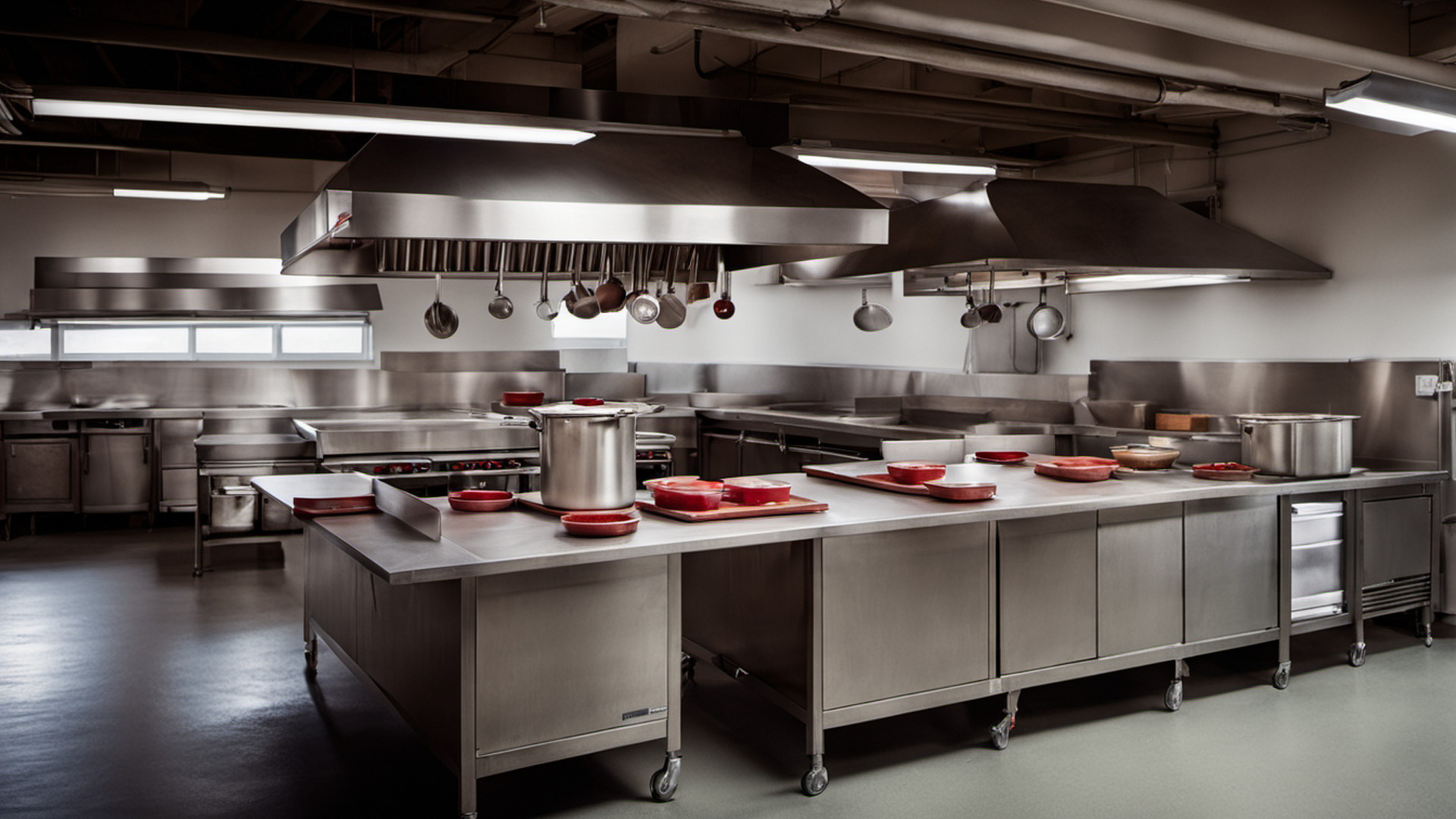
On the kitchen side the unit is an hour. Capital Kitchens posts $29 per hour for prep-only clients and $33 per hour for main kitchen clients. Catapult Lakeland posts $15.00 per hour for 20+ hours, with an off-peak rate of $7.50. A national directory that collects posted rates reports a median of $24.50 per hour across 239 kitchens that publish one.
On the co-packing side the unit is a run. Tabañero states 100 cases as its standard minimum. PepperNutz brews in 100 gallon kettles and says that scenario nets approximately 2,500 bottles of finished product. Sonoma Farm publishes a case price: $60 per case for hot sauce in 5 oz bottles, twelve per case.
Neither number is wrong. They answer different questions: what does an hour of licensed space cost, and what does a finished case cost. A maker who compares them without converting is comparing a rate to a total.
What an hour actually costs
The chart on this page lines up six posted hourly rates. The low end is Catapult Lakeland's off-peak rate of $7.50. The 20+ hour rate on the same sheet is $15.00. Wingman Kitchens lists a $21 per hour overage on its 40-hour plan and states an effective rate of $15.83 per hour at its 120-hour plan. Capital Kitchens sits at the top of this set with $29 for prep-only and $33 for the main kitchen. The national median of $24.50 falls inside that range.
The spread is real and it is not a discount trick. Access rules differ. Catapult defines its off-peak hours, Wingman trades commitment for a lower effective rate, and Capital charges less when you are only using prep space.
The practical reading is that an hourly rate is a starting point, not a price. A $15 hour that requires a 20-hour monthly minimum is a $300 monthly bill. A $33 hour with a 12-hour monthly minimum and a three-month contract is a $396 monthly commitment.
Both of those are published numbers, and neither appears in a per-bottle calculation until you decide how many bottles the month produces.
Minimums turn a rate into a bill
Minimums are where hourly kitchens and per-bottle math collide. Catapult states a $300 monthly minimum for 20 hours of kitchen time and a $65 joining fee per business. Capital Kitchens states a 12-hour monthly minimum and a three-month minimum contract.
Nationally, published booking minimums exist at 177 kitchens, and the most common requirement is four hours, the rule at 52 kitchens. A four-hour block is a real constraint on a sauce maker whose batch takes two hours to cook and an hour to clean up.
Monthly memberships are the other shape. The same directory reports 232 kitchens publishing monthly memberships with a median of $693.75. That is a different product from an hourly booking, and it usually buys access rather than a lower rate.
For planning, convert each minimum into a monthly floor before comparing. A rate times a minimum is the number that leaves your account whether or not you bottled anything that month.
The co-packing side has the same structure in different clothing: a minimum run. Tabañero's 100 cases and PepperNutz's 100 gallon kettle are floors, not targets, and they do not shrink because your first month is slow.
Co-packing prices the run
Co-packing quotes are built on the run, and the published numbers show how wide a run can be. Tabañero sets its standard minimum at 100 cases. PepperNutz brews in 100 gallon kettles and nets approximately 2,500 bottles from that. Sonoma Farm sells hot sauce by the case at $60 per case of twelve 5 oz bottles, with a minimum of one case per flavor.
That last pair is the only published per-bottle path in this group of sources. One case is twelve bottles, so the case price divided by twelve is the unit price, and the minimum order is small enough to test a label. The kettle route is the opposite. Thousands of bottles exist before the plant schedules a second run.
Both routes are custom-labeled product from a licensed plant, and both are priced per run rather than per hour. What changes is who carries the inventory risk. A one-case order puts twelve bottles in your hands. A 100 gallon run puts approximately 2,500 bottles in your storage, paid for before they sell.
Ask each plant what the per-bottle price includes. A quote that excludes labels, freight or storage is not comparable to one that includes them, and the case price above is a stock product, not your recipe.
Fees outside both quotes
Fees sit outside the headline rate on both sides, and they are the part makers forget. Sonoma Farm unlocks free shipping at 100 cases, which tells you shipping is chargeable below that. Catapult charges a $65 joining fee per business. Capital Kitchens requires a three-month contract, which is a fee in the form of commitment.
On the co-packing side, the contract itself is a cost item. NCSU Extension's checklist for choosing a co-packer asks what the critical factors are, such as pH and packing temperatures, and says to require documentation that these have been measured and met. It also notes that you must furnish your own liability insurance to sell your product to stores, and that payment terms are usually 10% down with the remainder on delivery.
Federal filing adds a constraint with a cost shape. Processors must file scheduled processes for each product, product style, container size and type and processing method. A second bottle size is a second filing, so launching one size is the cheaper packaging decision.
None of those lines appear in an hourly rate or a per-case price. They appear on the invoice, and they belong in the comparison before you sign anything.
Where the two paths cross
The two paths cross at different volumes, and the crossing point is arithmetic rather than opinion. A shared kitchen makes sense while your monthly hours are low and your output is small. You pay for the hours you use, and you keep the recipe and the process filings in your own name.
A co-packer makes sense when a run is big enough to absorb the minimum. A 100 gallon kettle producing approximately 2,500 bottles is not a farmers-market batch. Tabañero's 100 case minimum is a store-order quantity, not a Saturday morning.
The middle ground is stock private label. Sonoma's one-case minimum at $60 per case is small enough to test a price, a label and a channel before committing to a custom run.
What does not work is splitting the difference without measuring it: renting hours at $33 to produce a few hundred bottles while also paying a co-packer's minimum. Pick the model that matches the volume you can sell, then build the per-bottle number for that model. The rate tables tell you what the hour costs; the minimums tell you how many hours or bottles you are actually buying.
Build the per-bottle number
BatchCostPerBottle is the tool for that last step, and it is the only calculator on this page. It takes ingredient cost, bottles per batch, bottle cost, label cost, labor hours and an hourly labor rate, and returns packaging cost, labor cost, batch cost and cost per bottle.
The labor rate is where a shared kitchen enters the math. If you pay $33 per hour for main kitchen time and book a four-hour block, the labor line is four hours at that rate before any ingredient is opened. If you book the $7.50 off-peak rate instead, the same four hours cost less than a quarter as much.
The tool does not include rent minimums, joining fees, insurance, filing fees or freight. Those belong in your overhead, not in the per-bottle number. Mixing them in is how a maker ends up with a cost per bottle that changes every month and a price that cannot be explained to a buyer.
Run the number once for the shared-kitchen plan and once for a co-packed case at $60 for twelve bottles. Compare both results against the price your buyer will pay, and let the arithmetic pick the model. If the shared-kitchen number only works at a volume your hours cannot produce, the answer is not a better spreadsheet. It is a different model.
Posted hourly rates at three kitchens
Per-hour rates as posted by each kitchen, plus a national median from kitchens that publish a rate. Access tiers and minimums are not like-for-like.
| Item | Value | Unit |
|---|---|---|
| Catapult Lakeland off-peak | 7.5 | hour |
| Catapult Lakeland 20+ hours | 15 | hour |
| Wingman 40-hour overage | 21 | hour |
| National median, all kitchens | 24.5 | hour |
| Capital Kitchens prep only | 29 | hour |
| Capital Kitchens main kitchen | 33 | hour |
Batch cost per bottle
Enter your own batch numbers. The calculator adds ingredients, packaging and labor, then divides by the bottles the batch actually fills. It does not assume a price for you.
Peppers, vinegar, salt, spices, any purchased mash.
Use the count that passed QA, not the theoretical yield.
Delivered cost per bottle, including caps and shrink bands.
Printed label cost per bottle at your order quantity.
Cooking, filling, capping, labeling and cleanup.
Your own wage, including the owner's time.
- Packaging
- $123.60
- Labor
- $132.00
- Batch cost
- $315.60
- Cost per bottle
- $2.63
Excludes fixed costs such as kitchen rent, permits and insurance; add those separately when you price the bottle.
FAQ
Is a shared kitchen or a co-packer cheaper for a first batch?
It depends on volume. Catapult Lakeland's 20-hour minimum is a $300 monthly bill, while co-packed hot sauce is published at $60 per case of twelve bottles with a one-case minimum.
How much does shared kitchen time cost per hour?
Posted rates in this set run from $7.50 off-peak and $15.00 at 20+ hours to $29 for prep-only and $33 for main kitchen time, against a national median of $24.50 per hour.
What does a co-packer minimum look like?
Tabañero states 100 cases as its standard minimum, and PepperNutz brews in 100 gallon kettles that net approximately 2,500 bottles.