Why Stored Hot Sauce Browns and Fades, and What Slows It
Make your own: hot sauce recipe builder → Choose a pepper, scale a sourced recipe, and print your batch.
Color in a bottle of sauce fails in three separate ways, and one of them is about heat. An enzyme can darken the peppers before they ever reach the pot. Oxygen can darken the finished sauce after the cap goes on, through a reaction extension guidance describes as non-enzymatic oxidation of phenolic compounds with air. Heat itself is the third: enough of it stops the enzyme, too much of it costs color. The dose is measured in minutes and it changes with piece size, from 2 minutes for pepper strips to 3 for halves. This article separates the three failures and the three levers that answer them.
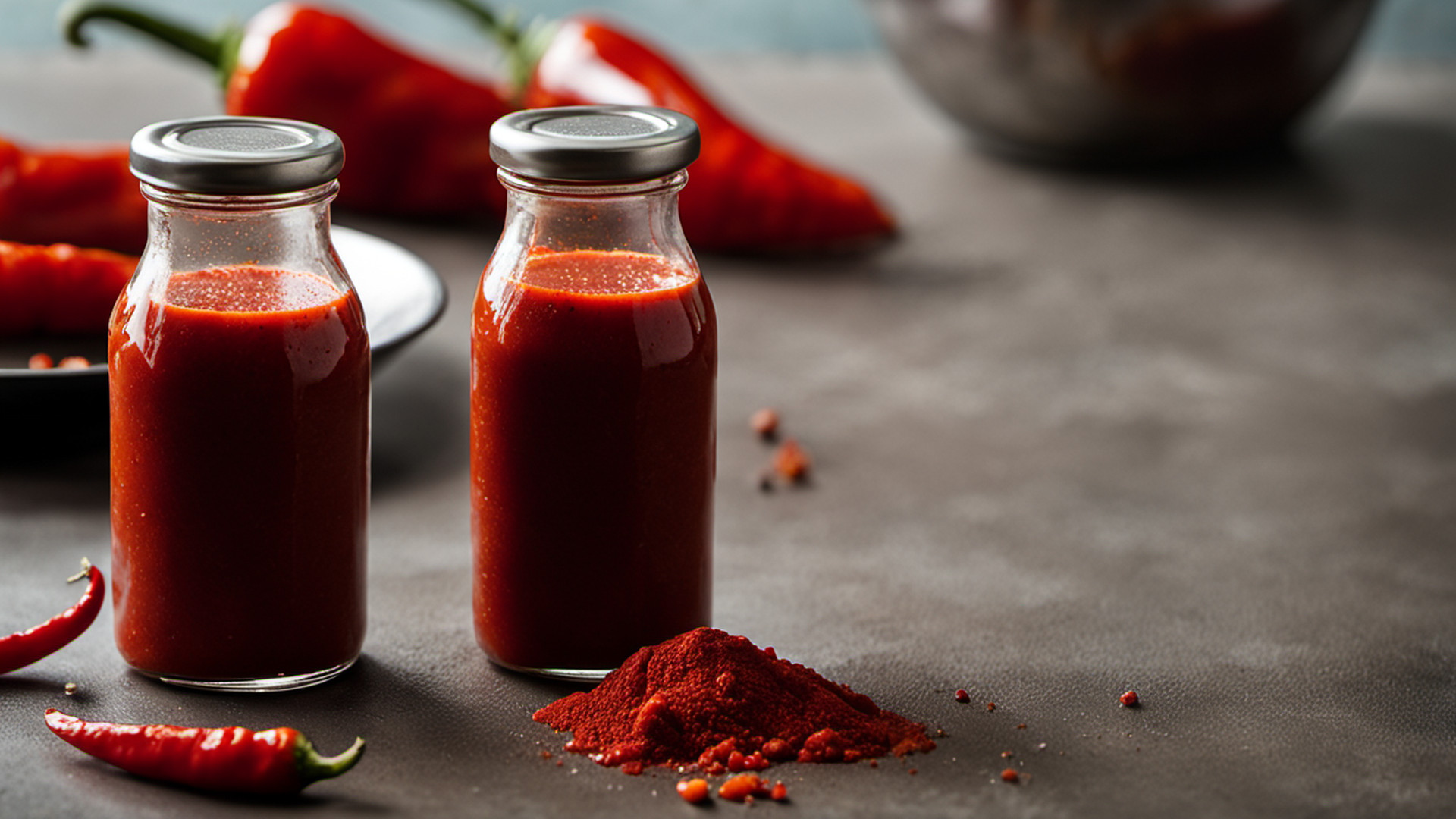
Two darkening pathways need different fixes
Extension guidance on canned corn lays out the distinction cleanly, and it transfers to any pepper product. There are two ways for the food to darken: the enzyme polyphenoloxidase acting before the corn is blanched and processed, or non-enzymatic oxidation reactions involving phenolic compounds with air, which form dark pigments after processing.
The first pathway is a process problem. The enzyme is present in the raw tissue and it acts while the tissue is still raw, so the answer is a heat step early enough to stop it. The second pathway is a storage problem. It runs after processing, sometimes weeks after, and a heat step at the start of the line does nothing to prevent it.
That is why a sauce can come off the line bright and arrive brown. The two failures are sequential, not alternatives: an under-heated batch enters storage with both pathways still available, while a properly heated batch enters with one. Extension guidance names the mechanism behind the second pathway as metal ions that catalyze the reaction, normally present in the tissue or in the processing water.
For a maker the diagnostic question is timing. If the color is gone within days of cooking, the enzyme step is the suspect. If it holds for a month and then fades, the oxidative pathway after packing is the one to look at.
Heat stops the enzyme in a measured dose
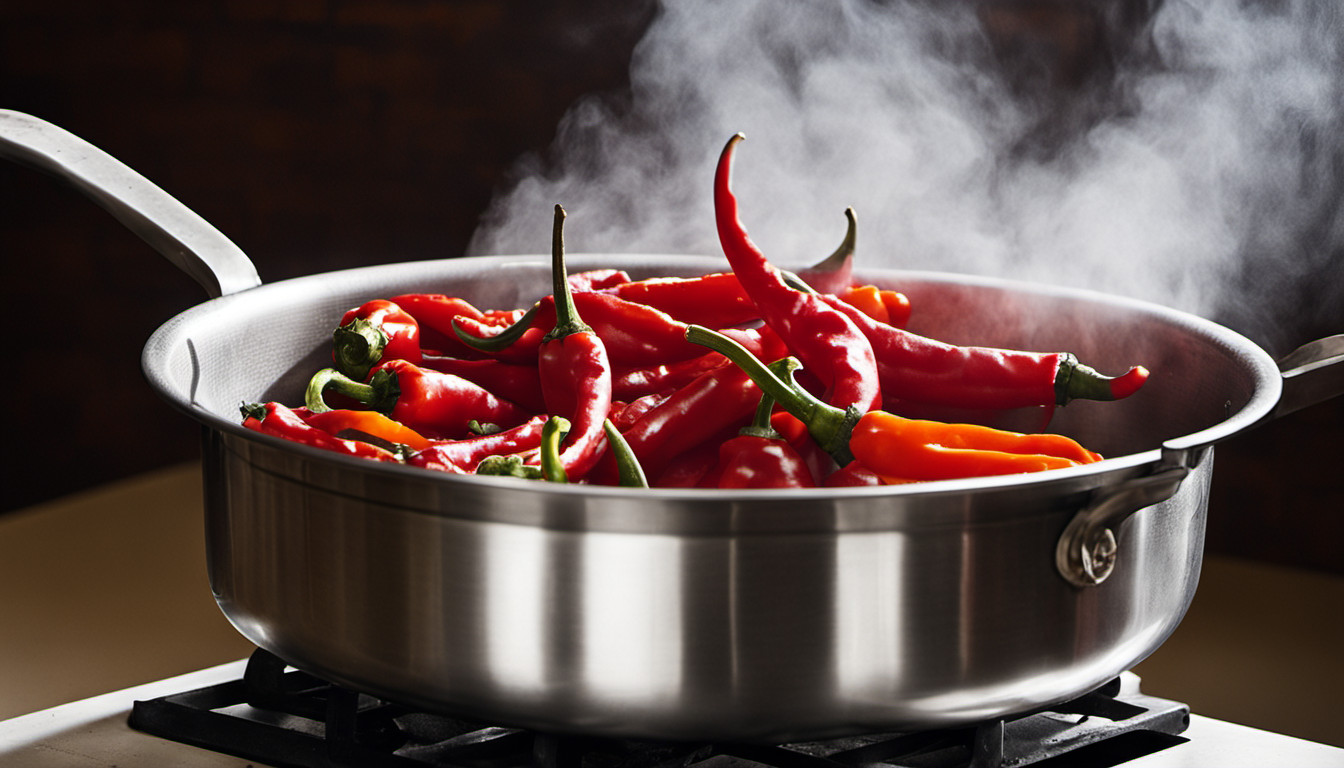
Blanching is the standard heat step: scalding the vegetable in boiling water or steam for a short time, described by the National Center for Home Food Preservation as a must for almost all vegetables to be frozen because it stops enzyme actions that cause loss of flavor, color and texture. The same step is what makes a pepper keep its color through later processing.
It is a dose, not a switch, and the guidance is unusually blunt about both failure directions. Blanching time is crucial and varies with the vegetable and size; underblanching stimulates the activity of enzymes and is worse than no blanching at all, while overblanching causes loss of flavor, color, vitamins and minerals. Too little heat leaves the enzyme more active than it started. Too much heat buys enzyme control with pigment.
Method matters as much as time. Microwave blanching may not be effective, since research shows that some enzymes may not be inactivated, and the result can be off-flavors with loss of texture and color. A maker who moves from a boiling-water blanch to a microwave to save time is changing the dose in a way the guidance warns against.
Used correctly, the same heat step does two jobs. It stops the enzyme and it brightens color, while slowing the loss of vitamins. The brightening is the visible sign that the enzyme load has dropped, which makes it a crude but free check on whether the step worked before the sauce is packed.
Piece size sets the minutes
Recommended blanching times move with the size of the piece, because heat has to travel to the centre. Sweet pepper strips or rings take 2 minutes. Sweet pepper halves take 3. Nothing else in the recipe changed; only the geometry did.
The same ladder shows up across vegetables in the published table. A small asparagus stalk takes 2 minutes, a medium stalk 3 and a large stalk 4. Small lima, butter or pinto beans take 2 minutes, medium 3 and large 4. Three sizes, three steps, one minute apart each time.
The practical consequence for a sauce maker is that a recipe written for strips cannot be transferred to whole or halved pods by feel. Cut size is a process parameter: change the cut and the heat dose has to change with it, or the batch lands on the wrong side of the underblanch and overblanch failures.
It also explains a common inconsistency between batches. A supplier who ships a different pepper size, or a cook who quarters instead of halves, has changed the dose without changing the clock. The times in the table are per vegetable and per size for that reason, not a single number for peppers.
Antioxidants buy time rather than immunity
The oxidative pathway has its own countermeasure, and extension guidance describes how it works. The non-enzyme darkening reaction can be inhibited by adding substances that are antioxidants, such as vitamin C, which bind the metals so they cannot participate in the reaction, together with a metal binder such as citric acid.
The regulatory definition matches the mechanism. Antioxidants are substances used to preserve food by retarding deterioration, rancidity or discoloration due to oxidation. That is a claim about slowing a reaction, not preventing it, and the wording matters when writing a label or a spec sheet.
The ingredients themselves are ordinary. Ascorbic acid is generally recognized as safe when used in accordance with good manufacturing practice, and erythorbic acid, its cheaper stereoisomer, carries the same GRAS status at good manufacturing practice. Neither has a numeric ceiling in that regulation, which puts the whole limit on the maker's judgment.
Judgement is where the extension guidance gets specific: use only the minimal amount needed to prevent discoloration, since it might affect the taste of the final product. An antioxidant dosed to the point of flavor change has solved the appearance problem by creating a worse one, and a sauce that tastes of ascorbic acid reads as a defect long before the color fails.
Added pigment is a regulated color
The other route to a stable color is to add one, and in the United States that ingredient is a color additive with its own regulation. Colors and coloring adjuncts are defined as substances used to impart, preserve or enhance the color or shading of a food, and the class explicitly includes color stabilizers, color fixatives and color-retention agents. Retaining color is therefore a named technical effect, not a workaround.
Paprika is the obvious candidate for a red sauce and it is defined precisely. As a color additive it is the ground dried pod of mild capsicum, Capsicum annuum. It may be used for coloring foods generally in amounts consistent with good manufacturing practice, and it is exempt from batch certification because certification is not necessary for the protection of public health.
The concentrated form behaves differently from the powder. Paprika oleoresin is the combination of flavor and color principles obtained from paprika by extraction, so a dose large enough to move the color also moves the flavor. A maker choosing between powder and oleoresin is choosing how much flavor comes with the color, not just how strong the red is.
Both routes also have a labelling consequence, because an added color is an ingredient that has to be declared. Because color-retention agents and color fixatives are a named class in the regulation, adding one to fix fading is a formulation decision with a label attached to it.
What a sealed bottle still loses
Heat and antioxidant both act at the front of the process. What remains is the storage window, and the mechanism there is the one that runs after processing: non-enzymatic oxidation of phenolic compounds with air forming dark pigments, often especially after the lid is removed. A sealed bottle slows that reaction by limiting air; it does not stop the chemistry.
The ingredient list is not the protection it looks like. Vinegar is excluded from the definition of a chemical preservative, along with common salt, sugars, spices and oils extracted from spices. Vinegar lowers pH and does real work in a sauce, but under the labelling rules it does not count as a preservative, and it is not doing the antioxidant job that fading requires.
The realistic plan is to measure the failure instead of assuming it. Hold a filled bottle from each batch, keep it at room temperature, and check color beside a retained reference sample at fixed intervals. That turns a vague complaint into a trend, and it tells you whether the answer is more heat at the front, an antioxidant dose, an added color, or simply a shorter stated shelf life.
Keep the three levers distinct when adjusting, because they interact. More heat reduces enzyme activity and costs color; more antioxidant slows oxidation and risks the taste; more color fixes appearance and changes the label. Change one at a time and the retained samples will tell you which lever was actually doing the work.
Blanching minutes rise with piece size
Recommended blanching times from the National Center for Home Preservation table, in minutes. All six are the same procedure at the same temperature; only the vegetable and the cut change.
| Item | Value | Unit |
|---|---|---|
| Pepper strips or rings | 2 | minutes |
| Pepper halves | 3 | minutes |
| Asparagus, small stalk | 2 | minutes |
| Asparagus, medium stalk | 3 | minutes |
| Asparagus, large stalk | 4 | minutes |
| Lima beans, small | 2 | minutes |
| Lima beans, medium | 3 | minutes |
| Lima beans, large | 4 | minutes |
Recipe percentages to grams
Enter the batch mass and each ingredient's share. The calculator converts the percentages into grams so a tested ratio can be reproduced at a different batch size.
| Ingredient | Percent | Grams | Remove |
|---|---|---|---|
| 1,100 g | |||
| 500 g | |||
| 240 g | |||
| 60 g |
Total: 95.0% of the batch
Percentages are by weight. A tested recipe still needs its own pH and process checks; this tool only does the arithmetic.
FAQ
Why does my hot sauce turn brown in the bottle?
Two reactions do it. A polyphenoloxidase enzyme can darken the peppers before they are heated, and non-enzymatic oxidation of phenolic compounds with air forms dark pigments after processing. The first is fixed with a heat step, the second with antioxidant and packaging.
How long should peppers be blanched for hot sauce?
It depends on the cut. Sweet pepper strips or rings take 2 minutes and halves take 3. Underblanching stimulates enzyme activity and is worse than no blanching, while overblanching costs color.
Does vitamin C stop hot sauce from fading?
It slows the oxidative pathway. Extension guidance says antioxidants such as vitamin C inhibit the non-enzyme darkening reaction, with citric acid binding the metal ions that catalyze it. Use the minimal amount, because it can affect the taste.
Is paprika a color additive on a hot sauce label?
Yes. Paprika is defined as a color additive, the ground dried pod of Capsicum annuum, usable for coloring foods generally at good manufacturing practice. Coloring adjuncts including color-retention agents are a named class in the ingredient regulations.
Does vinegar protect hot sauce color?
Not in the regulatory sense. Vinegar is excluded from the definition of a chemical preservative along with salt, sugars, spices and spice oils. It acidifies the sauce; it is not an antioxidant, and oxidative discoloration is the fading mechanism.