Choosing a Cap and Liner for a Hot Sauce Bottle
Make your own: hot sauce recipe builder → Choose a pepper, scale a sourced recipe, and print your batch.
A closure is three decisions stacked: the neck finish that has to match the bottle, the material that sets the price, and the liner that actually seals the sauce. The 5 oz woozy carries a 24-490 neck finish, while the plastic caps sold alongside it are 24-414, which is enough to show that 24 mm is a family rather than a size. Getting the finish wrong is a leak; getting the liner wrong is a complaint six weeks later.
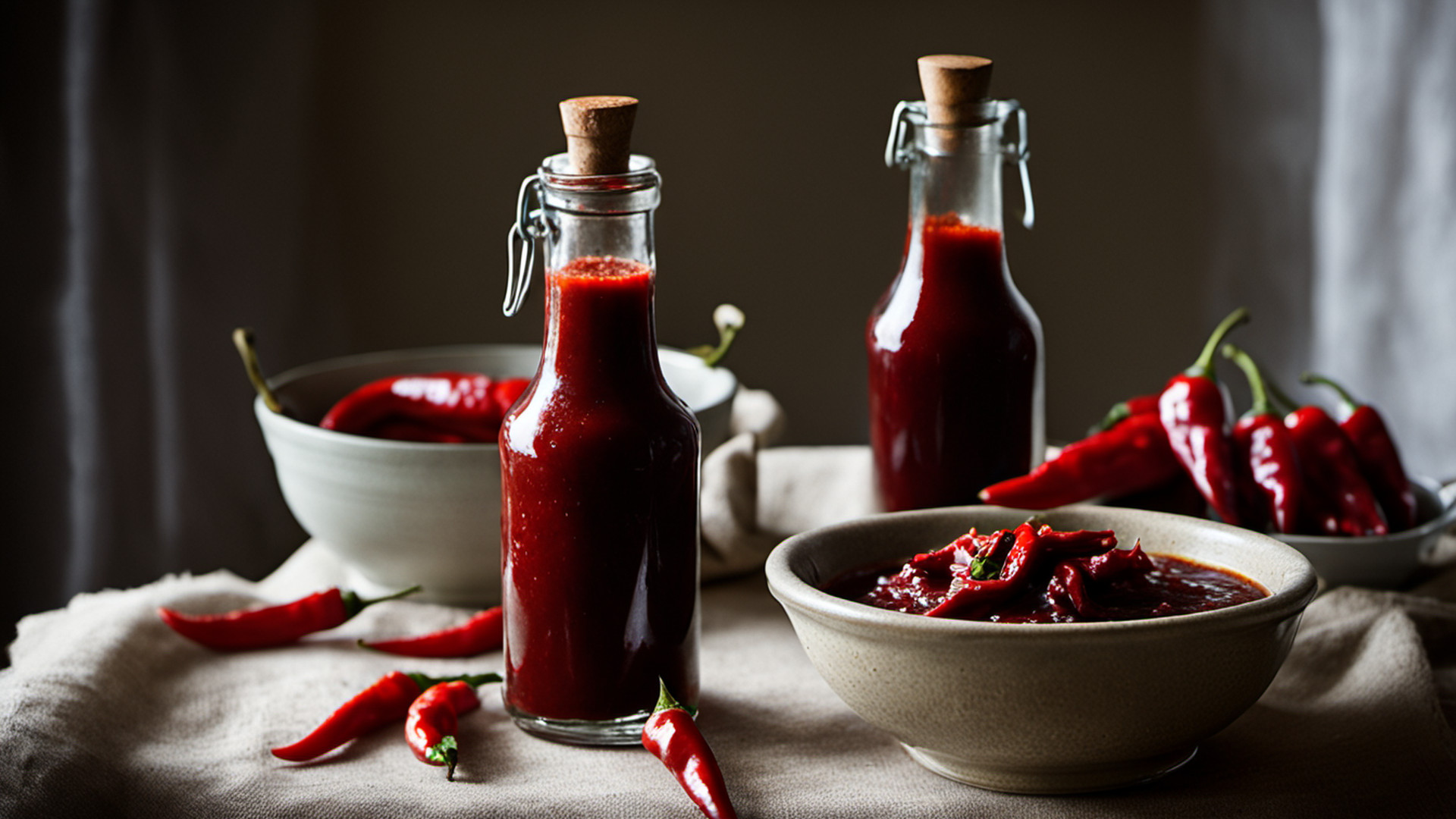

Match the neck finish first
Neck finish is the threaded opening, described by a diameter and a thread profile. Two closures can both be called 24 mm and still not interchange, because the second number describes the thread rather than the width.
The bottle in this example is specified with a 24-490 finish. The plastic caps listed with it are 24-414. Those designations are not decorative: a closure that threads onto one finish may not seal on the other, and a closure that half-threads will leak under the pressure of a shipping case.
The practical rule is to buy the bottle and the closure as a pair from the same specification. Ask for the finish code on the bottle drawing, then confirm the closure is made for that code, in writing. A supplier's recommendation list is a convenience, not a guarantee.
Test before ordering volume. Fill three bottles, cap them to your target torque, lay them on their sides for a day and check for seepage at the liner. That test costs fifteen minutes and a paper towel, and it catches the mismatch before it becomes 1,000 bottles of the wrong cap.

Two plastic closures, two prices
The two common closures for a sauce bottle price very differently, and the gap holds at every quantity break.
A black ribbed plastic cap with a foam liner runs $0.163 each for a single unit, $0.128 at 1,000, $0.114 at 4,000 and $0.102 at 12,000. A black phenolic cap with a polycone insert runs $0.342 for one, $0.317 at 2,200, $0.288 at 11,000 and $0.259 at 22,000.
At single-unit pricing the phenolic cap costs more than twice the plastic one. At volume the ratio narrows but does not close: $0.102 against $0.259 is still two and a half times the price. On a 1,024-bottle run that difference is roughly $160, which is real money for a first batch and small against the cost of a leak.
The choice is not about price alone. Phenolic closures are rigid and resist heat and chemicals, which is why they appear on aggressive products. Plastic is lighter, cheaper and adequate for a sauce with a good liner. Pick the material that matches the product, then negotiate the quantity.

The liner does the sealing
The closure body holds the cap on; the liner keeps the sauce in. Liner choice is the part most makers skip, and it is where leaks originate.
An F217 liner is a low density foam core between two solid polyethylene layers, and it provides good chemical resistance while limiting moisture transmission. It is a common default for food and beverage because it seals against a glass rim without reacting to a moderately acidic product.
A polycone insert takes a different approach. It is a phenolic cap with a low density polyethylene cone that presses into the inner diameter of the neck, sealing the bore rather than the rim. That makes it useful for aggressive products where a flat liner would be attacked, and it is the reason the phenolic closure carries a higher price.
Plastisol is the third familiar option. Warm plastisol molds to the rim of the container and, once cooled, forms a gasket-like seal, which is why it appears on vacuum-sealed products. It is not the right choice for a process that subjects the closure to sustained high heat, and it requires a filling line that can handle the temperature.
Match the liner to the sauce, not to the cap color.

Torque is a written specification
A cap that is tight enough to seal and loose enough to open is a specification, not a feel. The published range for hand-applied torque on lined polypropylene closures gives a 24 mm closure 10 to 18 in-lbs.
Immediate removal torque runs about 40 to 60 percent of the application torque, which tells you what a customer experiences on the first twist. A cap applied at the top of the range will be harder to open than one at the bottom, and a cap applied below the range may not have compressed the liner enough to seal.
Hand filling and machine capping produce different results. A hand-applied cap varies with the person and the day, which is tolerable on small runs and unacceptable on a wholesale order where every bottle is expected to open the same way. A torque tester costs less than a recall, and a capping machine can be set to a number rather than a habit.
Write the target torque on the batch record and check a sample at the start and end of the run. If a customer complains that a cap was glued shut or leaked in transit, that record is the difference between a fix and a guess.
Buy caps separately and plan volume
Caps and closures are sold separately from the bottle, so the closure line is a separate purchase with its own minimums and its own price ladder.
That is mostly good news for a maker who wants a colored cap or a specific liner, because the choice is not locked to the bottle order. It also means two inventories to manage, two lead times and two chances to run short at the wrong moment.
Small components deserve their own line on the batch sheet. A 24 mm orifice reducer costs $0.15 and controls how the sauce pours; without one, a thin sauce floods the plate and a thick one will not come out. At a dollar-fifty per ten bottles, the reducer is a cheap fix for the most common customer complaint about a new sauce.
Plan the cap quantity to the bottle quantity, rounded up. A run of 1,024 bottles needs 1,024 caps plus spares for capping failures and samples, and the price break at 1,000 means ordering 1,100 often costs less than ordering 1,024 twice. Add the spares to the first order rather than paying a second shipping charge later.
Closure components at single-unit pricing
One of each, before quantity breaks. Volume pricing narrows the gap between plastic and phenolic but does not close it.
| Item | Value | Unit |
|---|---|---|
| Ribbed plastic cap | 0.163 | $ |
| Phenolic polycone cap | 0.342 | $ |
| Orifice reducer | 0.15 | $ |
FAQ
Does a 24 mm cap fit every 24 mm bottle?
No. The woozy bottle is specified with a 24-490 neck finish while the plastic caps listed beside it are 24-414. The second number describes the thread profile, so confirm the closure is made for the bottle's finish code before ordering quantity.
How much cheaper is a plastic cap than a phenolic one?
At single-unit pricing a ribbed plastic cap is $0.163 against $0.342 for a phenolic polycone cap. At volume the plastic cap falls to $0.102 at 12,000 units while the phenolic falls to $0.259 at 22,000, so the ratio stays above two to one.
Which liner should a hot sauce use?
An F217 liner, a foam core between polyethylene layers, is the common default for a moderately acidic product. A polycone insert seals the inside of the neck and suits aggressive products, and plastisol forms a gasket-like seal when warm. Match the liner to the sauce rather than to the cap.
How tight should the cap go on?
The published range for hand-applied torque on a 24 mm lined polypropylene closure is 10 to 18 in-lbs. Immediate removal torque is about 40 to 60 percent of that, which is what a customer feels on the first twist. Record the target and check a sample during the run.