What Goes in a Hot Sauce Press Kit and What It Costs
Make your own: hot sauce recipe builder → Choose a pepper, scale a sourced recipe, and print your batch.
A press kit is a folder of assets and a decision about distribution. The assets are few: product photographs, a logo, a short bio and a fact sheet. The distribution decision has a published price list, from $149 for a single release down to $66.60 per release in a fifteen-release package, and each tier caps what the kit can carry, with one embedded image on the entry package and a 700-word limit.
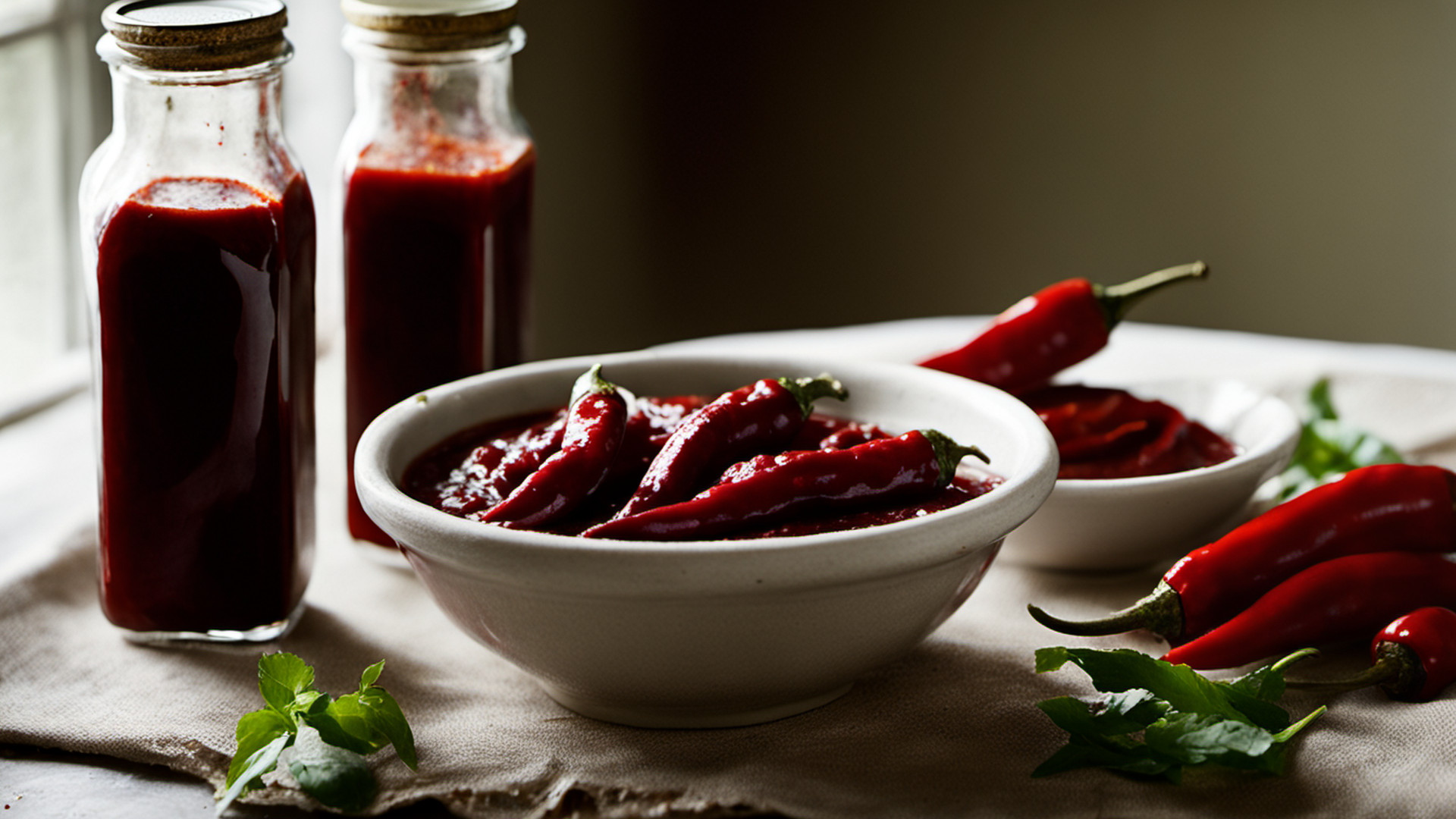

The kit is five files
A usable press kit for a hot sauce brand contains product photographs, a logo in two formats, a founder biography of a paragraph or two, a fact sheet with the product specifications, and a contact that a journalist can reach the same day.
The photographs are the constraint. Distribution packages cap how many images travel with a release: one embedded image on the entry package, three on the middle one and five on the top one. A kit with six photographs is a kit that has to be edited before it can be sent anywhere.
Shoot the set with the package limits in mind. One hero shot of the bottle, one of the sauce on food, and one of the production space covers the three-image tier and leaves room for a founder portrait on the five-image tier.
The fact sheet is the file that saves a journalist time: product name, bottle size, pepper base, heat level with a published figure behind it, and where it is sold. Keep it as text in the kit rather than as an image, because text can be pasted and images cannot.
The logo belongs in a vector format and a transparent raster, nothing more. A folder of twenty logo variants is a folder nobody opens.
Name the files so a stranger can use them without asking: bottle-hero, sauce-on-food, production-space, founder-portrait. A folder of camera defaults costs the recipient a rename and costs the brand the pickup.

Write to the word limit
The distribution package decides the length of what can be sent. EIN Presswire publishes word limits of 700, 1,000 and 2,500 across its three tiers, and it caps keyword anchor text links at 3 per release on every tier.
Seven hundred words is a workable release and an impossible brand history. The structure that fits: what is new, why it exists, three supporting facts, one quotation from the founder, and a boilerplate paragraph that never changes.
The three anchor links are the part worth planning. One should point at the product page, one at the press kit itself, and one at a page that supports the claim in the headline. Spending them on the homepage, the Instagram profile and a generic about page wastes the only links the release carries.
Write the release before choosing the package, then price the package that fits the draft. Choosing the package first produces a release written to a constraint nobody needed.

Distribution has a published price list
The price of sending a release is public at both major low-cost wires. EIN Presswire lists $149 for a single news release, $499 for five and $83.17 per release inside that five-pack, with a fifteen-release package at $999 or $66.60 per release.
Newswire prices higher on its entry tier: $399 per release on Starter, $659 on Basic and $965 on Feature. Its state-level distribution is $599 per release and includes unlimited words and images, which is the one line where the length and image caps disappear.
Those two lists describe different products. The cheap wire is priced for volume, with a fixed word and image ceiling; the state distribution is priced for a specific geography with no content caps.
For a sauce brand with one story to tell, the arithmetic is simple. A $149 release and a $66.60 release inside a package are the same document with different commitments, and the commitment is what the price reflects rather than the reach.
Pay for the tier whose limits match the assets already made. A brand with three photographs and a nine-hundred-word draft is buying the middle tier, and paying for the top tier buys a capacity it does not have files to fill.

Reach is a number, coverage is not
Both wires publish a reach figure and neither publishes a pickup guarantee. Newswire estimates 6-10 million monthly readers on its Starter tier. EIN Presswire reports 501,800 press releases posted in the last 365 days, which works out to roughly 1,375 releases a day across the service.
The second number is the useful one. A wire that carries 1,375 releases a day is a river, and a sauce brand's release is one drop in it. Reach describes the audience the river passes; it says nothing about who stops.
The practical response is to stop measuring the wire and start measuring the response: referral visits in the week after the send, emails that cite the release, and any pickup that links to the product page. Those are countable, and they are the only evidence that the $149 bought something.
A release is also not the only asset in the kit. The photography, the fact sheet and the boilerplate keep working in every pitch email sent afterwards, which is where most small brands get their actual coverage.
Put the referral number in the same file as the cost. A $149 release that produces forty visits is a test with a result; the same release with no measurement is a receipt.
What the kit is worth to a journalist
The case for a kit rests on the recipient's time. A writer covering food products needs a photograph they can publish, a specification they can quote and a contact who answers. A kit that supplies all three in one folder gets used; a link to a homepage gets ignored.
That is also why the kit should be a page on the brand's own site. A folder that lives at a stable URL can be linked from a release, an email signature and a trade show badge scan, and it can be updated without resending anything. The three anchor links a release carries are enough to point at it twice.
Newswire's own marketing cites 83% of consumers trusting earned media over ads. That figure is an argument about the value of coverage, not about the cost of getting it, and the two should be kept apart when deciding a budget.
The kit costs a photography session and an afternoon of writing. The distribution costs between $66.60 and $965 per release. Only one of those is worth doing badly.
Published price per press release
Per-release prices at two low-cost wires. Package size and content limits differ by tier.
| Item | Value | Unit |
|---|---|---|
| EIN fifteen-release package | 66.6 | $ |
| EIN single release | 149 | $ |
| Newswire Starter | 399 | $ |
| Newswire Basic | 659 | $ |
| Newswire Feature | 965 | $ |
FAQ
What should a hot sauce press kit contain?
Product photographs, a logo in vector and raster, a founder bio, a text fact sheet and a reachable contact. Keep the photographs to five or fewer, because the top distribution tier carries five embedded images and the entry tier carries one.
How much does it cost to distribute a press release?
EIN Presswire lists $149 for a single release, $499 for five and $66.60 per release in a fifteen-release package. Newswire lists $399, $659 and $965 per release across its three tiers.
How long should the release be?
It depends on the package. EIN Presswire publishes word limits of 700, 1,000 and 2,500 across its tiers, so the entry tier holds a seven-hundred-word release and no more. Every tier includes 3 keyword anchor text links.
Does a press release guarantee coverage?
No. Newswire estimates 6-10 million monthly readers on its Starter tier, while EIN Presswire reports 501,800 releases posted in 365 days, about 1,375 a day. Track referral visits and pickups instead of reach.