Choosing Pepper Varieties for Hot Sauce by Heat, Yield and Flavor
Make your own: hot sauce recipe builder → Choose a pepper, scale a sourced recipe, and print your batch.
Variety choice fixes three numbers a sauce recipe inherits before any cooking starts: heat per pound, pounds of pods harvested per acre, and how much of each pod survives cleaning and drying. Published ranges put a jalapeno at 3,000 to 8,000 SHU and a habanero at 150,000 to 350,000. Single-site New Mexico State University trials harvested 24,000 pounds of green jalapenos per acre against 6,872 pounds of habanero-type fruit. The distance between those two figures decides whether a recipe needs one pepper type or a blend, and the dilution calculator below shows what blending does to finished heat.
Published heat ranges disagree across sources
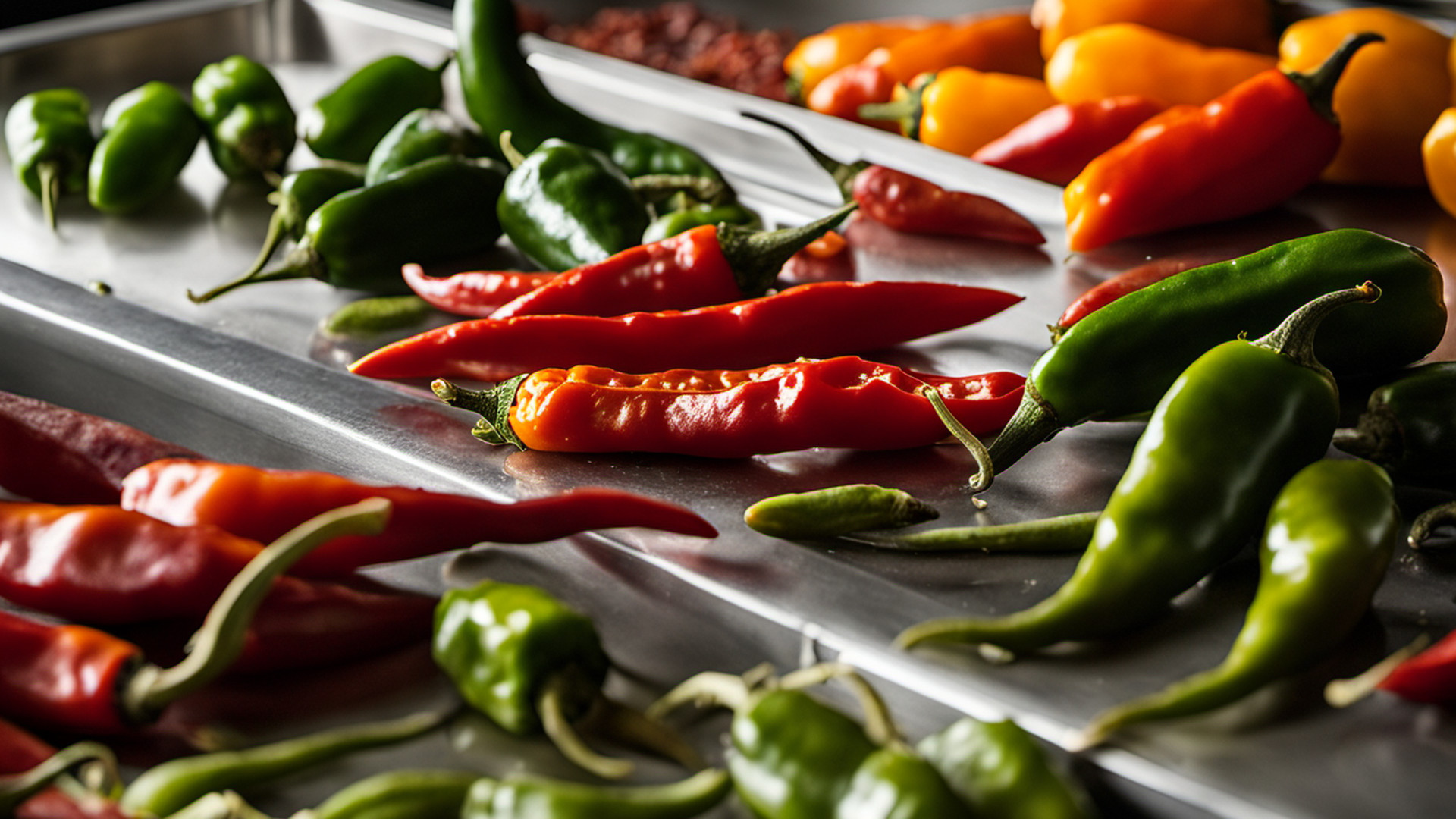
The table most buyers start with is a range, not a single figure. Cornell's extension table puts a sweet bell at 0 units and a jalapeno at 3,000 to 8,000. The same table climbs through serrano at 10,000 to 25,000, cayenne at 30,000 to 50,000, Thai chiles at 50,000 to 100,000 and habanero at 150,000 to 350,000. Ghost chiles sit at 850,000 to 1,000,000.
Two extension publications disagree slightly on the same pepper. Florida's IFAS list gives jalapeño at 2,000 to 8,000 SHU, while Clemson gives 2,500 to 8,000 SHU. One Florida entry is a single measured figure rather than a range, Bhut Jolokia at 1,041,427 SHU. New Mexico State's institute draws its super hot line at one million SHU.
Ranges come from measurement, and the method sets how tight a range can be. HPLC is the most accurate method for heat. The older Scoville tasting test stays subjective and depends on the taster's palate. NMSU's breeding program has run more than 5,000 samples through HPLC, so its published values are averages with a stated method behind them.
For a sauce recipe, read the width of the band. A variety quoted across 3,000 to 8,000 can land at either end depending on the lot you buy, so a recipe that needs a fixed heat level has to measure the mash rather than trust the label.
Averages shift with stress and season
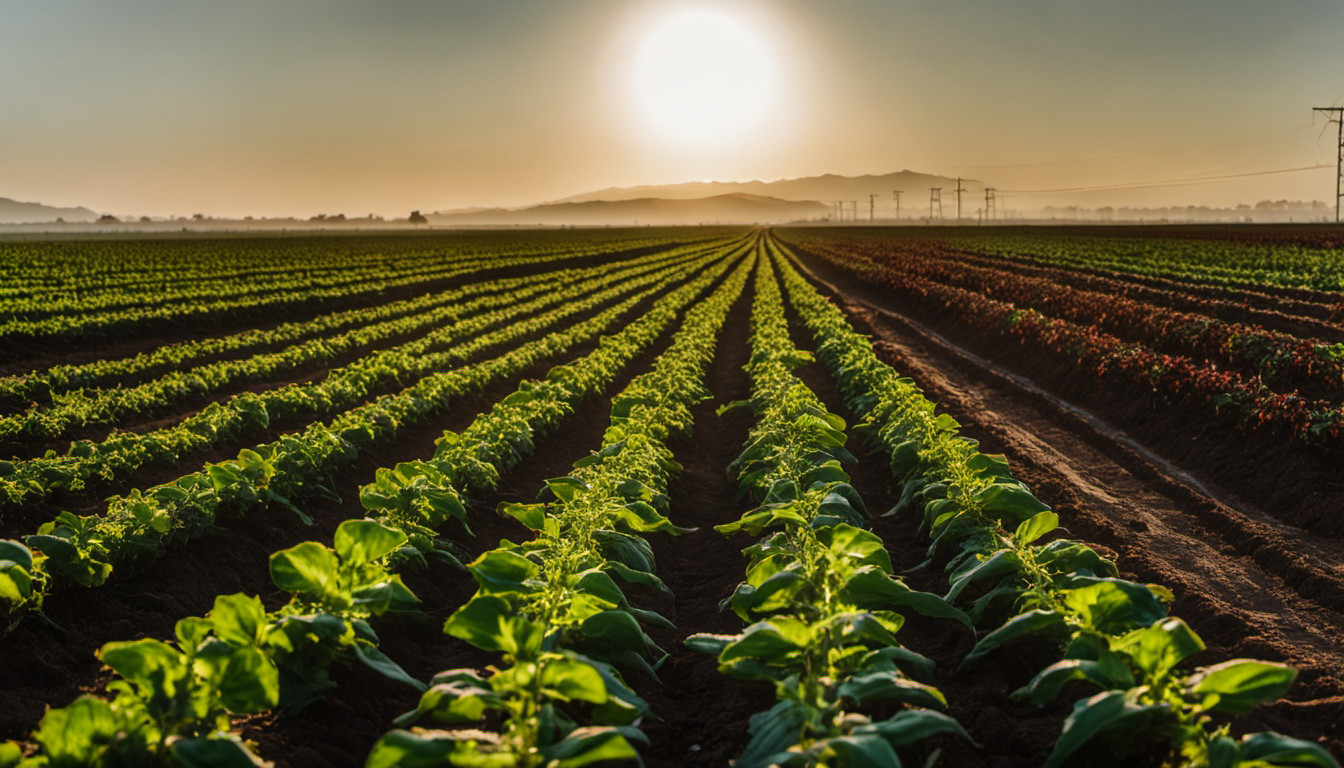
Two fields of the same cultivar can test at different heat. Temperature and water influence the heat level. A mild cultivar bred for low heat becomes hotter when exposed to any stress in the field. The converse is stated on the same page: a relatively hot cultivar given optimal conditions becomes only moderately hot.
NMSU applies the same caution to its own table, where the heat levels listed are averages that can vary by year and growing location. Genetics, weather, growing conditions and fruit age all move capsaicinoid content. A buyer comparing two lots of one variety is comparing two environments as much as two cultivars.
Where capsaicin sits inside the pod matters for processing. Capsaicin occurs in the fruit and not in stems or leaves. Seeds are not the source of heat, though they pick up capsaicinoids from contact with the placenta. A recipe that strips seeds and placenta is stripping heat with them, so the same mash weight can test lower after cleaning.
Neighbour planting does not change the current season's fruit. A sweet bell planted beside a habanero will not produce hot bell peppers. Saved seed from that block can carry the cross in a later generation, which is a seed question rather than a fruit question.
The consequence for a maker is lot testing. A published average says what to expect from a cultivar. It does not say what the sack in front of you will do, and the difference turns up in the finished sauce rather than in the field record.
Pod type sets the yield ceiling
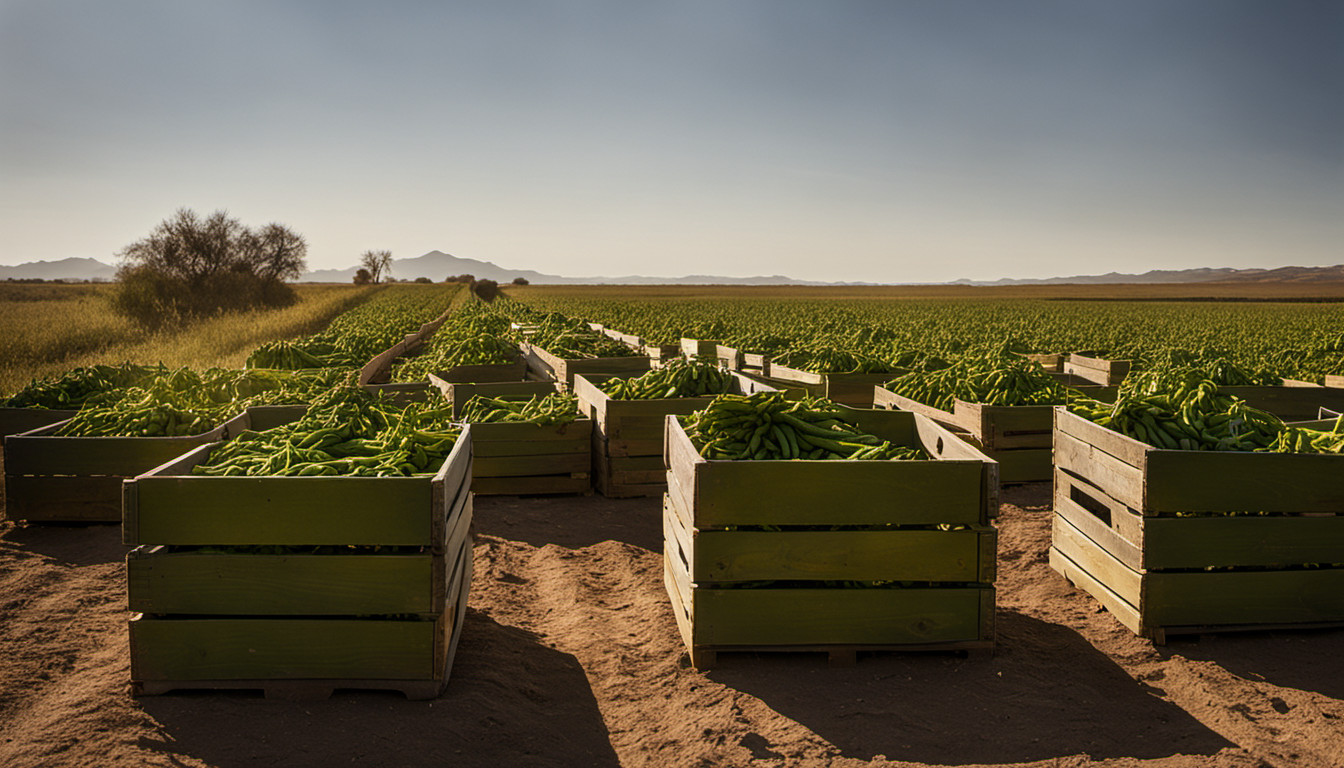
Yield is where heat costs money. NMSU trial plots harvested green pods of Sandia at 12,207 pounds per acre and NuMex Big Jim at 31,761 pounds per acre. The jalapeño Vaquero yielded 24,000 pounds per acre while Orange Habanero yielded 6,872 pounds per acre. Habanero-type fruit returned roughly a quarter of that jalapeño tonnage on the same station's plots.
Clemson's garden guidance states the same pattern in a sentence: yields are smaller for hot peppers. The chart above places the four NMSU figures side by side, all as green pod weight per acre from replicated trials at one location.
Those trials are a comparison, not a forecast. The circular reports plot averages from Las Cruces and states that its heat values vary by year and location. A grower with a shorter season or different soil will see different tonnage. The ordering between pod types is the part worth carrying forward.
Yield also depends on what the plant is asked to produce. A cayenne bred for mash measured 17,400 SHU and was rated well suited to the cayenne mash industry for hot sauce production. A piquín cultivar bred for dried powder produced 3,984 pounds of dry fruit per acre, a different unit of output altogether: dried weight, not green pod weight.
Read the unit before comparing two yields. Green pod tonnage, dry fruit tonnage and pounds of powder are three separate measurements, and a variety chosen for dehydrating belongs in a dry fruit comparison rather than beside a fresh market number.
Flavor follows species and ripeness
Most commercial chile cultivars belong to Capsicum annuum, the species that carries bells, jalapeños and cayennes. Habanero and Scotch bonnet sit in C. chinense, whose fruit can be extremely pungent and aromatic with persistent pungency when eaten. That aromatic persistence is a formulation variable. A chinense base keeps tasting hot after the swallow, while an annuum base fades sooner.
Ripeness changes sugar. A green chile is not as sweet as a red one, and once the pod reaches the red stage it produces more sugar. A sauce built on green jalapeños and one built on red jalapeños of the same cultivar differ in sweetness before a gram of added sugar is weighed.
The heat scale does not describe flavor. Clemson groups jalapeño, habanero, cayenne, large cherry and tabasco together as hot peppers, a category that says nothing about whether the sauce will taste grassy, floral or smoky. NMSU's institute notes that tabasco types and similar peppers are the ones used in hot sauces, which describes what the trade reaches for rather than what scores highest on a lab sheet.
A workable order is species first for aroma, ripeness stage second for sugar, and cultivar third for heat. Running that order backwards produces a sauce at the right Scoville number with the wrong smell, and smell is what a customer meets before the burn.
Days to harvest decide season fit
Peppers are ready for harvest about 70 to 85 days after transplanting, and 100 to 120 days to maturity from seed. That window decides which varieties a grower can finish before frost, and it moves by cultivar inside a single pod type.
The cayenne Nematador reached first harvest 99 days after transplanting in NMSU trials. Española Improved is described as an early maturing red chile cultivar at 155 days, a figure that only works in a long season or with transplants started early indoors. Two chile choices at 99 days and 155 days are not interchangeable in a short-season plan.
Maturity also fixes the harvest stage a recipe receives. Green and red pods come off the same plant at different times, and red-stage fruit carries more sugar. A recipe written around red fruit therefore implies a later harvest than one written around green fruit, and a buyer sourcing green chile and a buyer sourcing red chile are buying two points in one season.
For a maker contracting acreage, the useful date is the last safe harvest. Work back from frost using the 70 to 85 day transplant window, then check the specific cultivar's own figure. The spread between the earliest and latest entries cited here runs to 56 days, which is most of a short growing season.
Wall thickness sets what a pound becomes
Two pods of equal weight can yield different amounts of usable sauce. In Sandia, the flesh portion averages 63 percent of the total weight of the dry red fruit. The remainder is stem, seed and air. A thin-walled pod gives up a larger share of its weight before anything reaches a pot.
Drying concentrates what is left. A piquín cultivar bred for mechanical harvest produced 3,984 pounds of dry fruit per acre, and its dried powder measured 100,000 SHU. The same fruit at fresh weight would be many times heavier, which is why dried tonnage and green tonnage cannot be compared directly.
Heat survives drying but moves. Capsaicin sits in the fruit rather than the stem, and seeds carry capsaicinoids from contact with the placenta instead of producing them. A mash from whole pods therefore tests hotter than one from cleaned, seeded pods of the same lot.
The mash trade is built around that consistency. Las Cruces, a cayenne at 17,400 SHU, was rated well suited to cayenne mash for hot sauce, and the same circular attributes the crop's New Mexico value to demand for cayenne mash as the core ingredient in hot sauce.
For a maker buying by weight, the number to request is yield of usable flesh, not price per pound of pods. A cheap load of thin-walled fruit can cost more per finished bottle than a dearer load of thick-walled fruit, and the gap stays invisible on the invoice.
Matching heat to batch size
Blending is the usual way to hit a target heat with local fruit. The calculator below weights two starting heats by mass: a hot ingredient at a stated SHU range and a zero-heat ingredient, with the result expressed as an estimated range for the blend. It is an idealised mixing model, so it assumes heat distributes evenly and ignores how much capsaicin sits in the placenta.
Its inputs come from the ranges cited above. One part habanero-type mash at 300,000 SHU on a dry weight basis blended with nine parts of a zero-heat mash lands near 30,000 SHU by mass, which is cayenne-grade heat from a fruit that is unusable neat. Swap in a jalapeño at 33,000 SHU and the same nine-part dilution lands near 3,300 SHU.
Which route is cheaper depends on yield and price together. Habanero-type plots returned 6,872 pounds per acre against 24,000 pounds for a jalapeño, so the hotter fruit costs more per unit of heat taken off the field before dilution is considered at all.
The choice also fixes the harvest calendar. Early cayenne types reach first harvest in 99 days, and a 155-day red cultivar does not. A maker who needs volume through a short season is weighing a diluted hot base against a milder fruit that fills the tank faster.
Run the blend with your own masses before committing acreage. The model answers what the mix will test at. It does not answer what the field will yield, and both numbers decide whether the bottle works.
Green pod yield per acre in NMSU trial plots
Pounds of green pods per acre from replicated NMSU trials in Las Cruces, cited by cultivar. A single-location comparison, not a national average.
| Item | Value | Unit |
|---|---|---|
| Orange Habanero | 6,872 | lb/acre |
| Sandia | 12,207 | lb/acre |
| NuMex Vaquero jalapeno | 24,000 | lb/acre |
| NuMex Big Jim | 31,761 | lb/acre |
Idealized SHU dilution model
This is proportional arithmetic, not a laboratory result. Enter a starting SHU range, the mass of one heat-bearing ingredient, and the combined mass of ingredients assumed to contain zero capsaicinoids. No recipe or production value is preloaded.
The example uses NIST's published 2,000–8,000 SHU jalapeno range with 100 grams of heat-bearing material and 900 grams assumed to have zero heat. It is not a recipe.
Assumptions
- Starting SHU and both masses use a common as-weighed basis.
- Added mass contains zero capsaicinoids.
- The mixture is uniform and retains all starting capsaicinoids.
Not included
Cooking loss, evaporation, fermentation, extraction, straining, analytical uncertainty, sensory response, food safety, and advertising substantiation are outside this model.
FAQ
How do I choose a pepper variety for a hot sauce recipe?
Start from the heat band, then the species. Published ranges put a jalapeno at 3,000 to 8,000 SHU and a habanero at 150,000 to 350,000, and a chinense base keeps its aromatic heat longer after the swallow.
Why do two sources list different SHU for the same pepper?
Method and lot. IFAS lists jalapeño at 2,000 to 8,000 SHU while Clemson lists 2,500 to 8,000 SHU, and NMSU reports its own table values as averages that vary by year and location.
Does a hotter pepper yield more heat per acre?
Usually not. Orange Habanero plots yielded 6,872 pounds per acre against 24,000 for the jalapeño Vaquero, so heat per acre has to be worked out from tonnage and SHU together.
Do green and red pods of one variety make the same sauce?
No. Red-stage fruit produces more sugar and tastes sweeter than green fruit of the same plant, so one cultivar gives a different base at each harvest stage.