Choosing a Label Adhesive That Holds on a Sauce Bottle
Make your own: hot sauce recipe builder → Choose a pepper, scale a sourced recipe, and print your batch.
A hot sauce label has to survive three conditions the bottle was designed for: condensation on the way out of a fridge, a shipping box in a cold van, and a shelf under a warm light. Label stock is sold on exactly those terms. Sheet stock comes with permanent or removable adhesive, the material carries a published service range from -40°F to 302°F, and the outdoor-rated films claim up to 2 years of exposure. Those are the numbers to choose against.
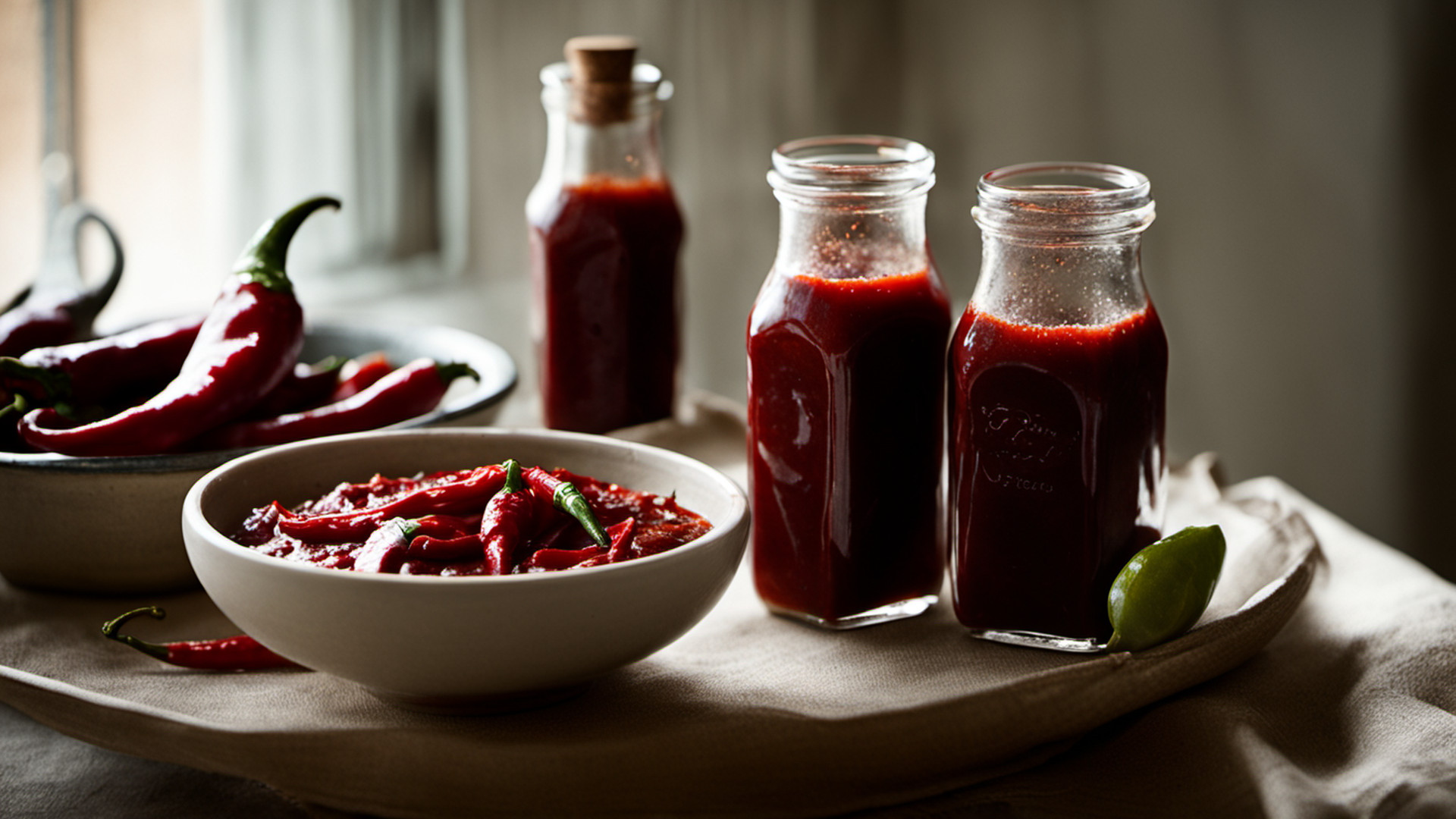

Two adhesive families, one decision
Sheet labels are sold with permanent or removable adhesive, and the difference is not a preference. Permanent labels are not designed to be removed without tearing the stock, damaging the surface, or using solvents. Removable stock comes off, which is what a tamper seal or a seasonal promo sticker wants and what a brand label does not.
For a hot sauce bottle the answer is permanent, with one exception worth knowing. A batch code or a fill-date sticker applied over a printed label is often the removable one, because it is meant to come off in the kitchen without taking the brand with it.
Adhesive strength also varies inside the permanent family. High-tack films are formulated for hard-to-stick surfaces such as textured or powder-coated ones, which a glass bottle is not, but the same stock is what makes a label hold on a bottle that sweats.
The decision costs nothing to make correctly at the reorder. It costs a print run to discover at the fill line, when labels lift at the edge on cold bottles and the run has to be repeated.

The service range is the real spec
Temperature is where labels fail visibly, and manufacturers publish the range. One adhesive stock carries a service temperature range of -40°F to 302°F, which covers a freezer, a shipping van and a warm shelf with room to spare.
Cold-rated stocks go further down. Cold temperature labels withstand temperatures as low as -65°F, which is colder than any hot sauce bottle will see in a home freezer. The catch is stated in the same line: they should be applied at room temperature.
That application note is the most useful sentence in the specification. A label applied to a cold, wet bottle will not bond properly no matter what its service range says, because the adhesive needs a dry, room-temperature surface to wet out. Filling and labelling on the same day, with bottles straight out of a cold rinse, is the common way to produce labels that lift in a week.
Read the range as two numbers rather than one. The bottom of the range describes storage; the application condition describes the fill day, and only one of them can be controlled by buying different stock.

Wet handling, outdoor exposure and film
Material properties are listed separately from the adhesive, and the list is the practical buying guide: weatherproof, tear resistant, temperature resistant and tamper evident are four different things sold on the same shelf.
Weatherproof is the property that matters for a sauce bottle leaving a fridge. It describes a face stock and laminate that resist moisture rather than a paper sheet that cockles and stains at the edge. A high-tack polyester film is the stock sold for exactly this: formulated to work for anything exposed to the outdoors or anything that withstands tough conditions.
Outdoor ratings put a number on it. One aggressive permanent film is rated for up to 2 years outdoors, against a paper stock that will not survive a season on a market table in the sun.
An all-temperature white uncoated stock also exists for both inkjet and laser printing, which is the option for a brand printing labels in-house on a laser printer rather than ordering them printed. It is the cheapest route per label and the one where the printer, not the converter, decides the result.
Match the property to the failure you have actually seen. Buying weatherproof stock to fix a design problem with small type is a common and expensive mistake.

Thickness changes how a label applies
Film thickness is quoted in mils, and the numbers are small enough that they read as noise until an applicator is involved. One thick adhesive is 2-mil in its thin version and 5-mil in its heavy version, a difference that changes how the label conforms to a curved bottle and how it behaves on a machine.
A 2-mil film on a 5 oz woozy bottle follows the curve without lifting at the edges. A 5-mil film is stiffer, bonds more aggressively to a rough surface, and is the one to use when the bottle is textured or the label has to bridge a seam.
Machine application raises the stakes. Rolls feed an applicator; sheets do not, which is why a brand that moves from hand-applied sheets to a semi-automatic labeler has to change the stock as well as the equipment.
Availability affects the schedule more than the spec. Sheet stock ships same-day on select sizes, which is the difference between a reprint that lands before a market and one that arrives after it. Check the shipping line before choosing an exotic film.
The rule that survives all of this: buy the thinnest film that holds on the bottle you actually use, and keep one roll of the heavy version for the batch that goes wrong.
What the material costs
Custom adhesive labels start at $168.75, which is the entry price for a short run rather than a per-label rate. Divide it by the run size before comparing it to anything.
At a thousand labels the entry price is about seventeen cents each. At five hundred it is about thirty-four cents. Against a 5 oz bottle that costs about fifty cents from a case of twelve, a thirty-four-cent label is a real line item, and against a 1.7 oz bottle at about thirty-two cents from a case of forty-eight it exceeds the packaging.
That comparison is why in-house printing exists. An all-temperature uncoated stock designed for both inkjet and laser printers turns a fixed print bill into a per-sheet cost, at the price of doing the work and accepting the print quality the office printer produces.
The decision belongs to volume. Below a few hundred labels a run, the printed route is a fixed cost the brand can plan around; above a few thousand, the per-label price falls far enough that buying printed is cheaper than the time spent printing.
Whatever the route, specify the adhesive before the artwork. Changing stock after the design is approved means re-proofing the colour on a different face sheet.
Published case price by bottle size
List price for one case at the smallest published quantity. Case packs are 12 bottles for the 5, 8 and 10 oz sizes and 48 for the 1.7 oz mini, so this compares listed case prices, not per-bottle cost.
| Item | Value | Unit |
|---|---|---|
| 1.7 oz (48/case) | 15.55 | $ |
| 5 oz (12/case) | 5.99 | $ |
| 8 oz (12/case) | 10.1 | $ |
| 10 oz (12/case) | 7.8 | $ |
FAQ
What adhesive should a hot sauce bottle label use?
Permanent. Permanent labels are not designed to be removed without tearing the stock or damaging the surface, which is what a brand label wants. Sheet stock is sold with permanent or removable adhesive, and removable is for batch stickers and promo seals.
What temperature range does a sauce label need?
One adhesive stock publishes a service range of -40°F to 302°F and cold-rated stock goes to -65°F. Apply at room temperature either way: a label put on a cold, wet bottle will lift regardless of its rated range.
Is a weatherproof label worth it?
For a chilled bottle, yes. Weatherproof and temperature resistant are separate material properties, and an outdoor-rated permanent film is rated for up to 2 years outdoors. Paper stock cockles at the edge once a bottle sweats.
How much do custom adhesive labels cost?
Custom adhesive labels start at $168.75, which is a run price rather than a per-label price. Printing on all-temperature uncoated stock at home replaces that fixed cost with a per-sheet cost, and sheet stock ships same-day on select sizes.