What a Tasting Table Costs Per Sample, Bottle by Bottle
Make your own: hot sauce recipe builder → Choose a pepper, scale a sourced recipe, and print your batch.
A tasting table is a small manufacturing operation with a cash register beside it. The unit is not the visitor, it is the sealed bottle that leaves in someone's hand. A case of 48 mini 1.7-ounce bottles lists at $15.55, which is 32 cents a bottle, and a case of 12 five-ounce bottles lists at $5.99 for pours at the table. Once the bottle cost is written down, the day's sample count becomes a budget line instead of a guess.
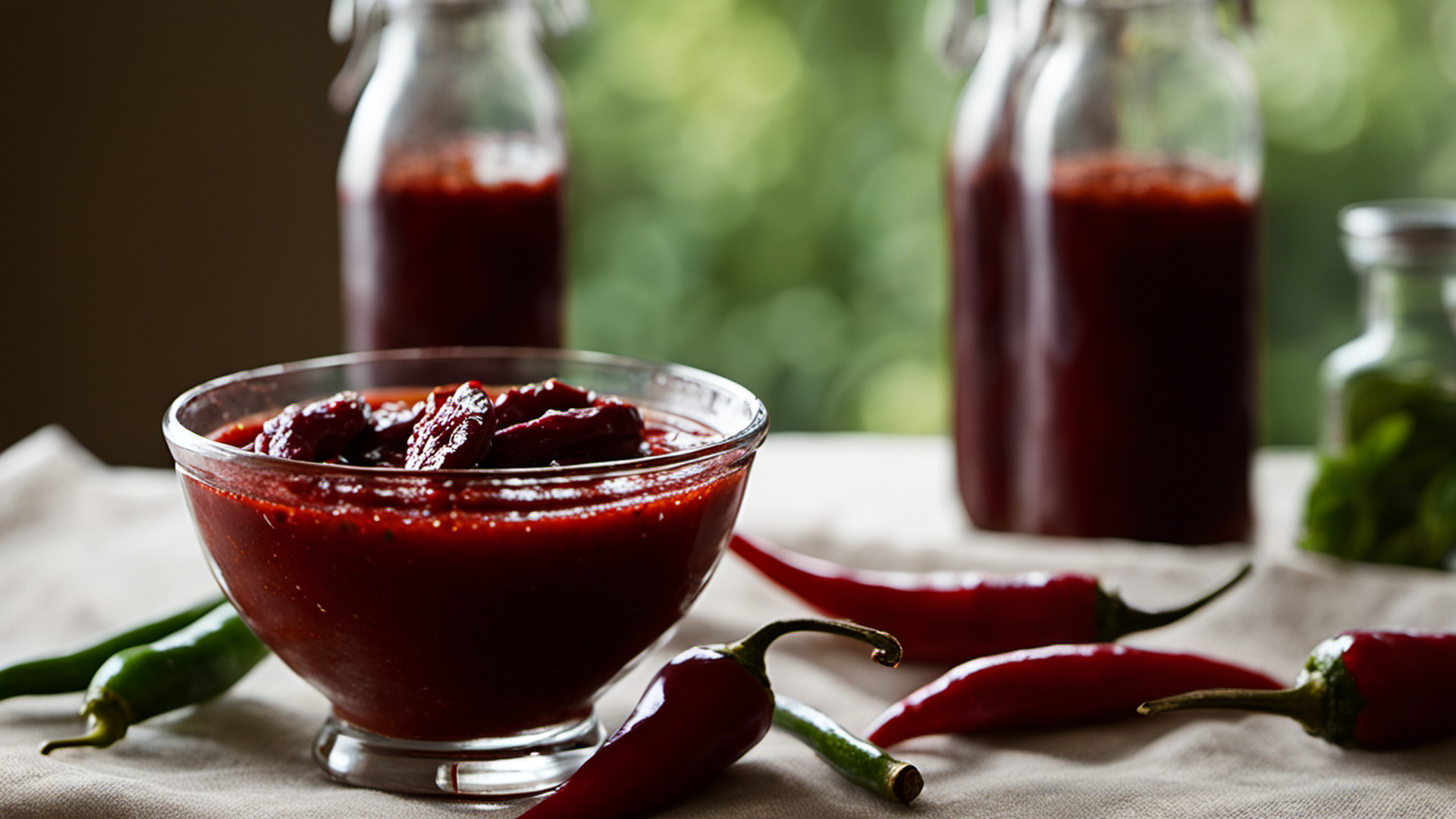

Count bottles, not foot traffic
Foot traffic is not a cost driver until it turns into bottles, so build the table budget from the bottle count. The mini is the workhorse: $15.55 buys 48 bottles of 1.7 ounces, 32 cents each. A day that hands out 96 sealed samples is two cases and $31.10 of glass.
That number is small enough to plan around and large enough to matter across a season. Twenty market days at 96 samples each is 1,920 bottles, or 40 cases, or $622 before caps, labels and sauce. A maker who thinks in visitors will under-buy, run out at noon and lose the afternoon; a maker who thinks in bottles buys the cases in advance and knows when to stop.
Set the sample count from the crowd you expect and the stock you can spare. A busy Saturday may justify 120 samples; a rainy Tuesday may justify 30. The point is to decide before the table is set, when the decision costs nothing.
Keep a tally on the table. A clicker or a simple sheet of paper turns the next event's budget from an estimate into a record.

Price the pour before the giveaway
Two different things leave a tasting table: a taste and a bottle. The taste costs sauce and a rinse cup. The bottle costs glass, closure, band and label, and it is the line that compounds.
At the table, pours come out of larger bottles. A case of 12 five-ounce bottles is $5.99, about 50 cents a bottle, and a case of 12 ten-ounce bottles is $7.80, 65 cents each. Those are the bottles you open for tasting, and they should be the ones already allocated to marketing rather than pulled from the retail stock at the last minute.
Sealed samples should be the mini, because a 1.7 ounce bottle is a completed product rather than a partial pour. Handing someone an open five-ounce bottle is a taste; handing them a sealed mini is a sample they can take home and open later.
Write both lines on the budget: pours at the table, sealed bottles out the door. A day that spends $31 on minis and $12 on pour bottles is a $43 product cost, and that is before the table, the tent or the permit.

Seal and band every bottle that leaves
A closure is not included in the bottle price. A 24-414 black plastic cap is $0.08 each, so a capped five-ounce case adds $0.96 and a capped ten-ounce case adds the same. On a 12-bottle case that is a rounding error; on a season of 40 cases it is $38.40 of closures that a budget without a cap line will miss.
Bands are the other small line. Heat shrink bands for 24mm finishes cost $9.50 for a pack of 250, or as low as $7.50 a pack at volume. That is under four cents a bottle, and it is the difference between a sample that looks finished and one that looks like a decant.
Mini bottles use a smaller neck finish than the standard woozy, so buy bands for the finish you actually order rather than assuming one pack covers the whole line. Read the finish off the bottle spec, not off the last invoice.
Total the sealed sample properly: 32 cents of glass plus a cap and a band lands near 44 cents for a standard woozy, and the mini's own closure and band will differ. The exact figure belongs on your sheet, not in a rough allowance.

Set the sample budget against sales
A sample budget needs a denominator, otherwise every event looks affordable in isolation. The denominator is the contribution the day produces. Contribution margin is the sale price per unit minus variable cost per unit, divided by the sale price per unit.
Run it on a bottle. If a five-ounce bottle sells at the table for $9.00 and carries about $0.50 of glass plus sauce, label and closure, contribution is roughly $8.00, or 89% of the sale price. Two bottles sold pay for about ten samples at 44 cents each.
That ratio is the whole argument for sampling at events where bottles also sell, and the argument against sampling where they do not. A festival where 100 samples produce 15 bottle sales has recovered the glass and made a small margin. A festival where 100 samples produce two sales has bought two customers at $22 each, which may still be worth it, but only if someone writes the number down.
Track three figures per event: samples out, bottles sold, and the product cost of both. Anything else is a story about the crowd.
Buy in the tier that matches the season
Both sizes price down with volume, and the steps are large enough to plan for. Mini cases run $15.55 at one case, $14.40 at 60 to 149 cases, and $13.95 at 150 or more. The gap between the top and bottom tier is $1.60 a case, or $64 across 40 cases.
A single season rarely reaches those tiers on its own, which is why the honest approach is to buy what the season needs and accept the first-tier price. Consolidating with a second event series, or with a co-packer buying glass for the same bottle, is how small brands reach the next step without carrying inventory for a year.
The catalog has no minimum order, which makes the first purchase cheap to test. Buy one case, run one event, measure the sample-to-sale ratio, then decide whether the next order is two cases or twenty.
Recheck the price before each season. Glass pricing moves, and a table budget built on last year's case price is a budget with a silent error in it.
Move leftovers without losing them
Samples that go home with the organiser are inventory, and inventory that sits becomes a write-off. The cheapest way to convert leftovers is mail: a flat rate envelope costs $11.97 at commercial pricing or $13.90 at the post office counter.
A padded envelope holds a few minis, which makes it a reasonable way to send a sample set to a store that asked, a restaurant that is testing, or a writer who requested one. Three minis plus an envelope is under $13 to place a product in front of someone who will not attend a market.
Plan the leftovers before the event rather than after. If 40 minis remain, decide in advance whether they go to mailers, to a second event, or into a bundle at a discount. A leftover case that is opened for a table six months later has lost its band and its freshness argument.
Keep the leftover count on the same sheet as the samples-out count. The difference between what was bought and what was handed out is the number that tells you whether the next order should be smaller.
Price of a 48-bottle mini case by order tier
Published case price for the 1.7 oz mini at each quantity break in the catalog.
| Item | Value | Unit |
|---|---|---|
| Case of 48 | 15.55 | $ |
| 60-149 cases | 14.4 | $ |
| 150+ cases | 13.95 | $ |
FAQ
How much does one sealed sample cost?
A mini 1.7-ounce bottle is 32 cents of glass from a 48-bottle case at $15.55. A capped standard woozy sample runs near 44 cents once an $0.08 closure and a band are added.
How many samples does a case make?
A mini case holds 48 bottles and a five-ounce case holds 12. At $15.55 a mini case, 96 samples is about $31 of glass.
Does buying more cases lower the sample cost?
Yes. Mini cases drop to $14.40 at 60 cases and $13.95 at 150, which saves $1.60 a case at the top tier.