Pepper Mash Ferment Temperature, Band by Band
Make your own: hot sauce recipe builder → Choose a pepper, scale a sourced recipe, and print your batch.
A pepper mash ferment is a temperature-controlled process with no pepper-specific temperature table. The nearest first-party guidance is vegetable extension work: an ideal band of 70F to 75F (21C-24C), sauerkraut finished in 3 to 4 weeks at that band, and up to 6 weeks at 60F to 65F. Above 80F the same documents warn of spoilage. Commercial pepper mash runs between two weeks and three years in barrels. Four things are measurable and settable: the band, the warm-side failures, the cool-side stall, and batch size. The chart plots published week counts at both ends of two bands.
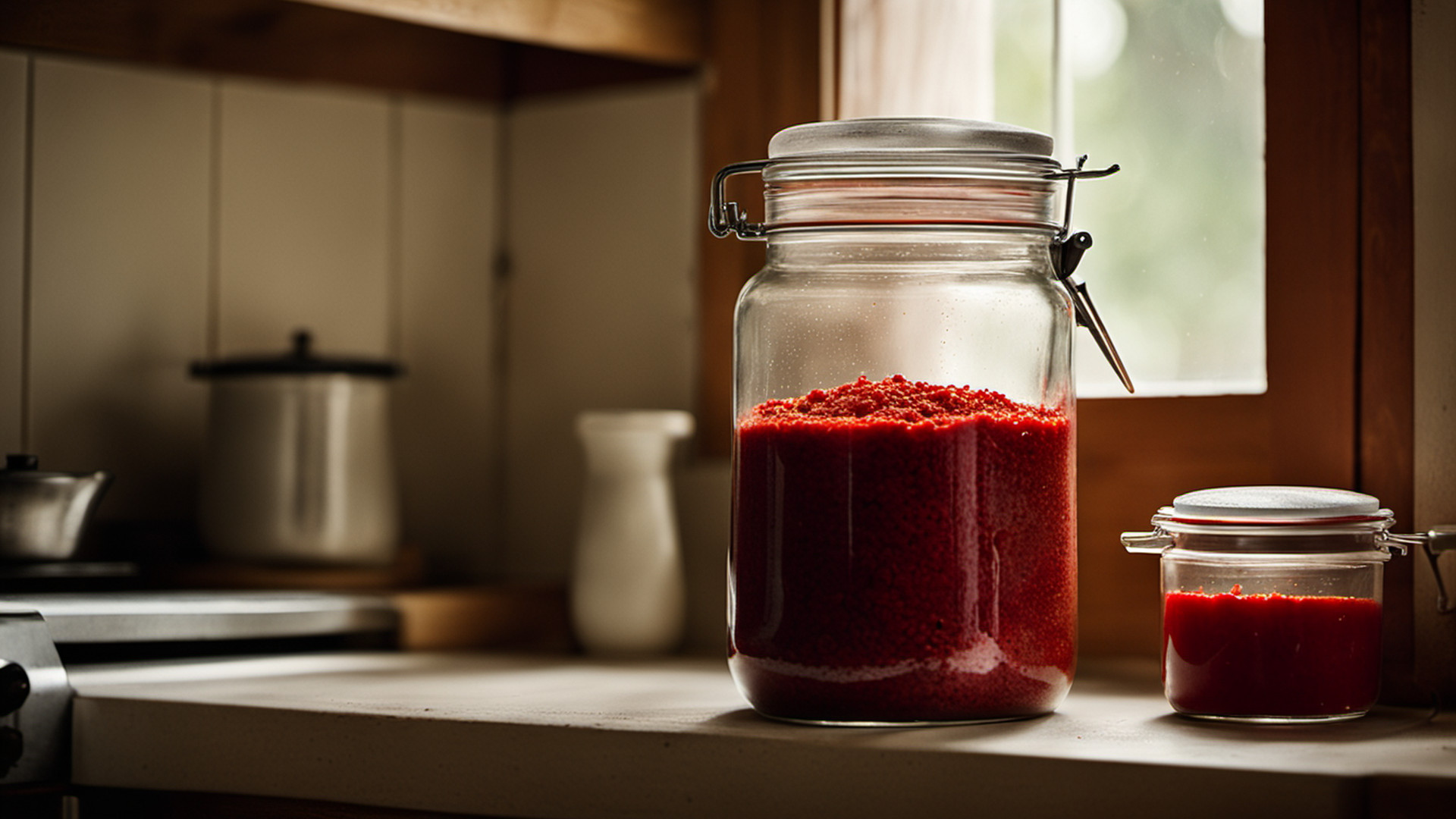
Three documents agree on one band
Three extension documents put the same number on a vegetable ferment. The NCHFP sauerkraut page states the USDA recommendation is to store at 70F to 75F while fermenting. Penn State Extension calls 70F-75F (21C-24C) the ideal fermentation temperature. North Carolina State uses the same window for fermented pickles, between 70F and 75F for about 3 to 4 weeks. The agreement matters because each page describes a different food and still lands on one band.
Read the wording closely. NCHFP says to store the ferment at 70F to 75F. Penn State names the temperature at which the sauerkraut sits as 70F-75F (21C-24C). Neither sentence is a product internal temperature. The measured quantity is the environment around the fermenter, which is what a thermometer on the shelf reads. A mash that sits at 68F in a 74F room is not inside the band as written, because the document never claimed to measure the mash.
The practical reading: hold the room, closet, or fermentation chamber in the band for the days the ferment runs. Penn State's short version is blunt about why that controls the schedule. The warmer the room, the more rapidly fermentation takes place. One sentence explains why a 74F kitchen finishes a batch that a 62F basement leaves half done.
Do not treat the band as a target to chase with a space heater. The same documents list failures on both sides of it. What the band buys is a predictable clock.
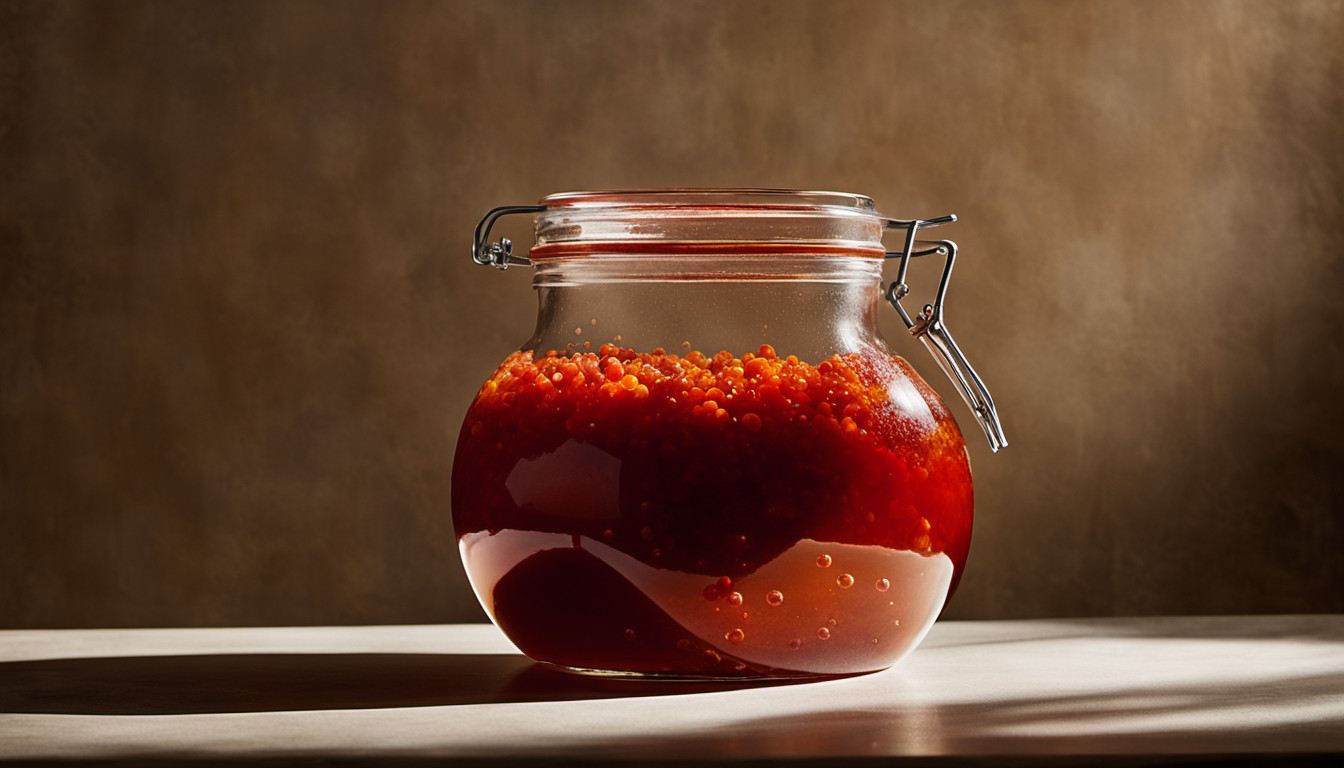
Time roughly doubles as the band drops
The chart on this page plots the two bands the NCHFP page states for sauerkraut, at both ends. At 70F to 75F, kraut will be fully fermented in about 3 to 4 weeks. At 60F to 65F, fermentation may take 5 to 6 weeks. Penn State gives the same 3 to 4 weeks at 70-75F and up to 6 weeks between 60F and 65F. North Carolina State stretches its cool band to 55F to 65F and still says 5 to 6 weeks.
Two pages agreeing on the doubling is the useful part. A 10F drop roughly doubles the calendar. NCHFP frames the whole subject as variable temperature and time combinations rather than one fixed schedule. Oregon State's small-batch sheet shortens both bands: about 1 to 2 weeks at 70-75F and 2 to 3 weeks at 60-65F. Same direction, smaller vessel.
For a pepper mash, the thing to carry away is the shape, not the week count. Warmer runs faster and fails earlier. Cooler runs slower and can stall. A maker planning a batch around a market date should pick the band first and count weeks second, because the band determines the count.
The chart uses band endpoints rather than midpoints. A midpoint would invent a precision the pages do not claim, and it would put a number in a chart that no quoted sentence supports.
Warm-side failures are texture failures
Warm-side problems in these documents are described as texture and surface growth, not as an acid failure. NCHFP states that above 75F, kraut may become soft. North Carolina State says to avoid temperatures above 80F, or pickles will become too soft during fermentation. Penn State is harsher: an overly warm room, over 80F (27C), will cause spoilage. The same page adds that sauerkraut fermented during warm weather is more likely to develop undesirable molds and yeasts.
Oregon State's troubleshooting table lists slimy kraut as spoilage to discard, and its prevention line is to ferment at temperatures below 75F and ensure proper coverage. Its general instruction is to keep sauerkraut between 70F and 75F during fermentation.
None of those sentences say a warm ferment is poisonous. They say the product softens, molds, or turns slimy, which is a quality failure that also removes the margin you were relying on. In a pepper mash, soft texture is harder to notice than a mold cap, because mash is already soft. That is the argument for a thermometer rather than a look.
The countermeasure in the documents is not ice packs or a new recipe. It is a cooler location and better coverage. Since the warmer room also ferments faster, warm-side management is a scheduling decision as much as a safety one.
Cool rooms stall rather than spoil
Cool-side behavior is different. NCHFP says that at temperatures lower than 60F, kraut may not ferment. That is a stall, not a spoilage event. Penn State's fall page treats 60F to 65F as workable but slow, up to 6 weeks. Oregon State's small-batch sheet puts that same band at 2 to 3 weeks.
A stalled ferment is easy to misread. No bubbles, no rise, and no sour smell after two weeks looks like a dead batch. The documents' explanation is that the culture is cold, not dead. The response that follows from their text is to move the vessel into the band and keep waiting, not to add salt or starter to force it.
Commercial pepper mash shows the other end of the range. Louisiana hot sauce production ferments a hot red chili pepper mash in wooden or plastic barrels for a period between two weeks and three years. A barrel room in Louisiana is not a 65F basement, and that page publishes no temperature set point for the barrels. It publishes the spread, which is wide enough that a home fermenter cannot borrow a number from it.
The useful rule for a cool kitchen: expect the slow band, schedule the pH check later, and do not judge the batch by the calendar alone. The calendar is the flavor read. The pH is the safety read, and the next section covers what the federal definition actually requires.
Batch size moves the clock too
Batch size changes the clock in the same direction as temperature. Penn State's small-batch instructions state that fermentation completes more quickly than in large batches. Oregon State says the smaller the fermenting container, the faster it will ferment, and adds that small-batch kraut should be checked daily.
That has a direct consequence for anyone testing a pepper mash recipe. A quart jar on the counter and a five-gallon bucket in the same room are not running the same experiment. The small vessel reaches its acid target sooner, so a week-two taste from the jar is not a week-two taste from the bucket. Scaling a recipe up changes the schedule even when the salt percentage and the room temperature stay fixed.
The two effects compound. A small jar in a 72F room is the fastest configuration these pages describe. A large crock in a 62F room is the slowest. A maker who changes both at once and then keeps the same calendar has changed two variables and measured neither.
If the batch is a test, keep the vessel small and the room in the band, then record the day the pH crosses. If the batch is production, pick the vessel first and let the calendar follow the vessel. Either way, write the room temperature and the vessel size next to the pH reading, because a reading without those two numbers cannot be repeated.
Pepper mash has no published band
None of the temperature tables above is a pepper-mash table. They cover cabbage and cucumbers. The pepper research that exists measures time and microbiology rather than a controlled temperature set point. The LSU AgCenter summary of pepper mash work describes fermentation in four stages where a symbiosis between lactic acid bacteria and yeast makes possible the fermentation of the mash. The dominant lactic acid bacteria identified were Lactobacillus plantarum and Lactococcus spp.
The same summary gives the commercial time range: two weeks to three years in wooden or plastic barrels. It also gives a stopping rule from a 550-day trial, recommending that mash fermentation stop after 550 days because conditions at that point could lead to growth of spoilage microorganisms. Note what that rule is. It is a maximum, not a target, and it came from one simulated natural fermentation.
So a pepper mash sits between a cabbage schedule it cannot cite and a commercial range too wide to schedule against. The defensible position is to use the extension band as an environmental target, because it is the only first-party temperature guidance in reach, use pH as the completion test, and record your own days-to-acid so the next batch has a number that belongs to your kitchen.
For sale, the federal frame is separate again. FDA defines an acidified food as a low-acid food with acid added, a finished equilibrium pH of 4.6 or below, and water activity greater than 0.85. Commercial processors must register each establishment and file scheduled processes. Temperature control is a quality lever inside that system, not a substitute for the filing.
Thermometers, pH meters and the calculator
Two instruments do different jobs. A thermometer answers whether the vessel is in the band. It does not tell you the ferment is finished. A pH meter answers whether the acid has arrived. It does not tell you the culture was warm enough to get there cleanly.
The documents put numbers on both sides. Penn State's ideal band is 70F-75F (21C-24C). NCHFP's stop conditions run from below 60F, where kraut may not ferment, to above 75F, where it may become soft. FDA's acidified-food line is a finished equilibrium pH of 4.6 or below with water activity above 0.85.
The calculator embedded on this page is an elevation tool, not a ferment tool. It returns the NCHFP Easy Hot Sauce Table 1 process time for the elevation you enter, for half-pint jars in a boiling water canner. It does not read mash temperature, does not estimate days to completion, and does not tell you whether a mash is safe to can. Use it only after a cooked, tested sauce is in jars.
A workable routine: log the room temperature twice a day, log the mash pH every few days once activity starts, and keep the vessel in the band until the pH holds steady. When the numbers disagree with the calendar, trust the numbers.
The chart and the tables above describe cabbage and cucumber ferments. They are the closest published temperature guidance for a pepper mash, and they are not a pepper-mash procedure. Say so on your own label if you sell the sauce.
Weeks to fully fermented, by storage band
Both ends of the two bands the NCHFP sauerkraut page states. The underlying food is cabbage, not pepper mash.
| Item | Value | Unit |
|---|---|---|
| 70-75F band, 3 weeks | 3 | weeks |
| 70-75F band, 4 weeks | 4 | weeks |
| 60-65F band, 5 weeks | 5 | weeks |
| 60-65F band, 6 weeks | 6 | weeks |
NCHFP Easy Hot Sauce, hot pack, half-pint jars. Times are Table 1 only.
0 - 1,000 ft: 10 min
FAQ
What temperature should a pepper mash ferment at?
The nearest published band is 70F to 75F (21C-24C) from Penn State Extension, with 3 to 4 weeks to finish at that range. That band is written for sauerkraut, not peppers. NCHFP states the same 70F to 75F storage temperature.
What happens if a pepper mash ferments too warm?
Above 75F the product may become soft, and above 80F an overly warm room will cause spoilage. Warm-weather ferments are also more likely to develop molds and yeasts.
How long can pepper mash ferment?
Commercial mash ferments for between two weeks and three years in wooden or plastic barrels. A 550-day trial recommends stopping after 550 days.