How Allergens Are Declared on a Hot Sauce Label
Make your own: hot sauce recipe builder → Choose a pepper, scale a sourced recipe, and print your batch.
Allergen labeling is the part of a hot sauce label that gets least design attention and causes the most recalls. Federal law names the allergens that must be declared, sets two acceptable places to declare them, and says nothing about a threshold below which a trace is acceptable. This article walks the statutory list, the two declaration formats, the ingredients in a sauce kitchen that trigger a declaration, what an advisory statement can and cannot do, and the cross-contact controls an inspector will look for.
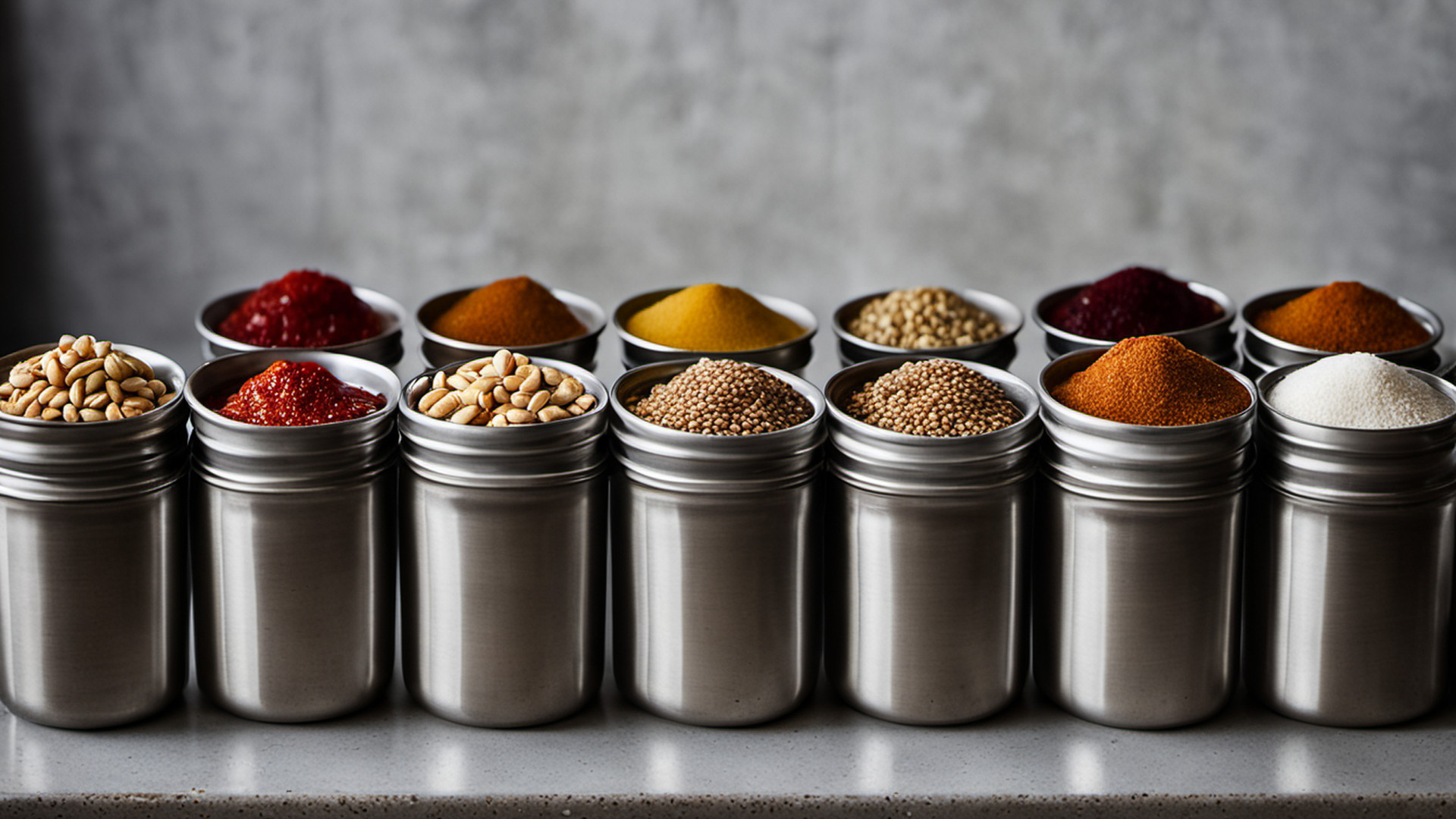

The nine allergens federal law names
Start with the list, because it is closed. The Food Allergen Labeling and Consumer Protection Act identified eight foods as major food allergens: milk, eggs, fish, Crustacean shellfish, tree nuts, peanuts, wheat, and soybeans. At the time of passage, those eight accounted for 90 percent of food allergies and serious allergic reactions in the United States. Sesame became the ninth on January 1, 2023, under the FASTER Act.
A hot sauce maker who ships a bottle with any of the nine present and undeclared is shipping a misbranded food. The FDA has not established a threshold level for any allergen, so there is no gram count below which a declaration becomes optional. A quarter teaspoon of tahini in a five-gallon batch is still sesame on the label.
The list is also shorter than the universe of reactions. More than 160 foods have been identified to cause food allergies in sensitive individuals. Those extra foods may need to be named in the ingredient statement, but they do not belong in a Contains statement, which is reserved for the statutory nine. The FDA drew that line explicitly when it removed coconut from the tree nut list: coconut is no longer listed in the Tree Nut List and should not appear in a Contains statement, though it still has to be named as an ingredient.

Two places the allergen can appear
The law gives two formats, and a label needs only one of them. The name of the food source must appear in parentheses following the name of the ingredient, as in lecithin (soy) or flour (wheat), or immediately after or next to the list of ingredients in a contains statement, as in Contains wheat, milk, and soy. There is no third option and no approved symbol.
Format matters as much as wording. A Contains statement must be printed in a type size no smaller than the type size used in the list of ingredients. A two-point Contains line tucked under a four-point ingredient list is a labeling error even when every word is correct.
Specificity is the other trap. The law requires the type of tree nut, and the species of fish and Crustacean shellfish, to be declared. Contains shellfish is not a compliant declaration for a sauce built on shrimp paste; the label needs the species.
The one real shortcut is built into the ingredient name itself. The requirement is met if the common or usual name of an ingredient already identifies that allergen's food source, with buttermilk given as the example. That works for buttermilk because the word carries the source. It does not work for soy sauce, miso, tahini, or fish sauce, where the allergen source is real but the name does not say soybeans, wheat, sesame, or anchovy.
Where hot sauce recipes pick up allergens
Most hot sauce recipes are peppers, vinegar, salt, and water, which carry none of the nine. The declarations arrive through the seasoning layer, and they arrive quietly.
The common routes are fermented soybean products, wheat-based thickeners and miso, fish sauce and anchovy-based Worcestershire, sesame paste and toasted sesame oil, and dairy used in a cooling or creaming step. Each of those maps to a named allergen source on the statutory list, and sesame maps to the ninth entry. A batch sheet that reads clean at the top can still carry four declarations by the time the last ingredient is weighed.
Flavorings and incidental additives do not escape. A flavoring, coloring, or incidental additive that bears or contains a major food allergen is subject to the labeling requirements. That closes the argument that a natural flavor or a processing aid is too minor to declare.
Small-quantity ingredients are a separate question from allergen status. Ingredients present at 2 percent or less by weight may be grouped at the end of the ingredient statement instead of being placed in descending order. That is a rule about sequence, not about disclosure. The ingredient still appears, and if it carries an allergen, the allergen still gets declared.
Build the label from the batch sheet, not from the recipe card. A substitution made on the floor, such as a different soy sauce with wheat in it, changes the label obligation even when the sauce tastes the same.
Advisory statements and what they cannot fix
May contain statements feel like insurance. They are not. The FDA describes advisory statements such as may contain or produced in a facility that also uses as statements that are not required by law. They exist to address unavoidable cross-contact, and only if manufacturers have incorporated good manufacturing processes in the facility and taken every precaution to avoid cross-contact.
Two combinations are specifically called out as improper. An allergen-free claim cannot sit beside an advisory statement for the same allergen; a wheat-free claim plus may contain wheat is not appropriate. A Contains statement cannot sit beside a may contain statement for the same allergen either, because the pairing could be misleading to consumers.
Advisory language also has to be true. The FDA states that advisory statements should not substitute for current good manufacturing practices and must be truthful and not misleading. A blanket may contain line printed on every SKU, regardless of what the line actually ran, is a claim about the plant that the plant may not be able to support.
The absence of a threshold is what makes this hard to reason about. Because the FDA has not established a threshold level for any allergen, a maker cannot point to a validated trace level and call the risk closed. The practical answer is process control plus an honest label, not an advisory line used as a substitute for cleaning verification.
Cross-contact controls a small kitchen needs
Allergen cross-contact means the unintentional incorporation of a food allergen into a food. The controls that address it live in 21 CFR part 117, which covers facilities that manufacture, process, pack, or hold human food.
The regulation is specific about scope. Food allergen controls must include procedures, practices, and processes that ensure protection of food from allergen cross-contact, including during storage, handling, and use. Storage is in the sentence for a reason: an open bag of sesame seed stored above an uncovered mash kettle is a control failure before any equipment runs.
The FDA does not rely on paperwork alone. It conducts inspections and sampling to check that major food allergens are properly labeled on products. Where a label lacks required allergen information, or a product inadvertently contains an allergen through cross-contact, the agency treats the product as misbranded or adulterated and can pursue recalls, import refusal, and seizure.
The record supports the risk framing. From September 2009 to September 2014, about one-third of foods reported to the agency as serious health risks involved undeclared allergens. Dressings, which include sauces and gravies, were among the five food types most often involved in those allergen recalls. A sauce operation is not a low-risk bystander in this data set; it is in one of the named categories.
Reading a label before you print it
Run the proof against the batch sheet in a fixed order. First, confirm that every ingredient is listed by common or usual name in descending order of predominance by weight. Second, check whether any ingredient sits at 2 percent or less by weight and has been grouped at the end with a quantifying phrase instead of being ordered by weight; that grouping is allowed, but the shift in position should be deliberate.
Third, test each allergen against the two formats. Parentheses after the ingredient name or a Contains statement next to the list, with the Contains line no smaller than the ingredient text. Fourth, check specificity for tree nuts, fish, and Crustacean shellfish, which require the type or species. Fifth, confirm that no advisory statement contradicts a Contains line or an allergen-free claim.
One scope point catches market vendors. The labeling requirements extend to retail and food-service establishments that package, label, and offer products for human consumption. A sauce bottled at a market booth and handed across the table is packaged and labeled, so the same declaration rules apply.
Finally, treat the FDA guidance as guidance. The agency states that its guidance documents do not establish legally enforceable responsibilities; the statute and the regulations do. A label that follows a guidance example but misses the statutory declaration is still non-compliant, and the maker is the party responsible for catching it before the print run.
Major food allergens named in federal law
Count of allergens named by statute. The original eight came from FALCPA in 2004; sesame became the ninth on January 1, 2023. Not a measure of how often any allergen appears in sauce.
| Item | Value | Unit |
|---|---|---|
| Original eight foods | 8 | allergens |
| Sesame added | 9 | allergens |
FAQ
Does a hot sauce with soy sauce need a Contains statement?
It needs the soy source declared, and either format satisfies the law: parentheses after the ingredient name, or a Contains statement next to the ingredient list. The common-name shortcut does not rescue the word soy sauce, because that name does not identify soybeans the way buttermilk identifies milk. Soybeans are one of the nine named allergens.
Is a may contain sesame statement required on hot sauce?
No. Advisory statements are not required by law. They address unavoidable cross-contact and are appropriate only where the facility has incorporated good manufacturing processes and taken every precaution to avoid cross-contact. The statement must also be truthful and not misleading.
Can a sauce be labeled wheat free and also say may contain wheat?
No. The FDA states that using an allergen-free claim together with an advisory statement for the same allergen is not appropriate. The same logic blocks a Contains peanuts line paired with may contain peanuts on one label.
Which allergen did the FASTER Act add?
Sesame. It became the ninth major food allergen recognized in the United States, effective January 1, 2023, joining milk, eggs, fish, Crustacean shellfish, tree nuts, peanuts, wheat, and soybeans.